
Murano’s glass island beside Venedig
Published on 09/17/2026 at 07:02 | Editorial responsibility: Rafael Müller, Editor-in-Chief AD HOC NEWS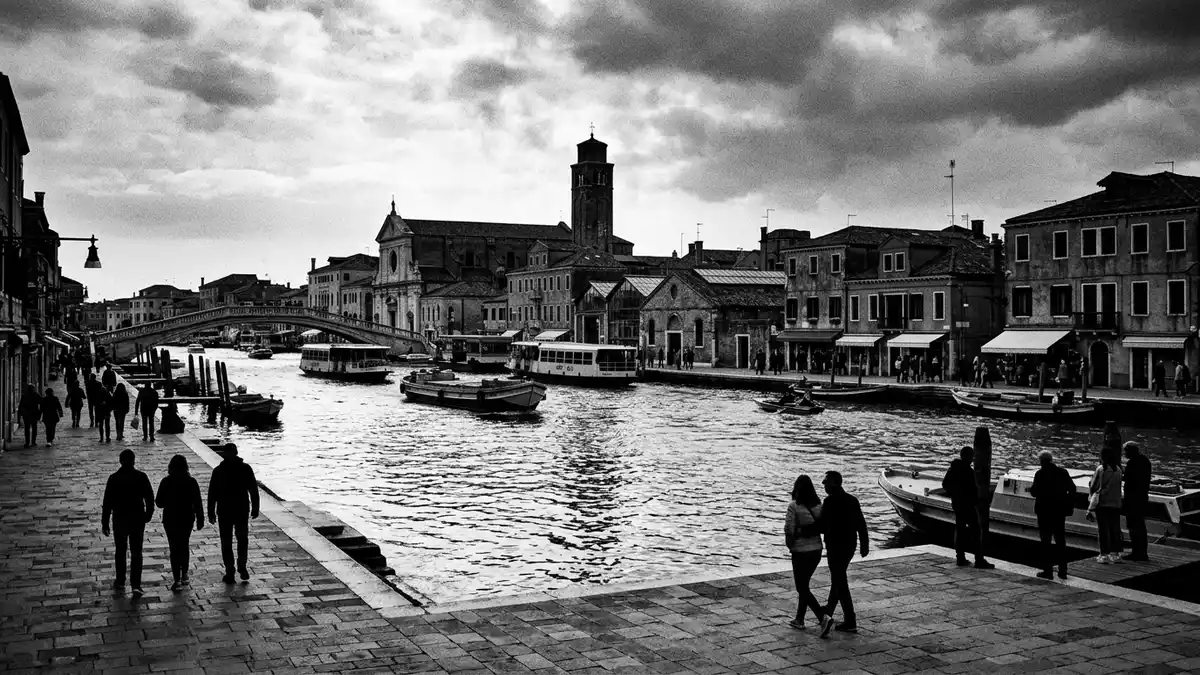
Murano is the lagoon island where Venetian glassmaking was concentrated by law in 1291, and that decision still defines its streets, canals and workshops. The island also holds the Basilica di Santi Maria e Donato, so the place reads as both craft centre and parish landscape.
Glass, law and the island’s identity
The strongest fact about Murano is its long association with glass. Venice moved furnaces to the island in 1291, and Murano became the main name attached to Venetian glass, from clear cristallo to millefiori and aventurine.
The island’s glass museums and workshops keep that identity visible. The Museo del Vetro occupies the former residence of the bishops of Torcello, and its collections trace the history of Murano glass across several centuries. The island name remains linked to techniques, colour and luxury objects made in the Venetian lagoon.Murano glassmaking
Churches, campi and lagoon edges
Murano is not only a workshop island. The Basilica di Santi Maria e Donato brings together brick, mosaic and a very old religious plan, while the waterfronts and campi give the island a more open civic rhythm than a single monument would suggest.
The lighthouse at the island’s south-eastern end is another fixed point in the view. It marks the edge between built island and open water, and its simple vertical form contrasts with the low mass of the surrounding buildings.Basilica di Santi Maria e Donato Murano Lighthouse
Murano after its glassmakers
Murano’s identity is historical, but it is not frozen. Glass remains the island’s defining craft, yet the streets also work as a lived urban fabric, with bridges, waterfronts and churches carrying daily life alongside the legacy of the furnace.
That layered character gives Murano its interest for travellers who come from Venedig by vaporetto. The island is small enough to read in a walk, but varied enough to move from ecclesiastical architecture to industrial memory without leaving the main canal-side routes.Venice Glass Museum Murano glass techniques
Visiting Murano: what travellers from Western Europe should know
- Murano lies in the Venetian Lagoon, north of Venedig. Vaporetto services connect the island with the city and with nearby lagoon stops.
- The island is flat and compact, with bridges, canals and paved lanes. Walking is the simplest way to move between the glass museum, the basilica and the waterfronts.
- The Basilica di Santi Maria e Donato brings together early religious fabric and mosaics. The Museo del Vetro focuses on the history of Murano glass and sits in a historic palazzo.
- English is widely understood in the visitor-facing parts of the island, while Italian is the everyday language. The currency is the euro.
Searching for Murano on social platforms
These links open searches for Murano on each platform.
Frequently asked questions about Murano
Where is Murano?
Murano is an island in the Venetian Lagoon, close to Venedig. It sits among waterways rather than on the mainland.
What does a visit involve?
The island is compact, with canals, bridges and short walking routes. Its main references are glass workshops, the glass museum and the basilica.
What makes Murano distinctive?
Its identity is tied to Venetian glassmaking, especially after the 1291 move of furnaces to the island. That craft legacy is visible in the museums and in the island’s name.


