
Murano, island of glass in the Venetian Lagoon
Published on 08/31/2026 at 19:42 | Editorial responsibility: Rafael Müller, Editor-in-Chief AD HOC NEWS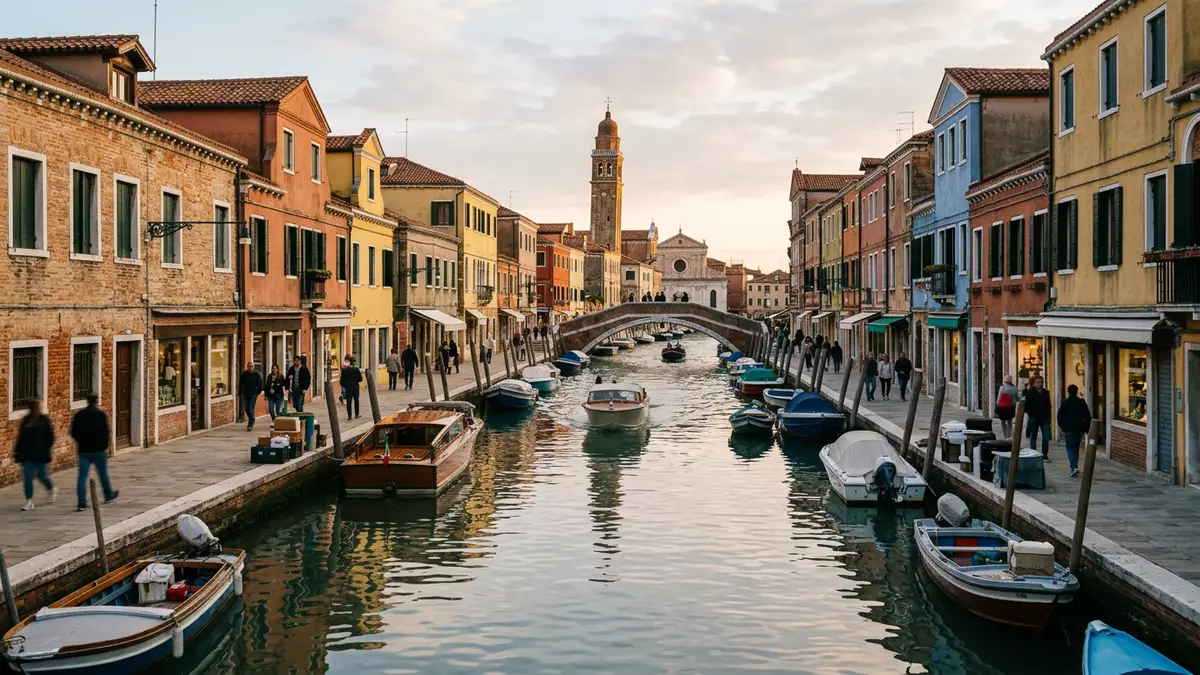
Murano in the Venetian Lagoon is an island where glassmaking, canals and church towers form a single landscape, just north of historic Venedig. It lies a short boat ride from the city’s northern edge, and its identity has been tied to glass furnaces since the thirteenth century, when the Republic of Venice concentrated its glass industry here.
An island built around glass furnaces
Murano is one of the larger settled islands in the northern part of the Venetian Lagoon, separated from the main city of Venice by stretches of shallow water and boat channels. The island has been inhabited since the early medieval period, with documents from the ninth century already mentioning a settlement here under an earlier name; its churches and urban fabric still reflect this long history.Murano is a major island in the lagoon The water around it carries working traffic as well as visitors: barges, workboats and passenger services weave between piers and canal entrances.
The decisive turning point for Murano came in the late thirteenth century, when the Great Council of Venice ordered the relocation of glass furnaces from the densely built city to this island. On 8 November 1291 a decree confined most of the city’s glassworking to Murano, responding to the fire risk posed by open kilns among wooden structures and to a desire to control a lucrative craft.The 1291 decree moving glass industries From that point, glassmakers, their workshops and their families were concentrated here, and the island effectively became an early industrial zone centred on kilns, warehouses and artisan houses.All furnaces were moved to Murano in 1291
Murano glass: techniques, traditions and innovation
Venetian glass already had a history in the lagoon before Murano’s rise, with references to glasswork in Venice from the tenth century and statutes regulating glassmaking in the late thirteenth century.Medieval statutes on glassworking By concentrating furnaces on Murano, the Republic fostered a specialised community of masters and workshops whose techniques came to define Venetian glass for centuries. From the medieval and Renaissance periods onwards, the island’s furnaces produced fine glass beads, mirrors and later elaborate chandeliers, as well as tableware and decorative pieces for export across Europe.Murano glass beads, mirrors and chandeliers
Murano’s glassmakers developed distinctive materials and methods that are still associated with the island. Aventurine glass, with metallic flecks suspended in its mass, was invented here, adding shimmering surfaces to vessels and ornaments.Aventurine glass was invented on the island Over time the workshops refined colour control, clarity and decorative forms, contributing to what is now known as Venetian glass, a category of glassware closely linked to Murano’s production.Venetian glass concentrated on Murano Techniques such as layering, cane work and intricate shaping are demonstrated in many studios, where furnaces, benches and display rooms occupy adjoining spaces along canals and courtyards.
Churches, canals and daily life on Murano
Beyond its furnaces, Murano presents a compact townscape of canals, quays and parish churches that reflect its role within the wider Venetian world. The island has long had its own ecclesiastical structures; sources mention numerous parishes and religious houses before the Napoleonic period, indicating a complex sacred geography that accompanied its economic life.Murano once had many parishes and monasteries Among these buildings stands a Byzantine-style basilica with brick walls and a campanile, facing onto water and small squares, giving visitors a sense of the lagoon’s early Christian heritage.
Murano’s canals structure movement and outlook. Quays lined with workshops and houses run beside water channels where boats moor at stone steps and timber poles. Bridges arch over these canals, linking clusters of buildings into a continuous urban fabric. Glass studios, shops, residential dwellings and small civic buildings sit close together, so that kilns and domestic spaces are only a short walk apart. The island’s scale means that walking streets and embankments brings repeated views of the lagoon, of distant campanili on other islands and of working boats heading towards Venice or further into the northern lagoon.
Visiting Murano: what travellers from Western Europe should know
- Murano lies to the north of central Venedig in the Venetian Lagoon and is reached by waterbus services from the city, with ACTV routes such as line 12 calling at its piers.
- The island is flat but crossed by canals; visiting involves walking along paved quays and streets and crossing bridges with steps between different parts of the settlement.
- Murano is surrounded by open water channels; in some places workshops and houses stand directly beside the lagoon, with quays providing level access to boat landings.
- The official language is Italian and the currency is the euro.
Searching for Murano on social platforms
These links open searches for Murano on each platform.Frequently asked questions about Murano
Where is Murano in relation to Venedig?
Murano is a major island in the northern Venetian Lagoon, lying just north of the historic centre of Venedig and reached by waterbus from the city.
What can visitors expect on a visit to Murano?
Visitors encounter working glass furnaces, studios and shops alongside canals, bridges and churches, all set within a compact island townscape connected by paved quays.
What makes Murano distinctive among lagoon islands?
Murano is distinctive for its centuries-old concentration of glassmaking, established by a decree of 1291 that moved Venetian furnaces here and turned the island into a specialised centre.


