
Monestir de Poblet: a walled Cistercian world near Vimbodi
Published on 09/18/2026 at 10:50 | Editorial responsibility: Rafael Müller, Editor-in-Chief AD HOC NEWS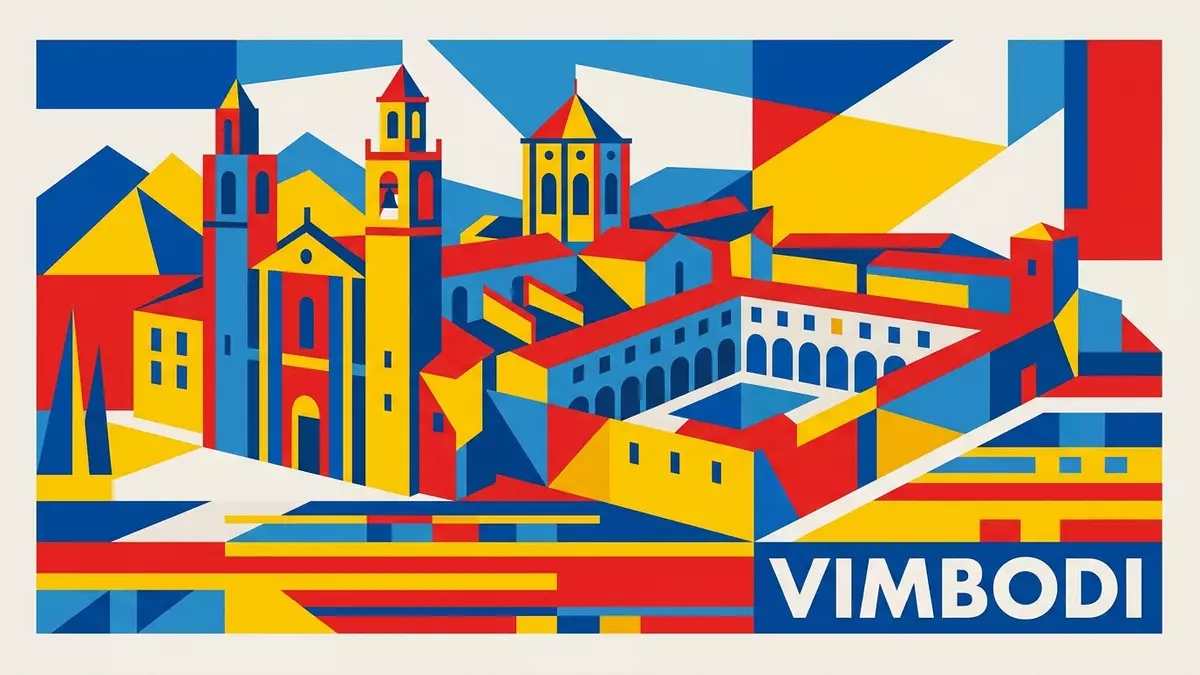
Monestir de Poblet, formally the Royal Monastery of Santa Maria de Poblet, is a Cistercian abbey near Vimbodi i Poblet in Catalonia where stone, walls and courtyards form a contained world at the foot of the Prades Mountains. Founded in the twelfth century and later recognised as a UNESCO World Heritage Site, it combines monastic life with dynastic memory inside one fortified complex.
A royal Cistercian abbey in rural Catalonia
Monestir de Poblet stands in the municipality of Vimbodi i Poblet in the Conca de Barberà region of Tarragona, Catalonia, with its buildings gathered on level ground beneath the wooded slopes known as the bosc de Poblet.Vimbodi i Poblet in Catalonia The monastery complex lies close to the Prades Mountains, a protected upland area that frames the site and reinforces its sense of separation from the wider landscape.foot of the Prades Mountains
The abbey belongs to the Cistercian order and is dedicated to Santa Maria, reflecting the twelfth-century spread of Cistercian houses across Iberia.Cistercian monastery of monks Poblet was founded under the patronage of Ramon Berenguer IV, count of Barcelona, who brought monks from Fontfroide in 1149, and it grew over subsequent centuries into a major religious and political centre.founded by Ramon Berenguer IV
Architecture, cloisters and royal tombs behind the walls
Monestir de Poblet is enclosed within defensive walls that separate the abbey from the surrounding fields, creating a clear threshold between the secular countryside and the monastic precinct.enclosed by defensive walls Inside those walls, the core of the complex is a church dating from the thirteenth century, around which the rest of the buildings were constructed between the twelfth and fifteenth centuries in the sober Cistercian idiom.built in the 12th to 15th centuries
Stone cloisters link the church to living quarters and work spaces, forming courtyards that structure movement and frame views of arcades, roofs and planted centres.one of the largest Cistercian abbeys Within the church and adjoining spaces stands the royal pantheon of the Crown of Aragon, where kings of Aragon and Catalonia were buried from the end of the fourteenth century, adding a layer of dynastic symbolism to the monastic architecture.pantheon of the kings of Catalonia and Aragon
World Heritage recognition and a living monastery
In 1991 Monestir de Poblet was inscribed on the UNESCO World Heritage List as a cultural property, recognised for the completeness of its Cistercian architecture and its role as a royal burial site.inscribed in 1991 UNESCO highlighted the monastery as a major artistic landmark and one of the most complete expressions of Cistercian style from the twelfth to fourteenth centuries, with its fortified royal residence and church at the centre.expression of Cistercian style
The monastery houses a community that follows the Rule of Saint Benedict, and its combination of active religious life, historical architecture and rural setting makes it a distinctive ensemble within Catalonia.monks following the Rule of Saint Benedict The layout of cloisters, church, chapter house and ancillary spaces reflects the Cistercian emphasis on order and clarity, while the enclosing walls and nearby woodland underline its separation from surrounding settlements such as l’Espluga de Francolí.situated near l’Espluga de Francolí
Visiting Monestir de Poblet: what travellers from Western Europe should know
- Monestir de Poblet stands near Vimbodi i Poblet in the province of Tarragona in Catalonia, with access by road from nearby l’Espluga de Francolí along the local T-700 route.
- The monastery complex is set on predominantly level terrain at the edge of agricultural land, with its stone buildings and cloisters enclosed by substantial defensive walls.
- The surrounding landscape includes the lower slopes of the Prades Mountains and the bosc de Poblet woodland, so approaches by road pass through rural scenery before reaching the walled precinct.
- Monestir de Poblet lies in Spain, where the official language is Spanish alongside Catalan and the currency is the euro.
Searching for Monestir de Poblet on social platforms
These links open searches for Monestir de Poblet on each platform.
Frequently asked questions about Monestir de Poblet
Where is Monestir de Poblet located?
Monestir de Poblet is located near Vimbodi i Poblet in the Conca de Barberà comarca of Tarragona, Catalonia, at the foot of the Prades Mountains.
What can visitors expect to see at Monestir de Poblet?
Visitors encounter a fortified Cistercian monastery with stone cloisters, a thirteenth-century church and the royal pantheon of the Crown of Aragon inside its enclosing walls.
What makes Monestir de Poblet distinctive among monasteries?
Its combination of extensive Cistercian architecture, intact defensive walls and role as a royal burial site recognised by UNESCO as World Heritage gives Monestir de Poblet a distinctive character.


