
Miniatur Wunderland in Hamburg, worlds in a warehouse
Published on 09/18/2026 at 06:35 | Editorial responsibility: Rafael Müller, Editor-in-Chief AD HOC NEWS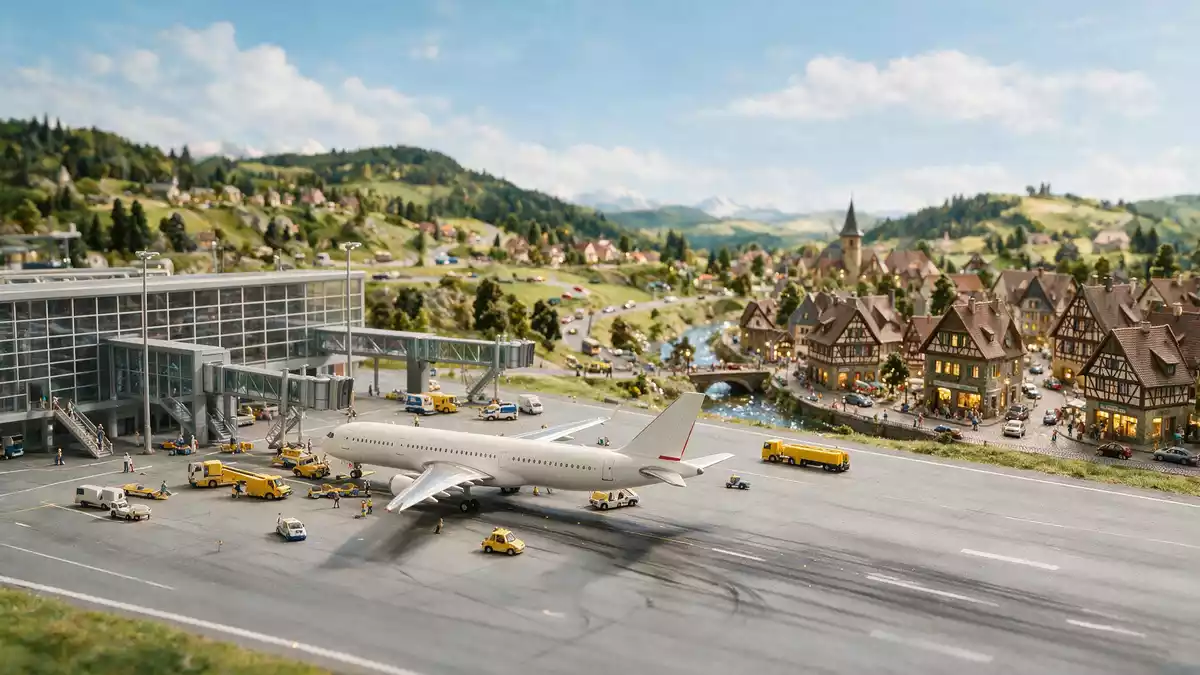
Miniatur Wunderland in Hamburg takes the idea of a model railway and scales it up into an indoor world where entire regions, cities and coastlines unfold across the floors of a brick warehouse in the Speicherstadt. Opened on 16 August 2001 by brothers Frederik and Gerrit Braun alongside co?founder Stephan Hertz, it has grown into a connected landscape of miniature scenes that link German regions with Alpine valleys and distant continents on a single continuous rail network.
A warehouse of interconnected miniature worlds
The setting of Miniatur Wunderland is a former warehouse in Hamburg’s Speicherstadt, the historic dockland district threaded by canals and bridges and lined with red?brick storage buildings. Inside this industrial shell, the attraction occupies several levels of the building, with visitors moving from one themed area to the next as the miniature landscape spans more than one warehouse floor.The attraction occupies several levels of exhibition space rather than a single hall.
The miniature world is divided into distinct sections, each representing a different geographical focus, yet all built to the same H0 scale so that trains and vehicles can pass from one landscape to the next. German regions such as the Harz mountains and Hamburg itself share the building with Alpine scenes depicting Austria and Switzerland, while international areas bring North America, Scandinavia, Italy, Rio de Janeiro, Patagonia and Monaco/Provence into the same connected model environment.Sections range from nearby landscapes to distant continents, giving the exhibition its broad geographic spread.
From the first three sections to a vast indoor landscape
The idea for Miniatur Wunderland took shape in the summer of 2000, when Frederik Braun began developing a concept for a large?scale model railway layout in Hamburg.The concept dates back to summer 2000 and led quickly to construction work inside a Speicherstadt warehouse. The first building phase created an initial model area of roughly 300 m² (3,230 sq ft), split between the three opening sections of Central Germany, Austria and the fictional town of Knuffingen, all ready for visitors by 16 August 2001.An early model world of around 300 square metres with three sections formed the starting point.
Over the years, further themed zones were added, extending the exhibition beyond its original floor into neighbouring warehouse levels and increasing the model area to more than 1,600 m² (17,220 sq ft). The expanding layout incorporated coastal scenery of Hamburg and the German shore, stretches of Scandinavia, additional Alpine terrain and overseas regions within the same network.Later additions expanded the exhibition to over 1,600 square metres of miniature landscape.
Founders, gauges and the scale of the layout
Miniatur Wunderland was founded and developed by Frederik and Gerrit Braun together with their associate Stephan Hertz, who turned their concept into a permanent attraction in Hamburg’s Speicherstadt.The three founders of the Wunderland remain closely associated with the site. The core of the layout uses H0 scale, corresponding to a ratio of 1:87 between the miniature objects and their real?world counterparts, which allows long mainline trains and detailed buildings to occupy the warehouse floors without losing their proportions.The railway network is built in H0 scale, giving the model world a consistent gauge.
Across the exhibition, the miniature railway tracks extend for many kilometres in total length when measured end to end, with digital control systems managing the movement of trains through tunnels, stations and bridges.The layout features a multi?kilometre track network combined with signals and points appropriate to the scale. Roads support model vehicles, harbours and airport scenes accommodate ships and planes, and countless small figures and structures give each section its own character within the shared technical framework.
Visiting Miniatur Wunderland: what travellers from Western Europe should know
- Miniatur Wunderland stands in Hamburg’s Speicherstadt district, in a former warehouse on Kehrwieder in the dockland area, reached on foot or by public transport from central Hamburg.
- Inside the building, visitors move between several levels linked by staircases and lifts, with long walkways around the model sections and areas where people pause to watch trains and scenes.
- The official language is German and the currency is the euro.
Searching for Miniatur Wunderland on social platforms
These links open searches for Miniatur Wunderland on each platform.Frequently asked questions about Miniatur Wunderland
Where is Miniatur Wunderland located in Hamburg?
Miniatur Wunderland is housed in a brick warehouse in Hamburg’s Speicherstadt district, in the Kehrwieder area of the docklands close to the city centre.
What can visitors expect during a visit?
Visitors walk through several floors of interconnected model landscapes, observing trains, vehicles and detailed scenes that depict regions from Germany, the Alps and overseas.
What makes Miniatur Wunderland distinctive among model railways?
Its distinction lies in the combination of a multi?kilometre H0?scale railway network with large themed sections covering both local German settings and distant international landscapes.


