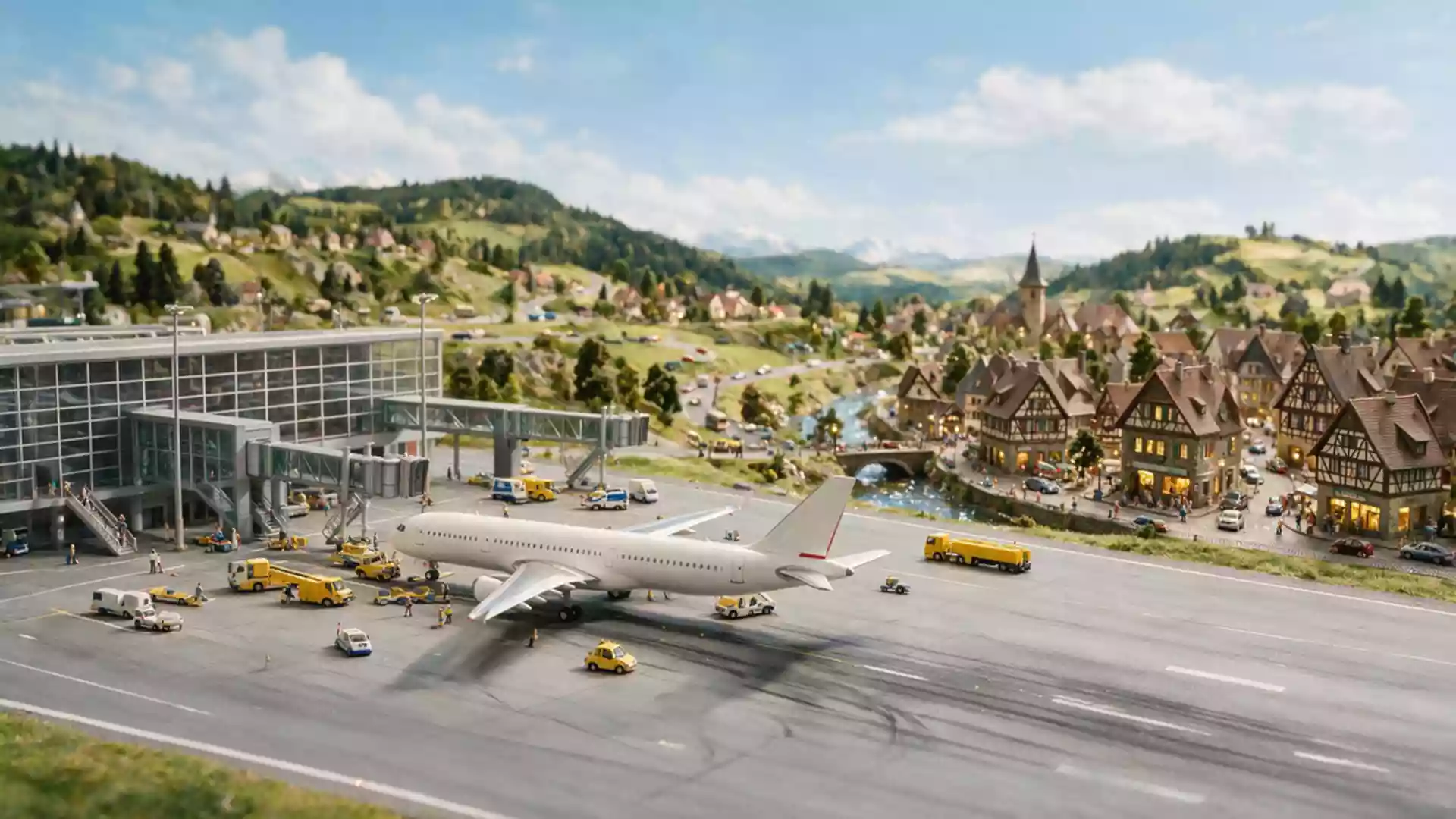
Miniatur Wunderland’s worlds within a warehouse in Hamburg
Published on 08/28/2026 at 10:16 | Editorial responsibility: Rafael Müller, Editor-in-Chief AD HOC NEWS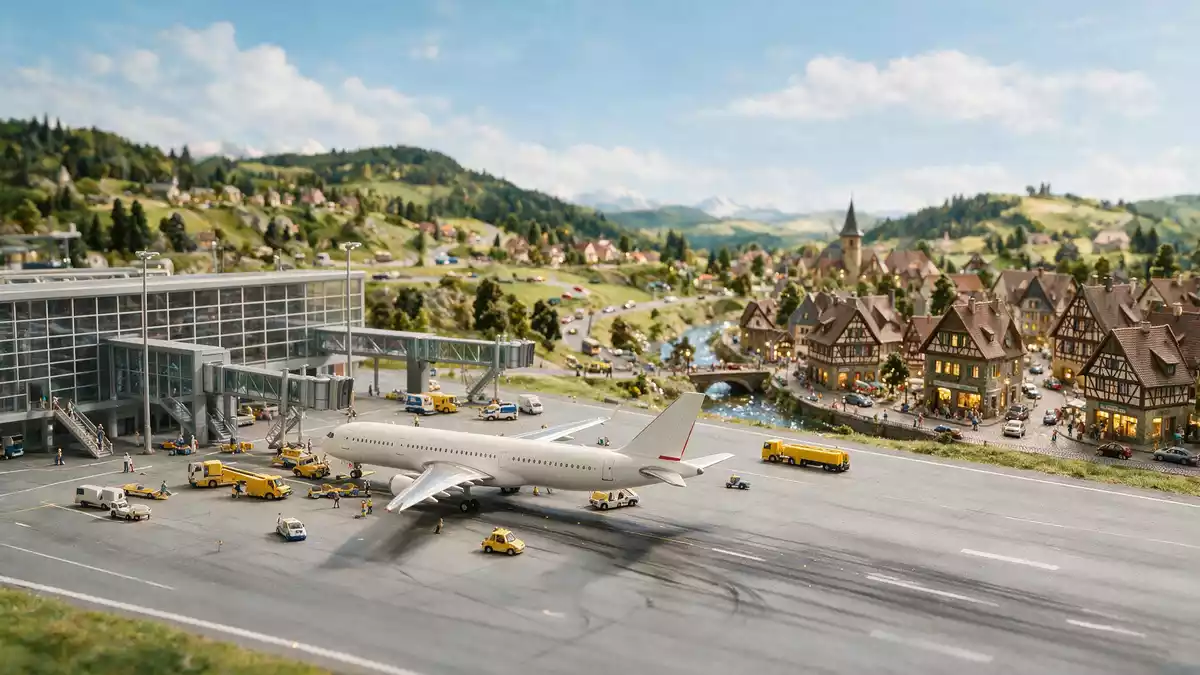
Miniatur Wunderland in Hamburg takes the idea of a model railway and stretches it across an historic brick warehouse, turning an industrial shell into a sprawling miniature world of railways, cities and landscapes. Opened to visitors on 16 August 2001 by brothers Frederik and Gerrit Braun and their co?founder Stephan Hertz, it has grown section by section into an indoor universe of detailed scenes drawn from Germany, Europe and beyond.Opened on 16 August 2001
A model world on an old port island
Miniatur Wunderland occupies upper floors of a former warehouse in Hamburg’s Speicherstadt, the brick?built storage district that was constructed in the late nineteenth century on Brook Island for the city’s free port.The Speicherstadt was built at the end of the nineteenth century The long façades and repetitive rows of windows outside contrast with interiors packed with tracks, bridges and miniature buildings laid out on raised platforms.
Inside, the exhibition is divided into themed sections, each occupying its own area of model landscape. The initial worlds of Central Germany, Austria and the fictional town of Knuffingen were the first to open in 2001, set within roughly 300 square metres (3,230 sq ft) of space in the building.Around 300 square metres of model world were ready for opening Later additions extended the model landscape far beyond Germany, bringing North European coasts, Alpine valleys and overseas regions into the same hall.
From a two?page concept to expanding miniature continents
The idea for Miniatur Wunderland emerged in the summer of 2000 when Frederik Braun visited a model railway shop in Zurich and considered building a vast layout in Hamburg.The concept dates back to summer 2000 Construction on the first sections began later that year, and within months the founders had turned one floor of a Speicherstadt warehouse into a model landscape where trains, vehicles and tiny figures share elaborate scenery.
Over the years, new themed zones have been added, expanding the exhibition to more than 1,600 square metres (17,220 sq ft) of model area.Over 1,600 square metres of model space Sections cover regions such as Hamburg and the German coast, parts of Scandinavia and Alpine scenery, alongside more distant landscapes. Each world blends familiar landmarks with imaginative elements, arranged so that trains and road vehicles pass from one scene to the next, linking coastlines, city districts and mountain passes in miniature.
Moving trains, changing light and dense detail
Miniatur Wunderland is built around a complex model railway system, but the trains share space with a large number of road vehicles, ships and aircraft that move through the scenes. Control systems behind the scenes coordinate hundreds of trains and cars along kilometres of track and roadway, creating continuous motion across the platforms.Thousands of figures, vehicles and trees fill the early sections The layout incorporates bridges, tunnels and multi?level track, so trains appear and reappear as they circle through city and countryside.
Lighting plays a central role in how the miniature worlds are presented. A day?night cycle runs across the exhibition, with a large number of individually controllable lights simulating street lighting, building interiors and vehicles.Hundreds of thousands of controllable lights support a day?night cycle Scenes shift from daylight to dusk and darkness, revealing different details as neon signs, house windows and navigation lights take over from natural light. Many figures and small tableaux are arranged so that closer inspection reveals everyday situations, celebrations and industrial work frozen at miniature scale.
Visiting Miniatur Wunderland: what travellers from Western Europe should know
- Miniatur Wunderland stands in Hamburg’s Speicherstadt district, within former brick warehouses south of the Zollkanal. The area is reached by city public transport and is close to other harbour?side attractions.
- Access to the exhibition involves moving between floors inside the warehouse on staircases and lifts, and the model worlds themselves are viewed from walkways that run alongside and between the large layouts.
- Hamburg lies in northern Germany and the official language is German; the national currency is the euro.
- Entry requirements depend on your nationality; UK travellers can check the FCDO travel advice at gov.uk/foreign-travel-advice, Irish travellers the Department of Foreign Affairs at ireland.ie.
Searching for Miniatur Wunderland on social platforms
These links open searches for Miniatur Wunderland on each platform.Frequently asked questions about Miniatur Wunderland
Where is Miniatur Wunderland located?
Miniatur Wunderland is located in Hamburg in northern Germany, inside former warehouse buildings in the city’s Speicherstadt district on Brook Island.
What can visitors expect inside Miniatur Wunderland?
Visitors walk through halls filled with large model landscapes where trains, cars and aircraft move through detailed scenes, presented under changing day?night lighting.
What makes Miniatur Wunderland distinctive among model railways?
Its scale, the number of themed sections drawn from different regions and the integration of moving vehicles and complex lighting across more than 1,600 square metres set it apart from typical layouts.