
Medina of Tripoli between harbour walls and historic lanes
Published on 09/16/2026 at 20:47 | Editorial responsibility: Rafael Müller, Editor-in-Chief AD HOC NEWS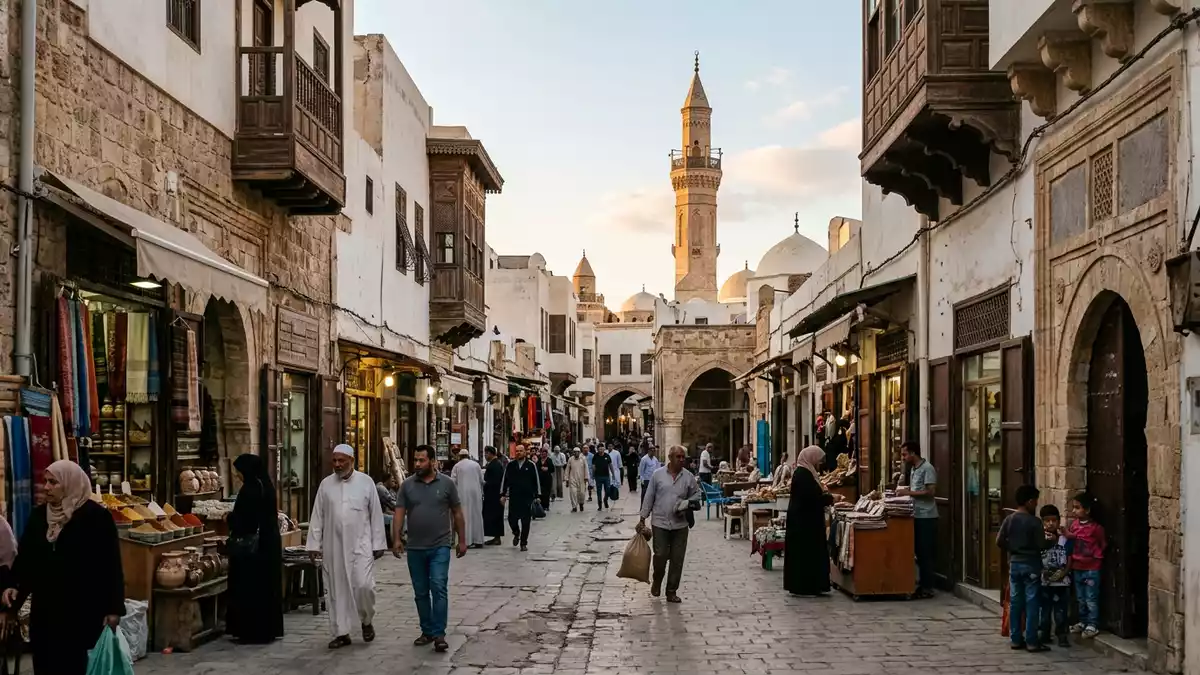
Medina of Tripoli is the historic walled old city of Tripolis in Libya, a compact quarter pressed between the harbour and the newer districts on the Mediterranean coast. It forms the ancient centre of the capital, with streets and buildings shaped over centuries of trading and rule from ancient Oea through the Ottoman and Karamanli periods.
A harbour-side old city framed by walls and water
Medina of Tripoli lies along the harbour in central Tripolis on Libya’s Mediterranean coast, bounded by the waterfront and the wider modern city around it.The ancient walled city lies along the harbour Buildings rise in a compact mass behind the harbour embankment and the coastal road, creating a dense urban silhouette distinct from the broader avenues and open spaces of the newer quarters.Medina of Tripoli forms the ancient walled centre along the harbour
The medina is enclosed by stretches of wall whose form was fixed when the town was refortified under Ottoman rule in the sixteenth century, giving the old city a roughly pentagonal outline against the sea.Ottoman refortification in the sixteenth century determined the pentagonal layout Within this frame, gates once controlled access between the harbour, the inland routes and the clustered streets of the quarter, marking the transition from open waterfront to enclosed town.
Layers of history in mosques, arches and houses
The fabric of Medina of Tripoli carries visible layers from different periods of the city’s history, reflecting its role as a long-standing port and trading centre.The Old City of Tripoli is the ancient centre overlooking the sea and surrounded by a wall Among the most recognisable landmarks is the Red Castle, a fortress that dominates the waterfront and stands close to the edge of the medina as a reminder of defensive needs along the coast.The Red Castle stands near the old streets as a historic anchor
Within the quarter, religious and civic buildings mark key phases of development. The marble triumphal arch of Marcus Aurelius from the second century AD survives among later structures, recalling Tripoli’s ancient identity as Oea under Roman rule.The Marcus Aurelius arch dates from 163 AD Nearby, mosques such as the Gurgi Mosque, completed in 1883, and the Karamanli Mosque from the eighteenth century stand as examples of Ottoman-era religious architecture within the walled city, their minarets rising above surrounding roofs.
Street pattern, markets and everyday life in the medina
Medina of Tripoli is characterised by a dense pattern of narrow streets and small squares, shaped by centuries of incremental building rather than by a single plan.Dense streets draw together Arab, Ottoman and Italian-era layers in a compact urban fabric Lanes twist between simple houses, caravanserais, religious schools and old consular buildings, creating an intimate scale in contrast with the larger blocks of the twentieth-century districts beyond the walls.
The medina remains a lived quarter rather than a museum. Souks and specialist markets, including areas where gold is traded and everyday goods are sold, sit in its streets alongside cafés and small shops, keeping trading traditions visible amid historic architecture.Gold and other goods are sold within the medina In quieter alleys, old doors, window frames and shaded passages show a more domestic side of the quarter, where everyday life and long history have long coexisted.
Visiting Medina of Tripoli: what travellers from Western Europe should know
- Medina of Tripoli lies along the harbour in central Tripolis on Libya’s Mediterranean coast and is reached from other districts by city roads and local streets.
- The quarter is enclosed by historic walls, and exploring its streets involves walking through narrow lanes and passages that can feel enclosed and irregular underfoot.
- The old city is adjacent to central squares and the waterfront, so views of the harbour and the coastal road appear at several points around its edge.
- The official language is Arabic and the currency is the Libyan dinar. Entry requirements depend on your nationality; UK travellers can check the FCDO travel advice at gov.uk/foreign-travel-advice, Irish travellers the Department of Foreign Affairs at ireland.ie.
Searching for Medina of Tripoli on social platforms
These links open searches for Medina of Tripoli on each platform.
Frequently asked questions about Medina of Tripoli
Where is Medina of Tripoli located?
Medina of Tripoli is in central Tripolis on Libya’s Mediterranean coast, lying along the harbour and enclosed by historic walls that mark the edge of the old quarter.
What can visitors expect when walking through the medina?
Visitors encounter narrow streets, small squares, historic mosques, markets and houses, with landmarks such as the Red Castle and the arch of Marcus Aurelius close to the waterfront.
What makes Medina of Tripoli distinctive among old cities?
Its combination of a harbour-side setting, surviving fortifications, Roman and Ottoman-era landmarks and a still-lived street network gives Medina of Tripoli a layered character within Libya’s capital.


