
Masjed-e Nasir ol-Molk and its kaleidoscope of colour
Published on 08/31/2026 at 22:34 | Editorial responsibility: Rafael Müller, Editor-in-Chief AD HOC NEWS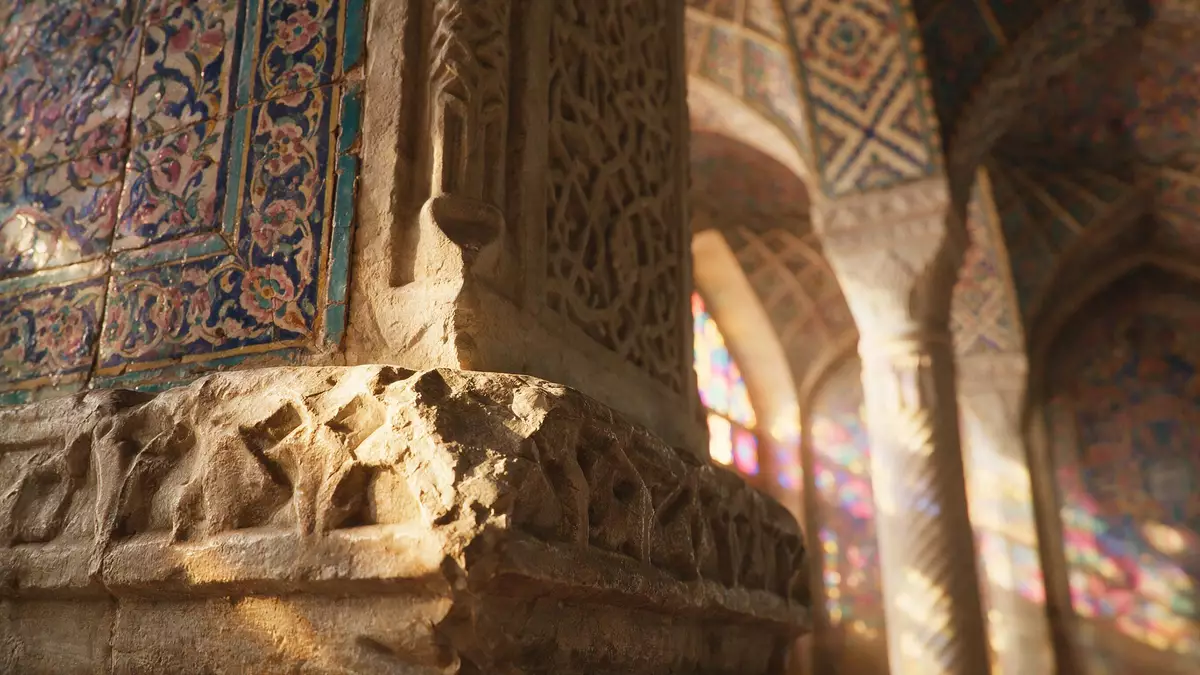
Masjed-e Nasir ol-Molk in Shiraz is a Qajar-era mosque where coloured glass, pink tiles and carved stone turn the morning light into a moving pattern across floors and arches. Completed in 1888 under the patronage of Mirza Hasan Ali Nasir al-Mulk, it stands in a modest neighbourhood south of Lotfali Khan Zand Street as one of Iran’s most elaborate exercises in light and colour in mosque architecture.Masjed-e Nasir ol-Molk
Qajar patrons, craftsmen and a late nineteenth-century mosque
Masjed-e Nasir ol-Molk belongs to the architectural world of the Qajar dynasty, when ornamental tilework, courtyards and shabestans were adapted to changing urban districts and tastes.Nasir al-Mulk Mosque is one of the architectural buildings of the Qajar period The mosque was commissioned by Mirza Hasan Ali Nasir al-Mulk, a local nobleman and governor of Fars, who gave his name to the building and oversaw its construction during the reign of Naser al-Din Shah Qajar.it took 12 years to complete in 1888
Construction began in 1876 and continued for twelve years, reaching completion in 1888.the construction of mosque had begun in 1876 and continues 12 years till 1888 The design is attributed to Haj Mohammad Hasan-e Memar, a master builder who also worked on the Eram Garden in Shiraz, together with craftsmen such as Mohammad Reza K?shi-S?z-e Šir?zi, whose work in tile and brick appears across the surfaces.designed by Mohammad Hasan-e-Mem?r In plan and detail the mosque follows established Iranian patterns, yet its dense colour and stained glass give the Qajar vocabulary a distinct character.
Courtyard, iwans and the mosque’s layered spaces
The mosque is organised around a central courtyard, an arrangement familiar from many Iranian religious buildings. A pool occupies the centre, with planted borders and paved walkways, and the courtyard is framed by iwans on the north and south sides and enclosed spaces to east and west.central courtyard, which houses a place pool, is surrounded by north and south iwans This layered sequence of open and roofed areas, from street to entrance portal, from entrance to courtyard and from courtyard into shabestans, is typical of Iranian mosque design from earlier centuries and survives here in finely adjusted proportions.
On the western and eastern sides are shabestans, enclosed prayer halls that remain central to the spatial experience of Masjed-e Nasir ol-Molk.Nasir al-Mulk Mosque enjoys two Shabestans The western shabestan, sometimes described as the winter hall, is divided by two rows of stone columns carved with spiral fluting and stylised capitals; their rhythm sets out bays of brick vaulting and directs views towards the eastern wall lined with stained glass. The eastern shabestan forms a quieter counterpart with its own sequence of arches and niches, contributing to the sense of the building as a composed hierarchy of spaces rather than a single hall.
Stained glass, pink tiles and the play of light
The quality that has given Masjed-e Nasir ol-Molk its reputation is the way light interacts with coloured materials. Large wooden windows in the western shabestan are filled with stained glass panels that spread bands of colour across carpets and stone surfaces when the sun reaches them.stained glass windows in the western prayer hall The glass is set into geometric and floral patterns that echo the forms of the tilework and stucco, turning the interior into an intricate field of repeated motifs.
The nickname “Pink Mosque” arises from the extensive use of tiles in shades of rose, magenta and soft red alongside blues and yellows.pink-hued tiles and colorful stained glass windows Seven-colour tiles carry arabesques, floral sprays, calligraphic bands and small figurative details that reflect Qajar taste for elaborate ornament. Muqarnas work appears in entrance vaults and niches, breaking surfaces into small facets. Together the stained glass, pink tile and carved stone create a visual texture that changes with the angle and strength of the light, making the mosque as much an exploration of colour as of structure.
Visiting Masjed-e Nasir ol-Molk: what travellers from Western Europe should know
- Masjed-e Nasir ol-Molk stands in the Gowd-e Araban district of Shiraz, south of Lotfali Khan Zand Street, within walking distance of the Shah Cheragh shrine and other historic sites.
- The mosque complex is built around a courtyard with a pool and paved paths; access to the western shabestan involves passing through the entrance iwan and crossing the open court.
- The interior shabestans are roofed spaces with stone columns and brick vaulting, and visitors spend time standing or sitting on carpets beneath the stained glass windows.
- The official language in Shiraz is Persian and the currency is the Iranian rial.
- Entry requirements depend on your nationality; UK travellers can check the FCDO travel advice at gov.uk/foreign-travel-advice, Irish travellers the Department of Foreign Affairs at ireland.ie.
Searching for Masjed-e Nasir ol-Molk on social platforms
These links open searches for Masjed-e Nasir ol-Molk on each platform.
Frequently asked questions about Masjed-e Nasir ol-Molk
Where is Masjed-e Nasir ol-Molk located?
Masjed-e Nasir ol-Molk is in the Gowd-e Araban district of Shiraz, in Fars province in Iran, south of Lotfali Khan Zand Street.
What should visitors expect inside the mosque?
Visitors encounter a courtyard with a central pool, richly tiled entrance vaults and shabestans where stained glass windows cast coloured patterns across stone columns and carpets.
What makes Masjed-e Nasir ol-Molk distinctive among mosques?
The combination of late Qajar architecture, pink-hued tiles and extensive stained glass in the western shabestan gives Masjed-e Nasir ol-Molk an unusual emphasis on colour and light.


