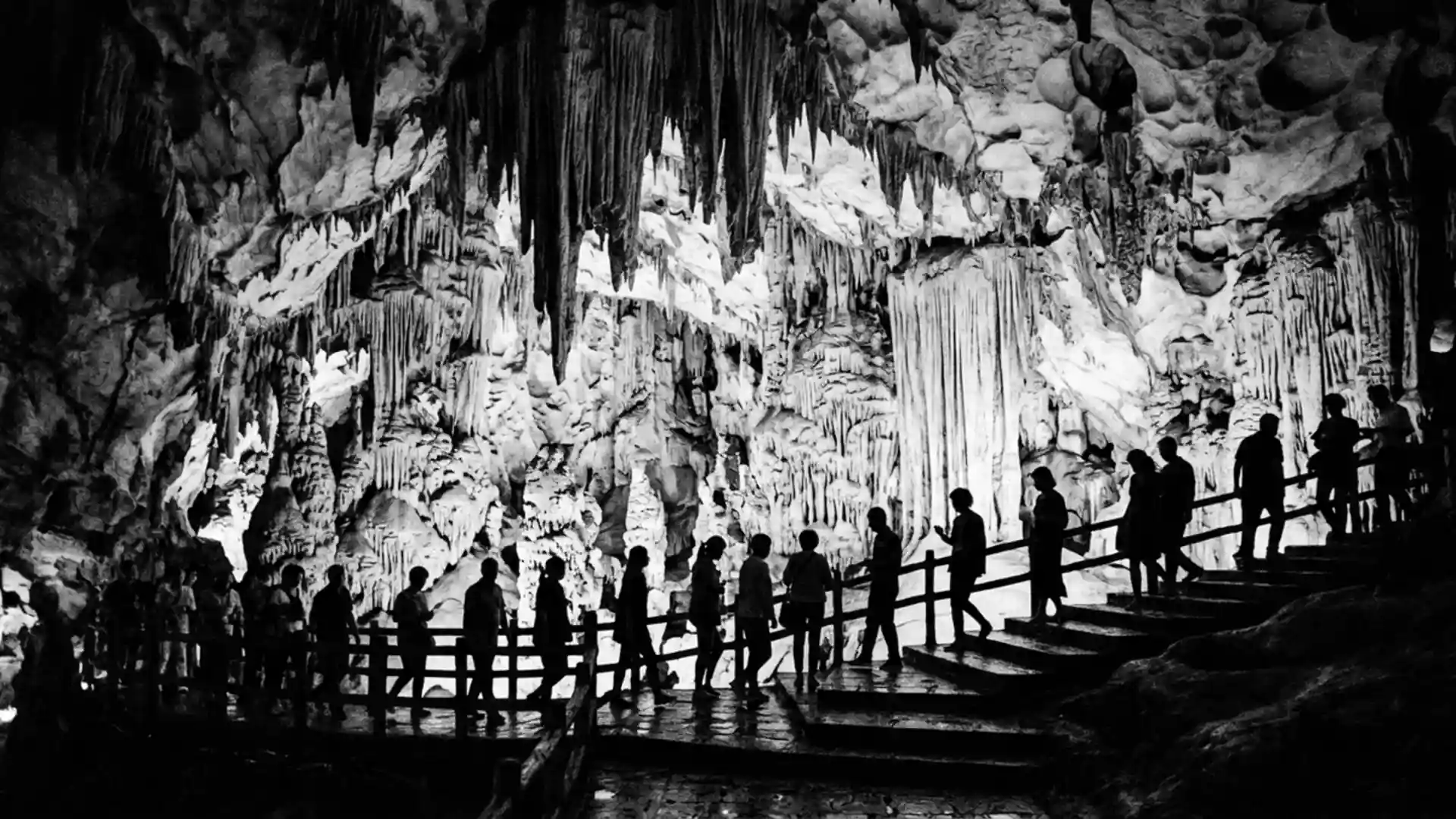
Ludi Yan in Guilin and its limestone chambers beneath Guangming Hill
Published on 09/11/2026 at 10:55 | Editorial responsibility: Rafael Müller, Editor-in-Chief AD HOC NEWS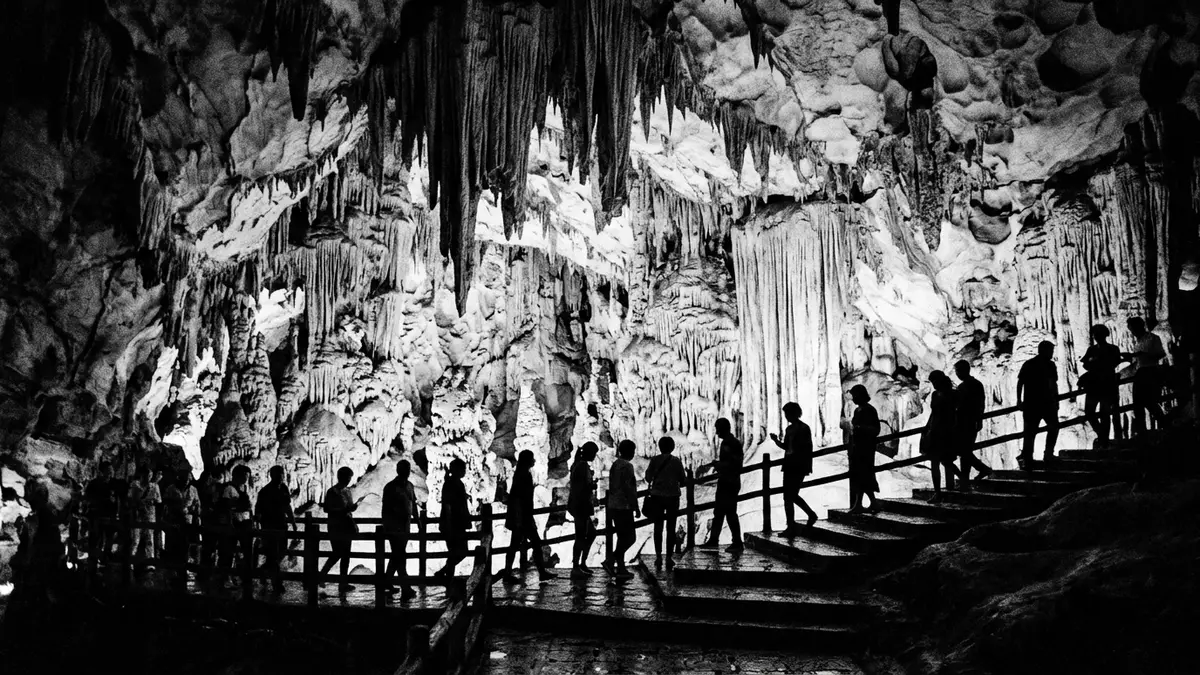
Ludi Yan in Guilin, known internationally as Reed Flute Cave, is a natural limestone cavern cut into Guangming Hill on the north-western side of the city in southern China. Set within the wider Guilin karst landscape, it offers a compact underground route where stalactites, stalagmites and other limestone formations share the same space as coloured lighting and carved inscriptions.
A karst cave under Guangming Hill
Ludi Yan is a water-eroded limestone cave within the Guilin karst, the band of tower-like hills and underground voids that forms part of the broader South China Karst region in Guangxi.water-eroded limestone cave within the wider Guilin karst The cavern lies on Guangming Hill, a karst hill that rises on the north-western outskirts of Guilin, with its entrance located near Ludi Road in Xiufeng District on the southern flank of the hill.on the northwestern outskirts of Guilin, on the southern shoulder of the Guangming Hill
The mapped length of Ludi Yan is about 240 m (787 ft), and the built visitor path follows this underground route through a sequence of halls and connecting passages.Length 240 m Ceiling height and width vary along the way, opening in places into broader chambers where limestone formations rise from the floor and descend from above, while narrower sections feel more enclosed. The cave is reached on foot once visitors arrive at the entrance zone, and inside the path and steps are constructed to guide the route through the chambers.
Forms, inscriptions and coloured light
Inside Ludi Yan the limestone has taken on a range of forms that are characteristic of karst caves. Gravity and mineral-rich water have produced stalactites hanging from the ceiling, stalagmites rising from the floor and pillars where the two meet, alongside flowstone drapery and other carbonate deposits shaped over long periods.a spectacular world of various stalactites, stone pillars and rock formations Many of these formations have acquired descriptive names, and some sections are presented as halls, with the chamber scale emphasised by the lighting.
The cavern is also known for stone inscriptions left on its walls, including ink writings from historical periods that reflect earlier visits and cultural interest in the cave landscape.medieval ink inscriptions Modern coloured lighting has been installed along the route, picking out formations in blues, greens and warmer tones, so that the limestone chambers appear almost theatrical in places. Visitors follow the path through these lit spaces, with viewpoints arranged to frame particular formations or groups of pillars and to show the contrast between the natural rock and the added light.
The name Ludi Yan and Guilin’s karst setting
The Chinese name Ludi Yan (???), written in pinyin as Lúdí Yán, refers to reed flutes, and the English name Reed Flute Cave carries the same meaning.Chinese: ???; pinyin: Lúdí Yán The surrounding area has long been associated with reeds whose hollow stems can be used to make simple flutes, and this plant connection is reflected in both the Chinese and English names.known for the reeds that grow outside that are hollow and can be made into flutes
Ludi Yan sits within the wider karst landscape for which Guilin is known, where limestone hills rise steeply from the surrounding ground and rivers wind between them.Guilin’s karst landscape continues underground as a sequence of chambers The cave is one expression of this geology beneath Guangming Hill, while above ground the same rock appears as towers and ridges. For visitors who have seen Guilin’s hills from the river or nearby viewpoints, entering Ludi Yan adds an underground perspective on the same limestone, with the chambers and formations revealing how the karst extends below the surface.
Visiting Ludi Yan: what travellers from Western Europe should know
- Ludi Yan is located in Xiufeng District on the north-western side of Guilin, with the cave entrance reached from Ludi Road at the southern foot of Guangming Hill. City buses run to a stop named for Ludi Yan, and visitors complete the approach to the entrance on foot.
- The route through the cave follows a constructed path with steps and changes in gradient, and some sections involve walking through chambers with varying ceiling height and width.
- Ludi Yan lies in southern China, where the official language is Mandarin Chinese and the currency is the Chinese yuan (renminbi).
- Entry requirements depend on your nationality; UK travellers can check the FCDO travel advice at gov.uk/foreign-travel-advice, Irish travellers the Department of Foreign Affairs at ireland.ie.
Searching for Ludi Yan on social platforms
These links open searches for Ludi Yan on each platform.
Frequently asked questions about Ludi Yan
Where is Ludi Yan located in Guilin?
Ludi Yan lies on Guangming Hill on the north-western side of Guilin, in Xiufeng District, with access from Ludi Road at the foot of the hill.
What can visitors expect inside the cave?
Visitors follow a constructed path through limestone chambers filled with stalactites, stalagmites, pillars and flowstone, with coloured lighting and stone inscriptions along the route.
What makes Ludi Yan distinctive among Guilin’s karst sights?
Ludi Yan offers an underground view of the Guilin karst, combining a compact 240 m (787 ft) cave route with named limestone formations and the reed-flute heritage reflected in its Chinese and English names.