
Ludi Yan and its carved limestone world beneath Guangming Hill
Published on 09/03/2026 at 15:03 | Editorial responsibility: Rafael Müller, Editor-in-Chief AD HOC NEWS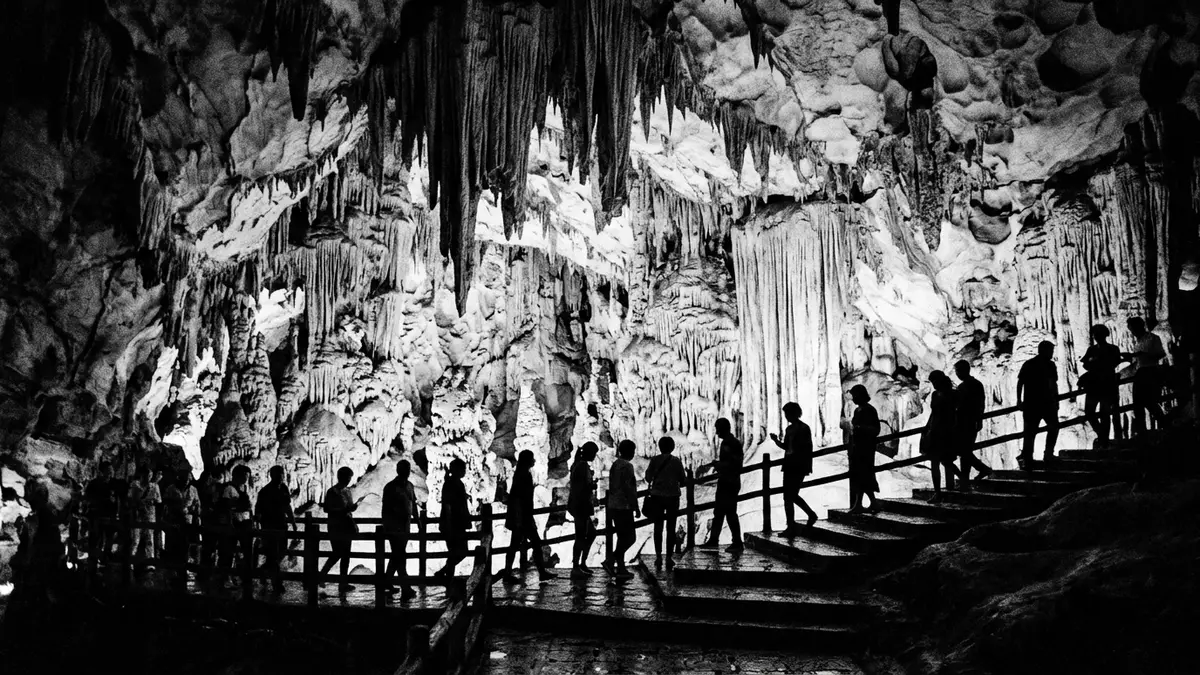
Ludi Yan in Guilin, better known internationally as Reed Flute Cave, is a natural limestone cavern carved into Guangming Hill on the north-western edge of the city in southern China. The Chinese name “Lúdí Yán” refers to the reeds that grow outside the entrance and can be made into flutes, while inside the cave a compact route reveals chambers of stalactites, stalagmites and stone pillars shaped by water and time in the Guilin karst landscape.
Limestone chambers in the Guilin karst
Ludi Yan is a water-eroded limestone cave within the wider Guilin karst, the band of tower-like hills and underground formations that forms part of the South China Karst listed as a UNESCO World Heritage Site.South China Karst listing The cavern runs for about 240 m (787 ft) in length, and the built visitor path follows this underground route through a succession of halls and connecting passages.240 m long water-eroded cave Along the way, the ceiling height and width change, opening at points into larger chambers where limestone formations rise from the floor and descend from above.
The rock forms inside Ludi Yan are classic karst features created by carbonate deposition: stalactites hanging from the ceiling, stalagmites growing upwards and thicker columns where the two meet.stalactites, pillars and rock formations Pools of water reflect these shapes and the installed lighting, doubling the patterns and colours on the stone surfaces. In some chambers, the rock surfaces carry ink inscriptions dating back to the eighth century AD, marking visits and poems from the Tang dynasty and giving the cave a documented human history that runs alongside its geological age.ink inscriptions from AD 792
A route shaped by light and stone
The visitor route through Ludi Yan is organised as a loop, entered and exited on foot and framed by built walkways that keep to one side of the chambers. The main path length is given as about 500 m, extending across the cave’s interior and linking a series of named halls where the rock formations take on recognisable outlines against the lighting.route of about 500 m The overall cave space reaches a maximum height of around 18 m and a width of up to 93 m, so some areas feel broad and high compared with the narrower connecting corridors.maximum height and width
Lighting is a defining feature of a visit, with coloured fixtures directed at stalactites, stalagmites and walls to bring out contours and pick out particular shapes. Reflections in still water mirror these forms, and the stepped path and railings create a clear walking line through the chambers without disturbing the limestone surfaces. The terrain inside remains enclosed and rocky throughout, so solid footwear is a practical choice for the uneven ground and for the stairs at the entrance and exit. The cave has been open to visitors as a scenic site since 1962, which has allowed the route and infrastructure to be established while keeping the focus on the karst formations and inscriptions inside.opened to the public in 1962
Guangming Hill, reeds and Guilin’s landscape
Outside the cave, Ludi Yan sits on the southern shoulder of Guangming Hill, also known as Bright Hill, on the north-western side of Guilin in Guangxi province.location on Guangming Hill The hill is part of the chain of limestone outcrops that characterise the city’s landscape, where rivers and ponds run between steep-sided hills and cliffs. The reeds that lend the cave its name grow near the entrance along Ludi Road, and the built approach leads up from the roadside towards the cave opening.
Ludi Yan lies roughly 5 km north-west of Guilin’s centre, which places it within the city but at the transition to more rural ground, with other hills and water bodies nearby.about 5 km northwest of downtown The cave’s setting within the Guilin karst means that even before entering, visitors see the surrounding hill forms that mirror the underground shapes on a larger scale. As a destination it combines geological interest, recorded history in the form of inscriptions, and a structured underground walk that remains close to the surface yet feels distinct from the city outside.
Visiting Ludi Yan: what travellers from Western Europe should know
- Ludi Yan stands on Guangming Hill in the north-western part of Guilin, reached from Ludi Road by foot along a built approach and then into the cave entrance.
- The route inside follows a constructed path and stairways through enclosed limestone chambers, so visitors need to be prepared for uneven rock surfaces and a sustained walk underground.
- City buses from central Guilin, including services on route 3 and 213, stop near Ludi Yan, making it accessible from the railway station area and other urban districts without long journeys.
- The official language is Chinese and the currency is the renminbi (yuan).
Searching for Ludi Yan on social platforms
These links open searches for Ludi Yan on each platform.
Frequently asked questions about Ludi Yan
Where is Ludi Yan located in Guilin?
Ludi Yan is on Guangming Hill in the north-western part of Guilin, in Guangxi province of southern China, reached from Ludi Road.
What can visitors expect inside the cave?
Visitors walk along a built path through limestone chambers filled with stalactites, stalagmites, stone pillars, pools of water and historic ink inscriptions illuminated by coloured lighting.
What makes Ludi Yan distinctive among Guilin’s sights?
Ludi Yan combines a compact underground karst route of about 240 m with Tang dynasty inscriptions and a hill setting within the broader Guilin karst landscape.


