
Lineas de Nazca, the vast geoglyph landscape of southern Peru
Published on 09/16/2026 at 12:41 | Editorial responsibility: Rafael Müller, Editor-in-Chief AD HOC NEWS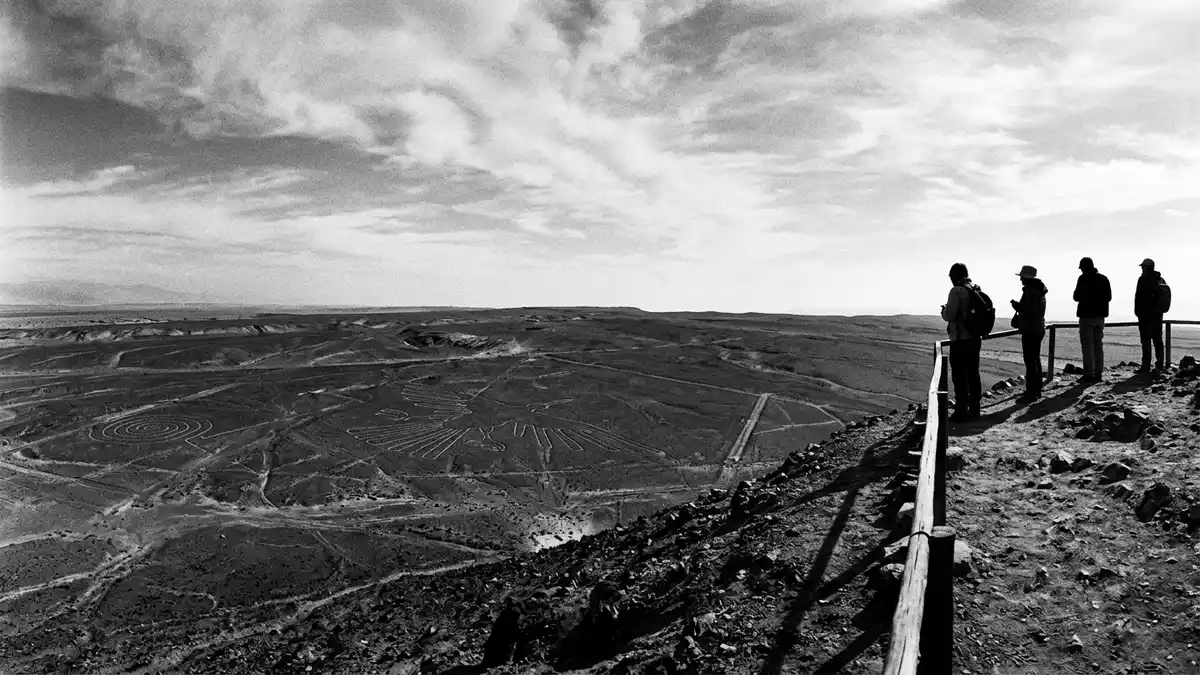
Lineas de Nazca, better known in English as the Nazca Lines, stretch across the desert plateau near Nazca in southern Peru as an immense landscape of ancient geoglyphs cut into the bare ground. The lines and figures occupy arid plains between Nazca and Palpa in the Ica Region and were created by pre-Hispanic societies between around 500 BC and AD 500, forming one of the most extensive groups of ritual desert markings in South America.
A desert plateau turned into a drawn landscape
The lead impression on arrival at Lineas de Nazca is of a wide, pale plateau marked by deliberate lines, shapes and figures that only resolve into coherent forms when seen from a height. The geoglyphs lie on pampas such as the Pampa Colorada and adjacent plains in the basin of the Río Grande de Nasca, where ancient communities cleared away dark stones and soil to expose lighter subsoil in long sweeps across the desert.Lines and Geoglyphs of Nasca and Palpa Archaeological surveys describe nearly 1,200 geoglyphs distributed across hundreds of square kilometres, including long straight lines, geometric figures and stylised animal and plant forms etched into this natural terrace.nearly 1,200 geoglyphs
The arid coastal plain some 400 km south of Lima offers an environment in which the cleared lines remain sharply visible for centuries. Low rainfall and sparse vegetation leave the pale tracks unobstructed, while gentle slopes and plateaus give the figures room to extend for kilometres without interruption.Nazca Lines area From ground level many of the markings blend into the surrounding stones, but elevated viewpoints and aircraft reveal spirals, sweeping bands and long alignments crossing the pampas in carefully plotted directions.
Figures, lines and the span of centuries
The visual vocabulary at Lineas de Nazca ranges from simple linear tracings to complex biomorphic figures. Researchers have documented hundreds of straight lines, some running in broad swathes across the plateau, alongside geometric shapes and numerous animal and plant designs cut into the desert surface.over 800 straight lines Among the most recognisable motifs are creatures such as a hummingbird, a monkey, a spider and various birds, together with stylised plants and abstract patterns that occupy entire patches of the plain.
The making of these geoglyphs spans at least a millennium of Andean cultural history. The earliest figures belong to the Paracas culture in the late first millennium BC, while the principal phase of construction is associated with the Nazca culture between about 200 BC and AD 500, a period reflected in ceramic finds and stratigraphic analysis on the plateau.Nazca civilization period This prolonged activity created a palimpsest of lines and figures in which older hillside designs, later plateau tracings and minor adjustments coexist on the same desert surface, giving the area a layered archaeological character.
World Heritage recognition and archaeological context
Lineas de Nazca form the core of the property officially inscribed as the Lines and Geoglyphs of Nasca and Pampas de Jumana on the UNESCO World Heritage List, a status granted in 1994 under cultural criteria that emphasise their scale, diversity and testimony to ancient ritual traditions.UNESCO inscription in 1994 The protected area covers tens of thousands of hectares of desert plain and low foothills in the provinces of Nazca and Palpa, encompassing both the broad pampas and adjacent slopes where figures and lines appear.
In this wider setting the Nazca Lines sit among other traces of the Nazca culture, including settlements, cemeteries and irrigation works that anchor the desert drawings in a broader archaeological landscape.Nazca culture The combination of large-scale geoglyphs, surrounding sites and a distinctive desert climate makes the plateau an important reference point for the study of pre-Hispanic societies on the south coast of Peru and their ways of marking space.
Visiting Lineas de Nazca: what travellers from Western Europe should know
- Lineas de Nazca lie on desert plains near the town of Nazca in the Ica Region of southern Peru, roughly south of Lima along the coastal corridor.
- The terrain consists of exposed desert ground and low plateaus; access routes and viewpoints involve walking on uneven stony surfaces and climbing steps or ladders to elevated platforms.
- The official language is Spanish and the currency is the Peruvian sol.
- Entry requirements depend on your nationality; UK travellers can check the FCDO travel advice at gov.uk/foreign-travel-advice, Irish travellers the Department of Foreign Affairs at ireland.ie.
Searching for Lineas de Nazca on social platforms
These links open searches for Lineas de Nazca on each platform.
Frequently asked questions about Lineas de Nazca
Where are Lineas de Nazca located?
Lineas de Nazca are located on desert plains northwest of Nazca in the Ica Region of southern Peru, on the arid coastal plateau some distance south of Lima.
What can visitors expect to see at Lineas de Nazca?
Visitors encounter a broad desert landscape marked by long straight lines, geometric shapes and animal and plant figures, many of which become clear from elevated viewpoints and flights.
What makes Lineas de Nazca distinctive among archaeological sites?
The site stands out for the sheer number, scale and precision of its geoglyphs, created over many centuries and recognised as a UNESCO World Heritage Site for their cultural and scientific significance.


