
Leon Viejo, a buried colonial city by lake and volcano
Published on 09/22/2026 at 03:32 | Editorial responsibility: Rafael Müller, Editor-in-Chief AD HOC NEWS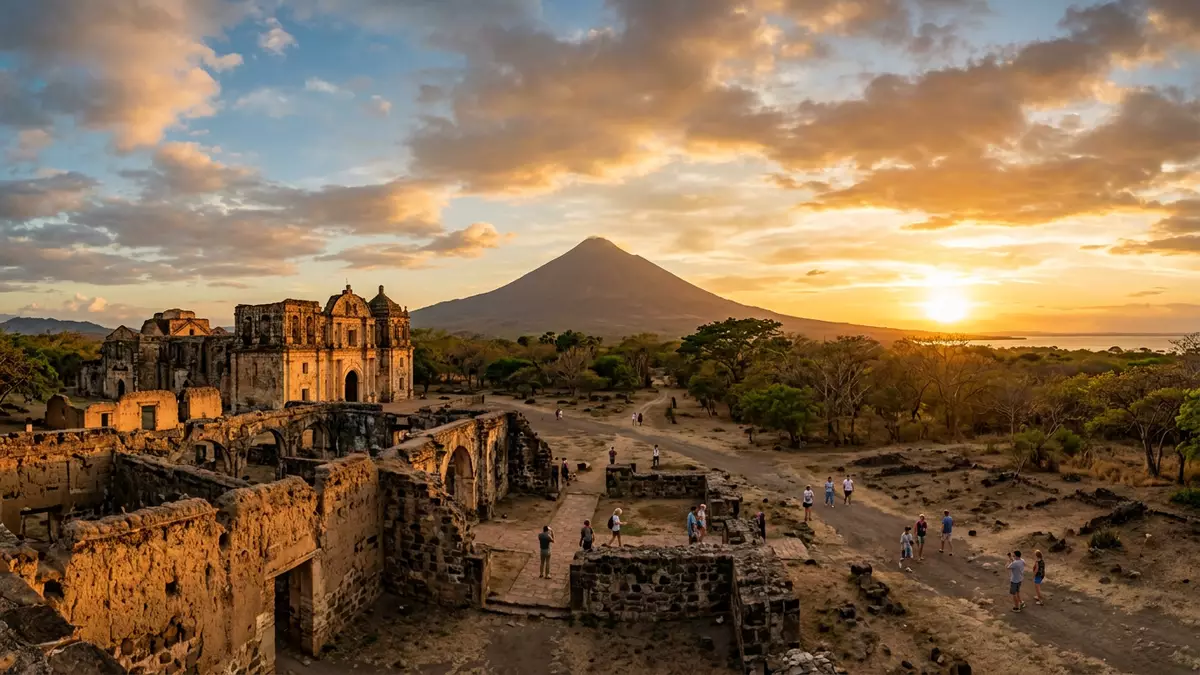
Leon Viejo in western Nicaragua is an archaeological site where the original Spanish colonial city of Leon once stood beside Lake Managua, facing the volcanic cone of Momotombo across the water. Founded in the early sixteenth century and later abandoned, the town’s remains lie partially exposed and partially buried, offering a rare chance to walk through a colonial grid plan that was never rebuilt or transformed by later centuries.
A sixteenth century city fixed in the landscape
The site of Leon Viejo occupies low ground on the western shore of Lake Managua, also known locally as Lake Xolotlan, near the small settlement of Puerto Momotombo in the municipality of La Paz Centro in the Department of Leon.Ruins of Leon Viejo Across the lake rises Momotombo, a stratovolcano whose steep cone dominates views from the ruins and underlines the close relationship between the colonial town and its volcanic surroundings.borders the Managua lake at the foot of the Momotombo volcano
Spanish colonists established the original city of Leon here in 1524 under the name Leon de Nagrando, making it the capital of the colonial province of Nicaragua only a few years later.Established in 1524 The town reached a peak around the middle of the sixteenth century before declining and being abandoned in 1610, when its inhabitants transferred the city to the location of present-day Leon further to the west.León Viejo was abandoned in 1610 Because no substantial rebuilding followed on the original site, the plan and foundations remained undisturbed beneath layers of volcanic ash and soil.
Walking through an undisturbed colonial grid
Leon Viejo is laid out as a Spanish colonial town with a central plaza, civic buildings and religious institutions arranged along straight streets that form a recognisable grid. Excavations and clearance work since the late twentieth century have revealed the outlines of important structures, including the cathedral of Santa Maria de la Gracia, the La Merced convent and the governor’s residence.old cathedral of Santa María de la Gracia and the La Merced convent Low walls and marked foundations trace the footprints of these buildings, while adjacent areas still hold archaeological layers where further remains lie beneath the surface.unearthed structures and adjacent zones
Visitors follow paths through the archaeological park, moving between exposed masonry, identifiable streets and open plots that suggest former courtyards and gardens. The relationship between the main plaza, religious buildings and administrative quarters shows how Spanish authorities organised power and faith in a colonial setting.early Spanish colonial architecture and town planning Because the town was abandoned rather than remodelled, Leon Viejo offers a rare case where the urban layout of an early colonial capital can be read almost like a diagram, with later developments absent.
World Heritage recognition and archaeological work
The ruins of Leon Viejo are recognised internationally as a cultural World Heritage Site and form Nicaragua’s first entry on the UNESCO World Heritage List.Inscribed 2000 The site is valued as one of the oldest Spanish colonial settlements in the Americas, whose undisturbed remains provide strong evidence of the social and economic structures of the Spanish Empire in the sixteenth century.oldest Spanish colonial settlements in the Americas National authorities declared the ruins historic and cultural heritage in the late twentieth century, and the Nicaraguan Institute of Culture oversees conservation and guided access.administered by the Nicaraguan Institute of Culture
Archaeological investigations accelerated after the rediscovery of the site in 1967, when clearance and excavation campaigns began to uncover buried structures and stabilise exposed remains.rediscovery of the Leon Viejo site in 1967 Work continues to document the town’s plan, recover artefacts and understand daily life in a sixteenth century colonial capital. The combination of cleared foundations, interpretive information and surrounding landscape makes Leon Viejo an open-air record of how a Spanish colonial city functioned beside a major lake and volcano.
Visiting Leon Viejo: what travellers from Western Europe should know
- Leon Viejo lies in western Nicaragua in the Department of Leon, near the lakeside settlement of Puerto Momotombo in the municipality of La Paz Centro; it is reached overland from the modern city of Leon or from Managua.
- The archaeological park occupies low ground beside Lake Managua, with paths over uneven terrain between exposed foundations and areas of scrub; moving around the site involves walking on earth tracks and over stone remains.
- The ruins stand on the western shore of Lake Managua opposite Momotombo volcano, so the wider setting includes water, volcanic slopes and rural settlements.
- The official language is Spanish and the currency is the Nicaraguan córdoba.
- Entry requirements depend on your nationality; UK travellers can check the FCDO travel advice at gov.uk/foreign-travel-advice, Irish travellers the Department of Foreign Affairs at ireland.ie.
Searching for Leon Viejo on social platforms
These links open searches for Leon Viejo on each platform.
Frequently asked questions about Leon Viejo
Where is Leon Viejo located?
Leon Viejo is in western Nicaragua in the Department of Leon, near Puerto Momotombo in the municipality of La Paz Centro on the western shore of Lake Managua opposite Momotombo volcano.
What can visitors expect when exploring Leon Viejo?
Visitors walk through an archaeological park of exposed foundations, low walls and marked streets that trace a sixteenth century Spanish colonial town plan beside the lake.
What makes Leon Viejo distinctive among colonial sites?
Leon Viejo was founded in 1524, abandoned in 1610 and later inscribed as a UNESCO World Heritage Site, so its undisturbed ruins preserve an entire early colonial capital without later alterations.


