
Kom Ombo Temple and its mirrored double sanctuary on the Nile
Published on 09/19/2026 at 22:52 | Editorial responsibility: Rafael Müller, Editor-in-Chief AD HOC NEWS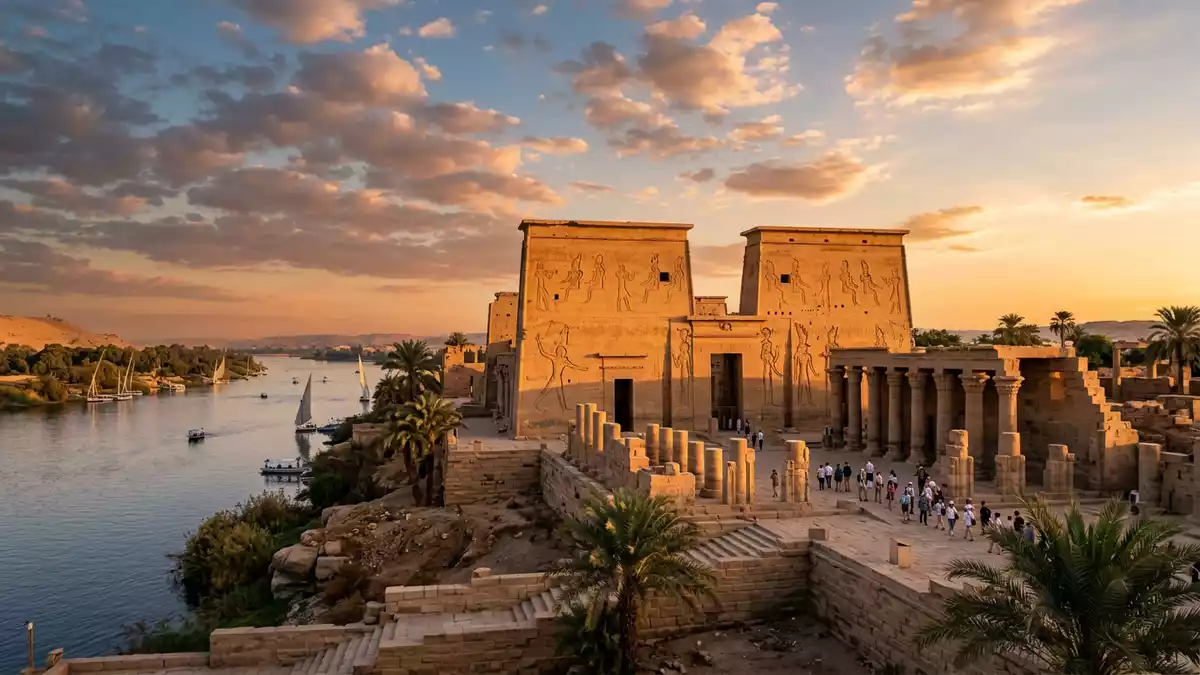
Kom Ombo Temple in Kom Ombo in Upper Egypt is a rare double sanctuary from the Ptolemaic and Roman periods, laid out with two parallel temple axes under one riverside complex.Graeco-Roman Period structure The surviving stonework largely dates between the second century BC and the early centuries AD, when rulers of the Ptolemaic dynasty and Roman emperors added gateways, halls and reliefs.
Kom Ombo Temple on the bend of the Nile
Kom Ombo Temple stands on the east bank of the Nile in the town of Kom Ombo in Upper Egypt, between Aswan and Edfu along the traditional river route through the Aswan Governorate.east bank of the Nile From the stone platforms the river is visible below, with the temple occupying a low rise above the water where ancient processional routes could approach from boats and from the desert edge.
The present complex belongs to the Graeco-Roman Period from 332 BC to 395 AD, with the earliest royal name preserved from Ptolemy VI Philometor in the second century BC and most relief decoration completed under Ptolemy XII Neos Dionysos in the first century BC.Ptolemy VI and Ptolemy XII Later, Roman emperors such as Tiberius added architectural elements and scenes, extending the sanctuary into the first century AD and weaving imperial images into the older religious landscape.Roman-period additions
A double temple for Sobek and Horus the Elder
Kom Ombo is dedicated to two major deities of ancient Egypt: Sobek, the crocodile god linked with the Nile and its dangerous fertility, and Haroeris or Horus the Elder, a falcon god associated with protection and healing.double temple for Sobek and Horus Instead of separating their cults into different buildings, architects laid out two parallel temple axes side by side, with twin gateways, twin forecourts, twin hypostyle halls and paired sanctuaries at the core of the complex.
One half of the plan is associated with Sobek and his divine family, the other with Horus the Elder and his local triad, giving Kom Ombo a mirrored layout in which many features exist in duplicate along slightly different ritual routes.twin ritual routes Reliefs along the walls show offerings to both crocodile and falcon deities, while lists of festivals and medical scenes carved in stone link the dual sanctuaries with wider concerns of health, fertility and royal legitimacy in the late pharaonic world.symmetrical design honouring two gods
Ptolemaic stonework, crocodile cult and carved detail
The main construction phase of Kom Ombo belongs to the Ptolemaic dynasty between 180 BC and 47 BC, during the reigns of Ptolemy VI Philometor and Ptolemy XII Auletes, with successive rulers adding to the stonework and decorative programmes.built between 180 and 47 BC Hypostyle halls supported by rows of sandstone columns lead towards the inner sanctuaries, and carved scenes include detailed depictions of surgical instruments, calendars and ritual offerings that document aspects of Ptolemaic religion and daily practice.
Kom Ombo is closely linked with the crocodile cult of Sobek, and mummified crocodiles found in the area are displayed in a nearby museum, underlining the relationship between the temple rituals and the animals inhabiting the Nile.crocodile god Sobek The surrounding town takes its name from terms meaning “mound” and “golden city”, linking the sanctuary with a longer history of settlement along this stretch of the river and with the broader religious landscape of Upper Egypt.name of Kom Ombo
Visiting Kom Ombo Temple: what travellers from Western Europe should know
- Kom Ombo Temple lies in the town of Kom Ombo on the east bank of the Nile in Upper Egypt, north of Aswan and south of Edfu, and is reached by road or Nile cruise vessels.
- The temple complex stands on a low rise above the river, with stone platforms, broad paved approaches and interior halls whose floors and steps require steady footing on historic sandstone.
- Kom Ombo is part of the Aswan Governorate in Egypt, where the official language is Arabic and the currency is the Egyptian pound.
- Entry requirements depend on your nationality; UK travellers can check the FCDO travel advice at gov.uk/foreign-travel-advice, Irish travellers the Department of Foreign Affairs at ireland.ie.
Searching for Kom Ombo Temple on social platforms
These links open searches for Kom Ombo Temple on each platform.
Frequently asked questions about Kom Ombo Temple
Where is Kom Ombo Temple located?
Kom Ombo Temple stands in the town of Kom Ombo in Upper Egypt on the east bank of the Nile, between Aswan and Edfu along the river corridor.
What should visitors expect on a visit to Kom Ombo Temple?
Visitors encounter a riverside complex with sandstone gateways, columned halls and twin sanctuaries, reached by stone approaches and offering close views of carved reliefs and inscriptions.
What makes Kom Ombo Temple distinctive among Egyptian temples?
Kom Ombo is laid out as a double temple with two parallel axes dedicated to Sobek and Horus the Elder, giving it mirrored gateways, halls and sanctuaries within one enclosure.


