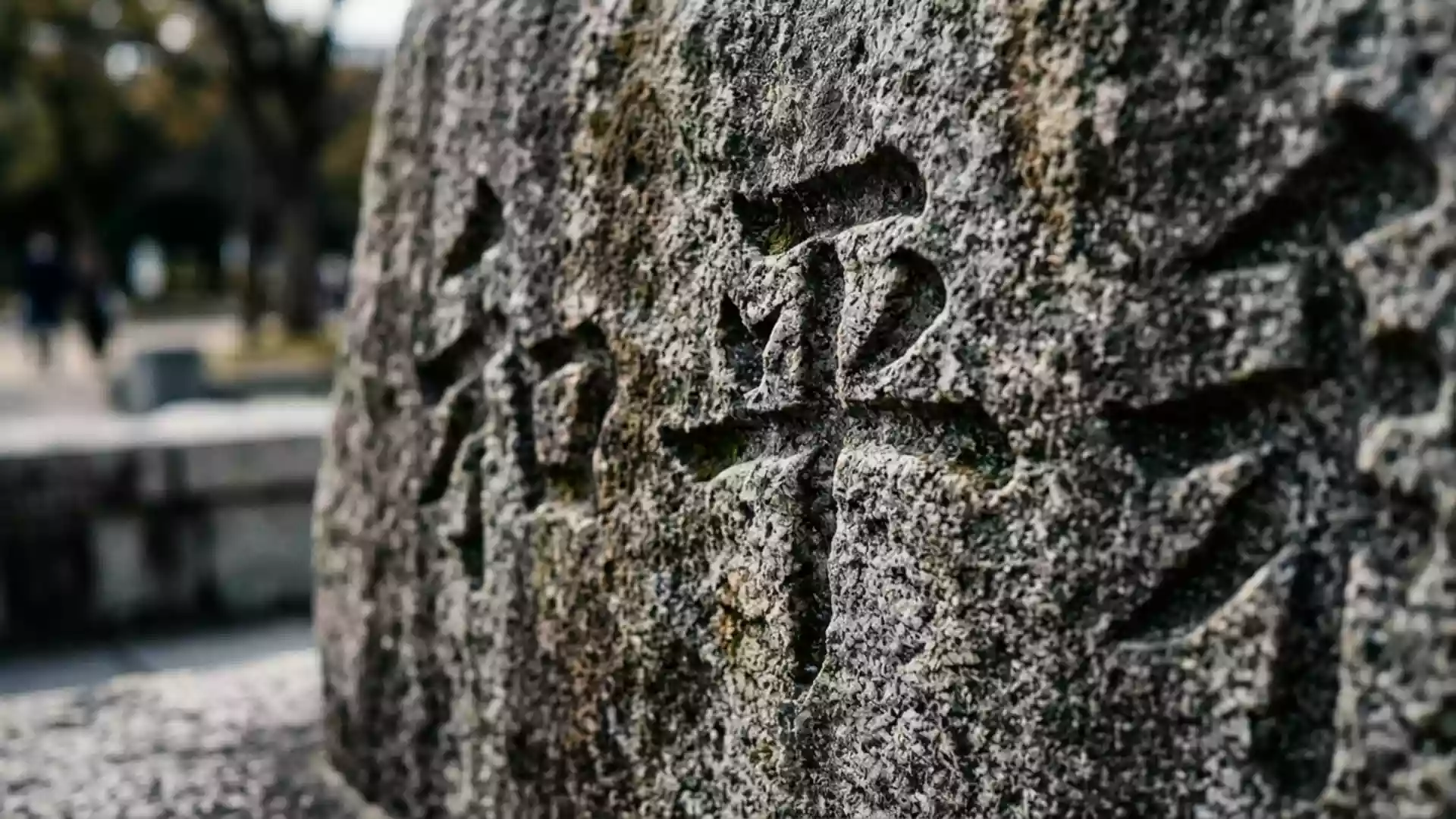
Heiwa Kinen Koen as Hiroshima’s river island of remembrance
Published on 09/09/2026 at 08:46 | Editorial responsibility: Rafael Müller, Editor-in-Chief AD HOC NEWS
Heiwa Kinen Koen in Hiroshima, internationally known as Hiroshima Peace Memorial Park, spreads across a low river island where memorials, lawns and museum buildings occupy ground marked by the atomic bombing of 6 August 1945. Completed in the 1950s as a dedicated peace memorial landscape, it gathers many commemorative structures and the Hiroshima Peace Memorial Museum into a single planned composition in central Hiroshima.
A river island turned into a landscape of remembrance
Heiwa Kinen Koen occupies much of a central river island in Naka ward, bounded by the Motoyasu and Honkawa rivers and linked to the surrounding streets by road bridges. The park covers an area of roughly 122,100 square metres, a broad expanse of grass, trees and paved paths laid out where a dense downtown district once stood.approximately 122,100 square metres The site lies close to the hypocentre of the atomic explosion of 6 August 1945, placing the memory of the event within everyday urban space.close to the hypocentre
The park as a memorial landscape was completed in 1954 to a design by architect Kenzo Tange, a leading figure of post-war Japanese architecture.completed in 1954 Tange’s plan arranges open lawns, tree-lined paths and memorial structures along axes that connect the rebuilt city to the preserved ruins of the Hiroshima Prefectural Industrial Promotion Hall, widely known as the Atomic Bomb Dome.Atomic Bomb Dome The whole island functions as a single composition in which open space, water and architecture share the work of remembrance.
Memorials, museum buildings and the Atomic Bomb Dome
Among the many structures in Heiwa Kinen Koen, the Hiroshima Peace Memorial Museum stands out as the main indoor facility, housing detailed exhibits about the bombing and its aftermath.Peace Memorial Museum The museum complex faces a broad lawn and a central axis leading towards the Atomic Bomb Dome on the opposite riverbank, tying the displays inside to the visible remains of the building that survived the blast. Nearby, the Hiroshima Victims Memorial Cenotaph forms an arched structure framing the museum and the dome in a single line of sight.Hiroshima Victims Memorial Cenotaph
The park contains over seventy monuments and memorials, ranging from sculptural works to simple stone markers.over 70 monuments Among them are the Children’s Peace Monument, dedicated to child victims of the bombing, and the Hiroshima National Peace Memorial Hall for the Atomic Bomb Victims, which is set partly below ground and provides space for quiet reflection.National Peace Memorial Hall Together, these structures give the island a dense layer of commemorative detail, yet much of the surface remains open grass and tree cover, so that the memorials sit within a park that also functions as public green space.
Heiwa Kinen Koen within Hiroshima’s urban delta
Heiwa Kinen Koen stands in the centre of Hiroshima’s urban delta, immediately west of the main government and business district around Kamiyacho and Hatchobori.west of the government and business district The Motoyasu and Honkawa rivers define the edges of the island, and bridges carry road traffic and tramway lines across the water towards the park.bounded by the Motoyasu and Honkawa rivers From Hiroshima Station the area is reached by Hiroshima Electric Railway tram routes and local buses running through Naka ward.Hiroshima Electric Railway tram lines
The park’s position within the city keeps it surrounded by ordinary offices, shops and apartment buildings on the opposite banks, so that views out from the lawns and memorials take in the everyday life of Hiroshima. Within the park itself, paths run past trees, open grass and water features, crossing near the cenotaph and the museum before continuing towards quieter corners of the island. The preserved Atomic Bomb Dome stands just beyond the Motoyasu River, structurally separate yet visually integrated into the composition as a stark reminder of the blast that devastated the city.
Visiting Heiwa Kinen Koen: what travellers from Western Europe should know
- Heiwa Kinen Koen lies in Naka ward in central Hiroshima on a river island between the Motoyasu and Honkawa rivers, west of the city’s main government and business district.
- The terrain is largely level, with paved paths, open lawns and gentle gradients; some memorials and halls are reached by short flights of steps or internal staircases.
- Hiroshima is served by mainline rail services and an airport; from Hiroshima Station, local tram routes and buses run into Naka ward and stop close to the park.
- The official language is Japanese and the currency is the yen.
Searching for Heiwa Kinen Koen on social platforms
These links open searches for Heiwa Kinen Koen on each platform.
Frequently asked questions about Heiwa Kinen Koen
Where is Heiwa Kinen Koen located within Hiroshima?
Heiwa Kinen Koen stands in Naka ward on a river island between the Motoyasu and Honkawa rivers, immediately west of Hiroshima’s central government and business district.
What should visitors expect on a visit to Heiwa Kinen Koen?
Visitors encounter a wide park landscape of lawns, trees, memorials and museum buildings, with paths linking major sites such as the Peace Memorial Museum, cenotaph and Atomic Bomb Dome.
What makes Heiwa Kinen Koen distinctive among urban parks?
The park’s distinctive character comes from its combination of planned green space, extensive memorials and direct links to the preserved ruins of the Atomic Bomb Dome on the adjacent riverbank.