
Haw Kham in Luang Prabang, a golden royal palace turned museum
Published on 09/19/2026 at 13:44 | Editorial responsibility: Rafael Müller, Editor-in-Chief AD HOC NEWS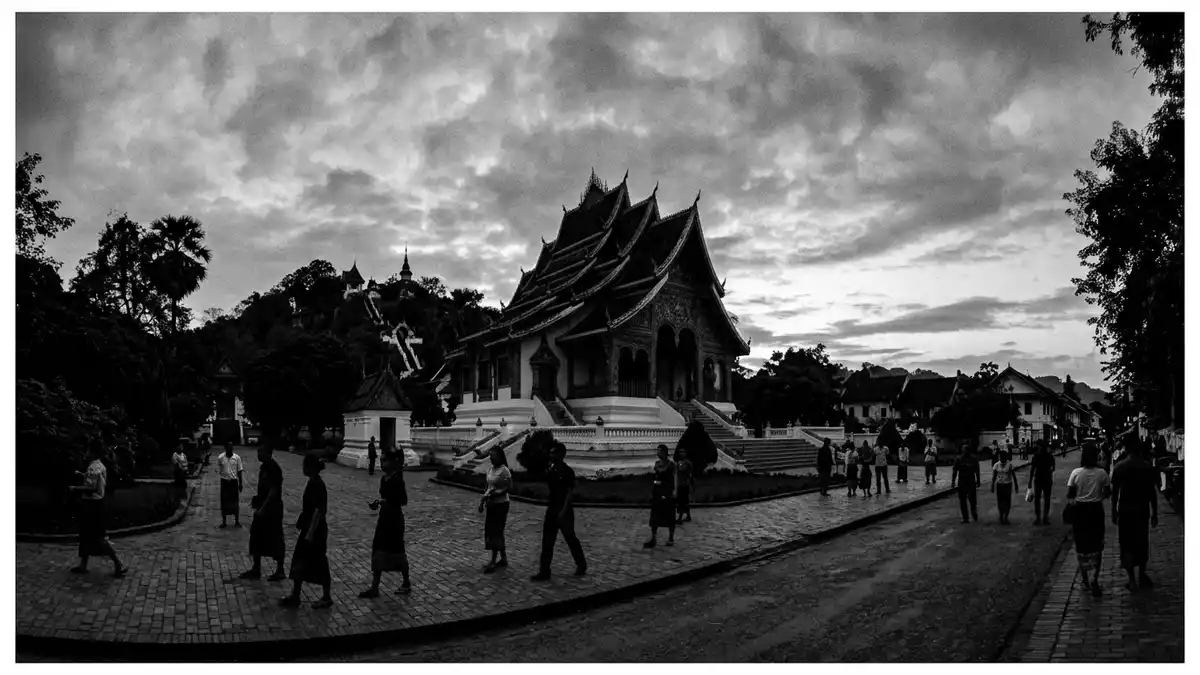
Haw Kham in Luang Prabang is the former royal palace of Laos, a golden-roofed residence built in the early twentieth century for King Sisavang Vong that now serves as the National Museum of Luang Prabang. Set within the UNESCO-listed historic centre, it brings together royal architecture, courtly interiors and religious artefacts in a compact compound between the Mekong river and Mount Phousi.
A golden palace of the Lao monarchy
The palace known as Haw Kham, literally “Golden Palace”, was constructed in 1904 during the French colonial era as the residence of King Sisavang Vong and his family.constructed in 1904 The building stands on a slightly raised platform along Sisavangvong Road and Ounheun Road on the Luang Prabang peninsula, facing the sacred hill of Mount Phousi and lying close to the Mekong riverfront.on the Luang Prabang peninsula between the Mekong river and Mount Phousi
Architecturally Haw Kham fuses Beaux-Arts symmetry with Lao decorative and roof traditions, reflecting the period when Luang Prabang lay within the French protectorate.a hybrid of Beaux-Arts symmetry and Lao roofline The main frontage presents a broad, low hall with golden detailing and tiered roofs rising above ceremonial gates, flanked by lawns and mature trees that frame the approach. Behind this entrance range, the residence extends into wings and ancillary structures that once accommodated court life, including throne spaces, royal apartments and service quarters.
From royal residence to National Museum
Haw Kham remained the principal residence of the Luang Prabang royal family until the monarchy was abolished in December 1975, marking the end of its role as an active palace.former Royal Palace, now turned into a museum In its present form, the complex functions as the National Museum of Luang Prabang, preserving interiors and collections associated with the Lao monarchy and the city’s religious and civic history.transformed into the National Museum of Luang Prabang
Visitors pass through the former audience and throne rooms, where decorative schemes of gilding, carved wood and patterned flooring remain in place, and continue into royal apartments laid out with furniture, portraits and everyday objects from the palace era.ancienne résidence royale du Laos reconvertie en musée The museum also exhibits ceremonial regalia, court costumes and diplomatic gifts, setting the story of the Luang Prabang kingdom within wider regional and international connections. Religious artefacts linked to the city’s Buddhist life and items illustrating its twentieth-century history add further layers to the collection.
Haw Kham within Luang Prabang’s historic landscape
Haw Kham occupies a central position in Luang Prabang’s historic peninsula, an ordered green space embedded within streets lined by temples, townhouses and markets.stands in central Luang Prabang on Sisavangvong Road and Ounheun Road The ceremonial approach opens towards Sisavangvong Road, one of the main streets of the old town, while paths and lawns within the compound link the palace buildings to the nearby Haw Pha Bang chapel and ancillary structures.le palais se trouve rue Sisavangvong
To one side lies Wat Mai, a major temple of Luang Prabang, and beyond the gates stretches the riverside area along the Mekong, with the slope of Mount Phousi rising opposite the palace grounds.located on the Luang Prabang peninsula between the Mekong river and Mount Phousi The palace compound therefore forms part of a dense ensemble of religious and civic landmarks that underpin Luang Prabang’s status as a World Heritage city, linking royal, monastic and urban spaces within a walkable area of low-rise buildings and tree-shaded streets.
Visiting Haw Kham: what travellers from Western Europe should know
- Haw Kham stands in central Luang Prabang on Sisavangvong Road and Ounheun Road, on the peninsula between the Mekong river and Mount Phousi, within the historic townscape.
- The palace compound is set on a slightly raised platform with lawns and internal paths; access to the interiors involves steps at the main entrance and doorways.
- Wat Mai and other temples lie close to the palace, and the Mekong riverfront and Mount Phousi are within walking distance along streets lined with low-rise buildings.
- The official language is Lao and the currency is the Lao kip.
- Entry requirements depend on your nationality; UK travellers can check the FCDO travel advice at gov.uk/foreign-travel-advice, Irish travellers the Department of Foreign Affairs at ireland.ie.
Searching for Haw Kham on social platforms
These links open searches for Haw Kham on each platform.Frequently asked questions about Haw Kham
Where is Haw Kham located in Luang Prabang?
Haw Kham stands in central Luang Prabang on the historic peninsula, with its main entrance on Sisavangvong Road near Mount Phousi and close to the Mekong riverfront.
What can visitors expect inside Haw Kham?
Inside Haw Kham, visitors move through preserved throne rooms, royal apartments and museum galleries displaying regalia, furnishings and artefacts linked to the Lao monarchy and Luang Prabang’s religious life.
What makes Haw Kham distinctive within Luang Prabang?
Haw Kham is distinctive as an early twentieth-century royal residence built for King Sisavang Vong that combines French and Lao architectural elements and now serves as the National Museum at the heart of the UNESCO-listed old town.


