
Haw Kham in Luang Prabang, a golden royal palace turned museum
Published on 08/30/2026 at 10:08 | Editorial responsibility: Rafael Müller, Editor-in-Chief AD HOC NEWS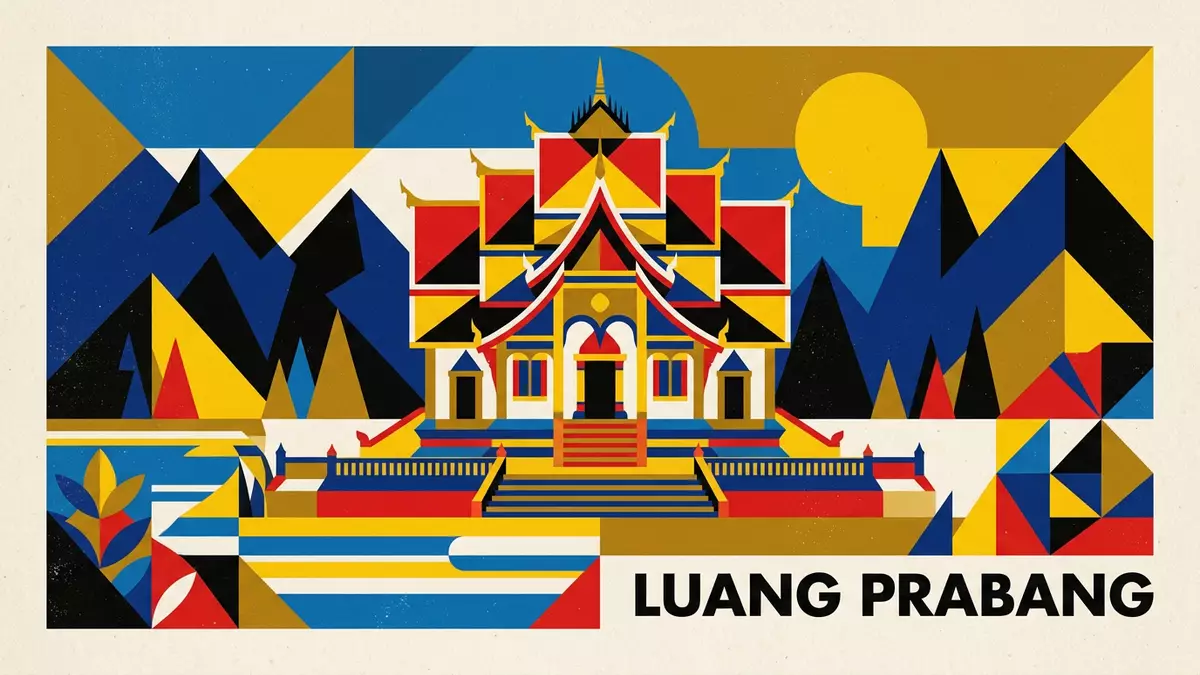
Haw Kham in Luang Prabang is the former royal palace of Laos, a twentieth-century residence built for King Sisavang Vong that now serves as the city’s National Museum within the historic centre.Royal Palace, Luang Prabang
A golden palace from the French colonial era
The palace complex known as Haw Kham, literally “Golden Palace” in Lao, was constructed in Luang Prabang between 1904 and 1909 during the period when Laos formed part of the French colonial domain in Indochina.constructed between 1904 and 1909 Commissioned for King Sisavang Vong and his family, it combined European Beaux-Arts influences with forms and decorative motifs drawn from Lao palatial and temple architecture.architecture Beaux-Arts française et traditions laotiennes
The main palace building presents a low, elongated profile aligned with the riverfront street grid, its rendered walls and tiled roofs punctuated by ornamental gables and gilded details that catch the light above the formal lawns. Symmetry plays a key role in the composition, with a central entrance pavilion leading towards the throne room and residential wings extending to either side. Decorative elements include stucco reliefs, coloured glass mosaics and patterned timber, setting the royal residence apart from the neighbouring shophouses and monasteries while still belonging to the wider townscape of Luang Prabang.
From royal residence to National Museum
Haw Kham functioned as the royal residence of Laos until the political changes of 1975, when the Kingdom of Laos was replaced by the Lao People’s Democratic Republic and the monarchy came to an end.was built in 1904 during the French colonial era for King Sisavang Vong and his family In the years that followed, the palace buildings were adapted for use as a museum, preserving royal furnishings, regalia and everyday objects within the original residential and ceremonial spaces.Le palais a alors été transformé en musée
In its present form, Haw Kham operates as the National Museum of Luang Prabang, with galleries set in the throne hall, royal apartments and ancillary structures around the courtyard.National Museum of Luang Prabang Exhibits include ceremonial artefacts associated with the Lao monarchy, religious objects connected to the city’s Buddhist life and items that illustrate Luang Prabang’s place within wider regional history. The arrangement allows visitors to move through rooms that retain their early twentieth-century layout, reading the palace not only through display cases but through architectural details, wall finishes and surviving fixtures.
Setting in Luang Prabang’s historic centre
Haw Kham stands in central Luang Prabang near Sisavangvong Road and Ounheun Road, a short walk from the Mekong riverside and the slopes of Mount Phousi.Location: Thanon Sisavangvong, Luang Prabang The palace grounds form an ordered green space within the dense UNESCO-listed townscape, framed by mature trees and bounded by streets leading to nearby temples such as Wat Mai.à proximité immédiate du Wat Mai
The ensemble includes the main palace, smaller service structures and the temple Haw Pha Bang on the edge of the forecourt, which was constructed to house the revered Phra Bang Buddha image associated with Luang Prabang’s status as a religious centre.le temple Haw Pha Bang qui abrite la statue la plus vénérée du pays Broad paved paths cross the lawns towards the palace steps, while the rear of the complex connects to streets that lead down towards the riverbanks and up towards hilltop viewpoints. The setting makes Haw Kham a focal point within Luang Prabang’s urban fabric, linking royal, religious and everyday life in a compact area shaped by twentieth-century history.
Visiting Haw Kham: what travellers from Western Europe should know
- Haw Kham stands on Sisavangvong Road and Ounheun Road in central Luang Prabang, with access on foot from the surrounding streets and the nearby Mekong riverfront.stands in central Luang Prabang on Ounheun Road and Sisavangvong Road
- The approach from the street leads through the palace grounds along paved paths, with a short flight of steps up to the main entrance and further internal staircases between levels.
- The official language is Lao and the currency is the Lao kip.
- Entry requirements depend on your nationality; UK travellers can check the FCDO travel advice at gov.uk/foreign-travel-advice, Irish travellers the Department of Foreign Affairs at ireland.ie.
Searching for Haw Kham on social platforms
These links open searches for Haw Kham on each platform.
Frequently asked questions about Haw Kham
Where is Haw Kham located within Luang Prabang?
Haw Kham stands in the historic centre of Luang Prabang on Sisavangvong Road and Ounheun Road, close to the Mekong riverside and Mount Phousi.
What can visitors expect to see inside Haw Kham?
Visitors encounter early twentieth-century palace architecture, a throne hall, former royal apartments and museum displays of royal regalia and religious artefacts within the original buildings.
What makes Haw Kham distinctive among sites in Luang Prabang?
Haw Kham brings together a French colonial-era royal residence for King Sisavang Vong and its later role as the National Museum, set amid the town’s monasteries and riverfront streets.


