
HaKotel HaMa'aravi and the layered stones of Jerusalem
Published on 08/30/2026 at 14:08 | Editorial responsibility: Rafael Müller, Editor-in-Chief AD HOC NEWS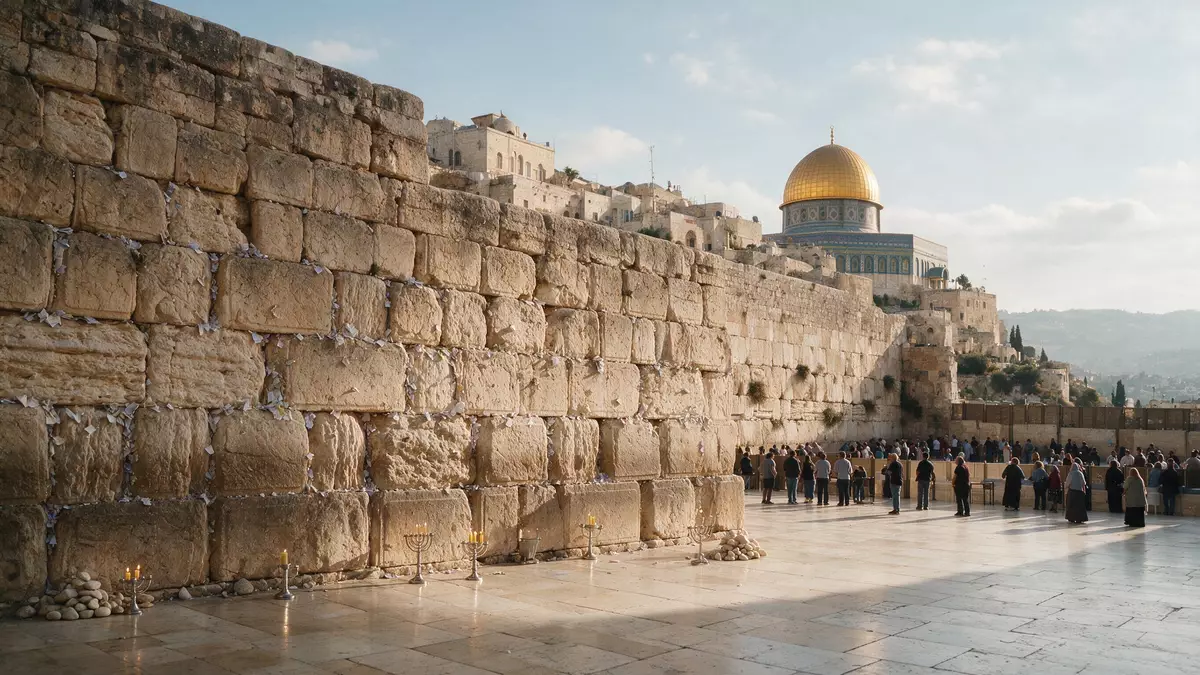
HaKotel HaMa'aravi, known in English as the Western Wall, is the western retaining wall of the Temple Mount in Jerusalem’s Old City and a central place of Jewish prayer. Its masonry links the expansion of the sanctuary under Herod the Great in the first century BC with the destruction of the Second Temple in 70 CE.
Herodian masonry and the Temple Mount
The exposed section of HaKotel HaMa'aravi familiar from countless images is part of a much longer retaining wall that runs along the western side of the Temple Mount. In a Jewish religious context, the name Western Wall can refer specifically to the prayer area facing the open plaza, yet the structure in its entirety forms the western flank of the raised platform that once supported the Second Temple.the western side of the Temple Mount
The present wall incorporates massive stone courses associated with the building works of Herod the Great in the late first century BC, when the Temple Mount was enlarged and encased in stone. The retaining wall supported an expanded esplanade around the sanctuary, and the surviving western stretch descends far below the present plaza level.Herod the Great’s expansion of the Temple Mount
The surviving wall after 70 CE
The First Temple, associated with King Solomon in the tenth century BC, was destroyed by the Babylonians in 586 BC, and the Second Temple was completed on the same hill in the late sixth century BC.the First and Second Temples of Jerusalem Under Roman rule, Herod the Great transformed the site into a vast sanctuary complex; the Second Temple and much of the surrounding architecture were later destroyed by Roman forces in 70 CE.
HaKotel HaMa'aravi is the most prominent surviving section of the western retaining wall of that sanctuary complex.western side of the Temple Mount The visible stones above the plaza belong to different building phases, with the largest blocks in the lower courses linked to the Herodian period and later layers added as the ground level and the surrounding streets changed.
A place of prayer in the Old City
HaKotel HaMa'aravi stands within the Jewish Quarter of the Old City of Jerusalem, below the level of the surrounding lanes and reached by streets that descend towards the open plaza. The section facing the plaza functions as a place of pilgrimage and daily prayer, while other segments of the western retaining wall continue north and south beyond the familiar open space.an ancient retaining wall on the western side of the Temple Mount
For visitors arriving from the stone-paved streets of the Old City, the transition into the plaza sets the wall against the sky and the stone surfaces of the Temple Mount above. The wall’s Hebrew name, HaKotel HaMa'aravi, literally means “the western wall”, and the site is closely connected with the memory of the Second Temple and its destruction in 70 CE.HaKotel HaMa'aravi in the Old City of Jerusalem
Visiting HaKotel HaMa'aravi: what travellers from Western Europe should know
- HaKotel HaMa'aravi lies on the western flank of the Temple Mount in the Old City of Jerusalem, close to Dung Gate and within walking reach of the Jewish Quarter.
- The approach from the Old City involves descending through narrow streets and passing security checkpoints, and the plaza in front of the wall is paved with stone.
- The site lies in Israel, where the official language is Hebrew and the currency is the Israeli new shekel.
- Entry requirements depend on your nationality; UK travellers can check the FCDO travel advice at gov.uk/foreign-travel-advice, Irish travellers the Department of Foreign Affairs at ireland.ie.
Searching for HaKotel HaMa'aravi on social platforms
These links open searches for HaKotel HaMa'aravi on each platform.Frequently asked questions about HaKotel HaMa'aravi
Where is HaKotel HaMa'aravi located?
HaKotel HaMa'aravi stands in the Old City of Jerusalem, on the western side of the Temple Mount within the Jewish Quarter.
What can visitors expect when approaching the wall?
Visitors enter a large stone-paved plaza facing the exposed western retaining wall, with separate prayer sections and security screening at the approaches.
What makes HaKotel HaMa'aravi distinctive among Jerusalem’s sites?
HaKotel HaMa'aravi combines Herodian-era stone courses, the memory of the Second Temple and the role of the western retaining wall as a continuing place of Jewish prayer.


