
HaKotel HaMa'aravi and the enduring stones of the Temple Mount
Published on 08/16/2026 at 13:34 | Editorial responsibility: Rafael Müller, Editor-in-Chief AD HOC NEWS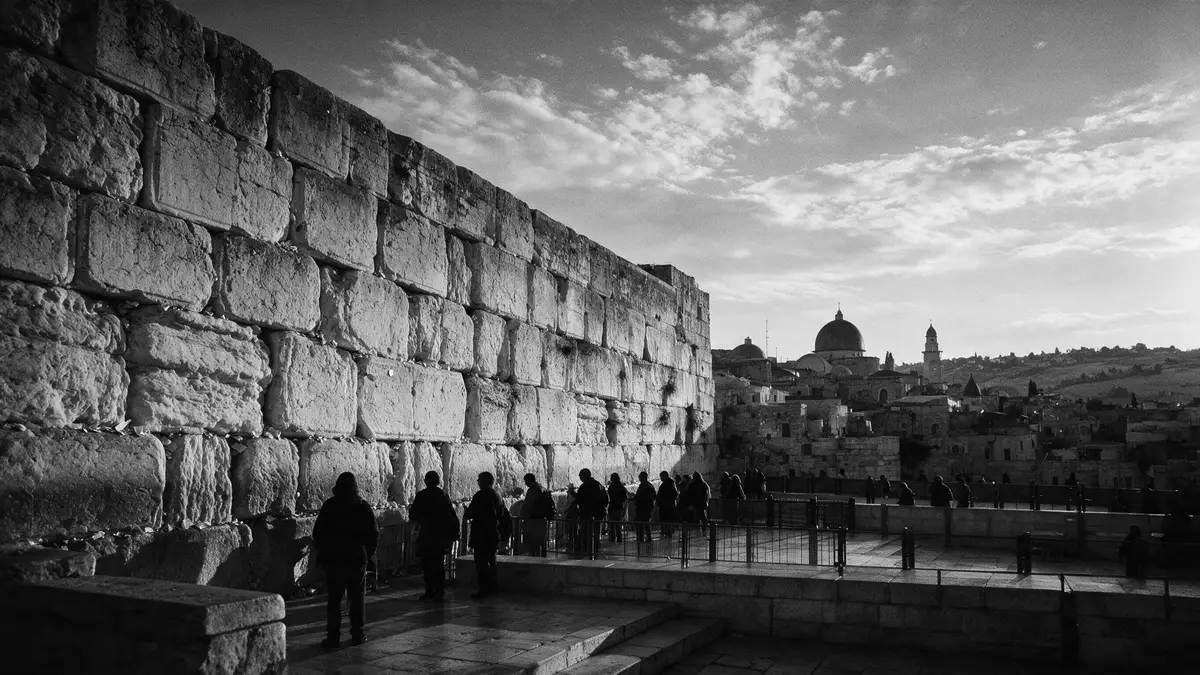
HaKotel HaMa'aravi, known in English as the Western Wall, is an ancient retaining wall on the western side of the Temple Mount in Jerusalem, where successive layers of stone record more than two millennia of history.retaining wall The wall formed part of the vast expansion of the Temple Mount associated with Herod the Great in the first century BC, and later became a focal place of prayer after the destruction of the Second Temple in 70 CE.destruction of the Second Temple
The Western Wall as a surviving structure of the Temple Mount
HaKotel HaMa'aravi is one of the supporting walls that hold the artificial platform of the Temple Mount, the hill long regarded as a sacred focal point in Judaism.one of four retaining walls The section known in everyday speech as the Western Wall is part of a longer stone barrier that runs along the western edge of the mount, once enclosing the precincts of the First and Second Temples.
The expansion of the Temple Mount is linked with the reign of Herod the Great, who ruled Judaea under Roman auspices in the late first century BC.Herod the Great's reconstruction In this phase the mount was enlarged into a vast platform, supported by monumental retaining walls built of large limestone blocks, of which HaKotel HaMa'aravi is a surviving western component.retaining perimeter wall
Stone courses and visible layers of history
The visible section of HaKotel HaMa'aravi at the prayer plaza consists of multiple courses of stone, with the lowest visible layers formed of enormous limestone blocks hewn in the Second Temple period.45 courses of stone These lower courses have characteristic marginal dressing around their edges, a style associated with Herodian construction, and their sheer size gives the wall its monumental presence in the Old City.Herodian-style dressing
Above the older limestone blocks, later builders added further courses during early Islamic and Ottoman periods, so that the upper part of the wall shows smoother, smaller stones resting on the massive ancient ones.later Moslem and Ottoman stones Archaeological descriptions indicate that the wall, counting both exposed and buried courses below plaza level, is composed of dozens of stone layers reaching down to bedrock, with a portion concealed beneath the present paving.buried courses below plaza
HaKotel HaMa'aravi in the Old City of Jerusalem
The Western Wall stands within the Old City of Jerusalem, close to the boundary between the Jewish Quarter and the Temple Mount esplanade, reached along alleys that open into the plaza facing the stones.located in the Old City The wider retaining wall on the western side of the mount runs far beyond the open area used for prayer, disappearing behind buildings and continuing into tunnelled sections that can be entered on guided visits.
In front of the exposed section of the wall lies a broad paved plaza, where the large stone blocks form a backdrop to gatherings and religious observance, while the continuation of the wall to the north is accessible through underground passages cut along its base.plaza in front of the wall Viewed from the paving, the stonework rises above eye level, while further courses extend below, visible in places through excavated sections that reveal more of the original retaining structure.
Visiting HaKotel HaMa'aravi: what travellers from Western Europe should know
- HaKotel HaMa'aravi lies within the walls of the Old City of Jerusalem, on the western flank of the Temple Mount, reached on foot through the Jewish Quarter streets.
- The plaza in front of the Western Wall is a paved open area; reaching the stones involves crossing gently sloping surfaces rather than climbing a long staircase.
- The official language is Hebrew and the currency is the Israeli shekel.
- Entry requirements depend on your nationality; UK travellers can check the FCDO travel advice at gov.uk/foreign-travel-advice, Irish travellers the Department of Foreign Affairs at ireland.ie.
Searching for HaKotel HaMa'aravi on social platforms
These links open searches for HaKotel HaMa'aravi on each platform.
Frequently asked questions about HaKotel HaMa'aravi
Where is HaKotel HaMa'aravi located?
HaKotel HaMa'aravi stands on the western side of the Temple Mount within the Old City of Jerusalem, close to the Jewish Quarter.
What should visitors expect at the Western Wall?
Visitors encounter a large paved plaza facing an ancient stone wall, with monumental limestone blocks at its base and further courses rising above the paving.
What makes HaKotel HaMa'aravi distinctive among Jerusalem’s historic sites?
The Western Wall combines Herodian-period retaining stones with later additions, forming a long structural wall that remains physically connected to the Temple Mount platform.


