HaKotel HaMa'aravi and the enduring stones of Jerusalem
Published on 09/11/2026 at 16:36 | Editorial responsibility: Rafael Müller, Editor-in-Chief AD HOC NEWS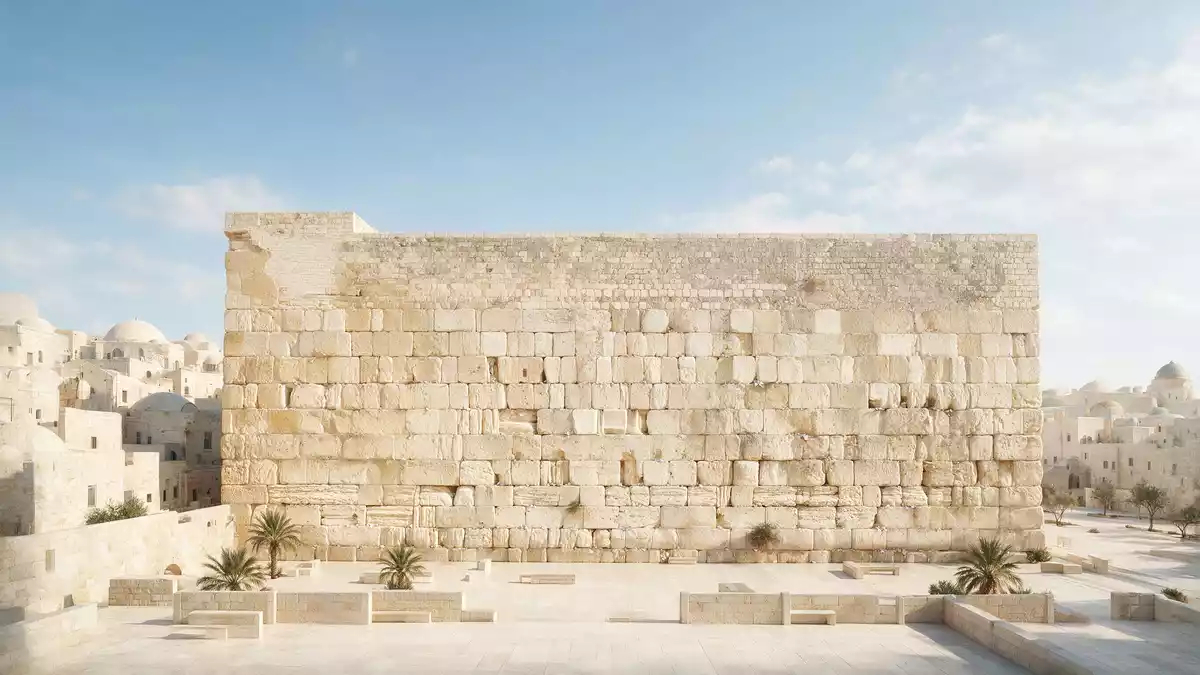
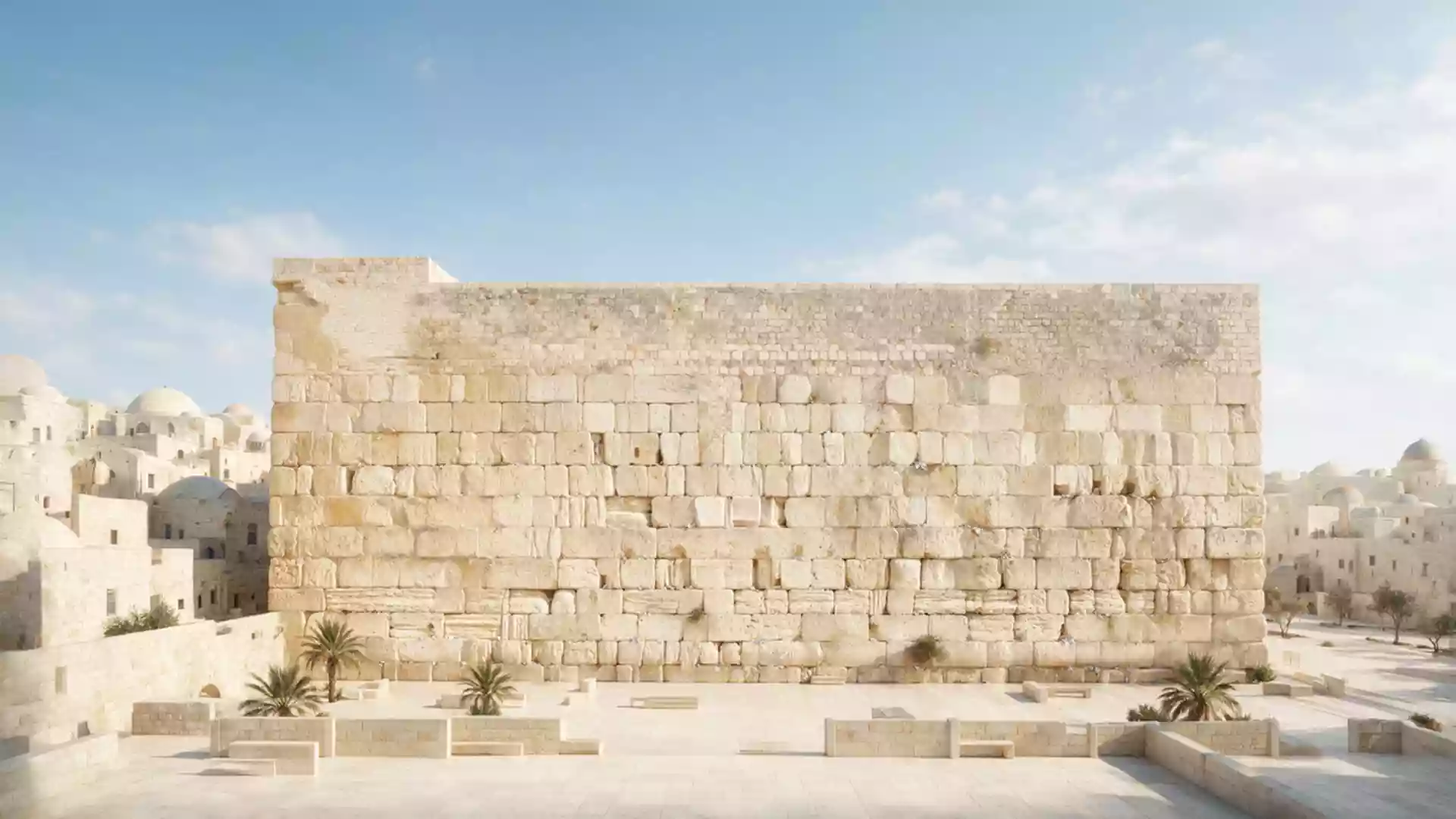
HaKotel HaMa'aravi, known in English as the Western Wall, is the western retaining wall of the Temple Mount in Jerusalem, where massive limestone blocks rise above an open plaza dedicated to Jewish prayer.place of prayer and pilgrimage The wall formed part of the monumental expansion of the Temple Mount associated with Herod the Great in the late first century BC, and the exposed stones visible today belong to a structure that has carried the memory of the destroyed Second Temple for centuries.ancient retaining wall
The western retaining wall of the Temple Mount
HaKotel HaMa'aravi stands on the western side of the Temple Mount within the Old City of Jerusalem, forming part of a much longer retaining wall that supports the raised platform above the surrounding streets.western side of the Temple Mount In its broader sense the Western Wall refers to a retaining structure that extends for hundreds of metres; in everyday use the name usually denotes the section of masonry facing the open plaza where prayer takes place.section used for Jewish prayer
The exposed prayer area shows several layers of construction, with lower courses of large limestone blocks dating back to the period of Herod the Great and later stones forming upper sections rebuilt in subsequent eras.successive layers of stone As seen from the plaza, this visible stretch of the Western Wall runs for dozens of metres and rises to a height of roughly twenty metres above the paving, while further courses continue below the present ground level and remain hidden from view.length and height as seen today
Stones, history and the memory of the Second Temple
The retaining wall is linked with the expansion of the Second Temple complex undertaken in the late first century BC under Herod the Great, whose works reshaped the hill into the large platform now known as the Temple Mount.retaining wall built by King Herod Parts of the Western Wall are remnants of the ancient wall that enclosed the Temple courtyard, and the prayer section stands as one of the closest accessible points to the former site of the Holy of Holies, the inner sanctuary of the Second Temple destroyed in 70 CE.closest remaining location to the former site
The Western Wall has taken on a central role in Jewish religious life as a place where individuals and groups gather for prayer, especially at moments of festival and commemoration.holiest site in Judaism and place of pilgrimage In a Jewish religious context the term “Western Wall” can refer narrowly to the exposed section facing the plaza or more broadly to the full length of the retaining structure on the western flank of the mount, a distinction reflected in the combination of open air prayer areas and tunnelled passages that follow the line of the stones beneath adjacent buildings.broader sense of the retaining wall
Names, quarters and approaches in the Old City
HaKotel HaMa'aravi lies within the walled Old City of Jerusalem, close to the boundary between the Jewish Quarter and the Temple Mount esplanade, with streets and alleys converging on the plaza in front of the stones.within the Old City In Hebrew the site is known as HaKotel HaMa'aravi, meaning “the western wall”, and informally simply HaKotel, while international usage has settled on Western Wall as a neutral name that foregrounds the position of the structure rather than any particular religious practice.Hebrew name ha-Kotel ha-Ma?arav?
The open plaza at the foot of the wall is reached through entrances that lead from different parts of the Old City, including routes from the Jewish Quarter and access near the Dung Gate in the city walls, where the approach drops down towards the Temple Mount area.access from quarters and the Dung Gate Paved surfaces, modest levels and broad steps structure the immediate surroundings of the prayer section, while further up the mount the retaining wall disappears behind higher ground and built fabric, emerging again in places where tunnels follow its course below streets and houses.retaining wall continuing in tunnelled sections
Visiting HaKotel HaMa'aravi: what travellers from Western Europe should know
- HaKotel HaMa'aravi stands within the Old City of Jerusalem on the western flank of the Temple Mount, reached on foot through the streets of the Jewish Quarter and adjoining districts.
- The plaza in front of the wall is a large paved area with steps and level changes, and reaching the prayer section involves passing through security checkpoints at the entrances.
- The official language is Hebrew and the currency is the Israeli new shekel.
- Entry requirements depend on your nationality; UK travellers can check the FCDO travel advice at gov.uk/foreign-travel-advice, Irish travellers the Department of Foreign Affairs at ireland.ie.
Searching for HaKotel HaMa'aravi on social platforms
These links open searches for HaKotel HaMa'aravi on each platform.
Frequently asked questions about HaKotel HaMa'aravi
Where is HaKotel HaMa'aravi located in Jerusalem?
HaKotel HaMa'aravi stands on the western side of the Temple Mount within the walls of the Old City of Jerusalem, close to the Jewish Quarter and reached through historic streets.
What can visitors expect when they reach the Western Wall?
Visitors enter a paved plaza facing the exposed stretch of the Western Wall, where prayer areas are set out along the foot of the limestone blocks and access routes converge from different quarters.
What makes HaKotel HaMa'aravi distinctive among Jerusalem’s religious sites?
The Western Wall is the surviving western retaining wall of the extended Second Temple platform built under Herod the Great, and the visible stones form one of the closest accessible points to the former Temple sanctuary.