
Habana Vieja’s stone plazas and harbour streets in Havanna
Published on 09/21/2026 at 20:15 | Editorial responsibility: Rafael Müller, Editor-in-Chief AD HOC NEWS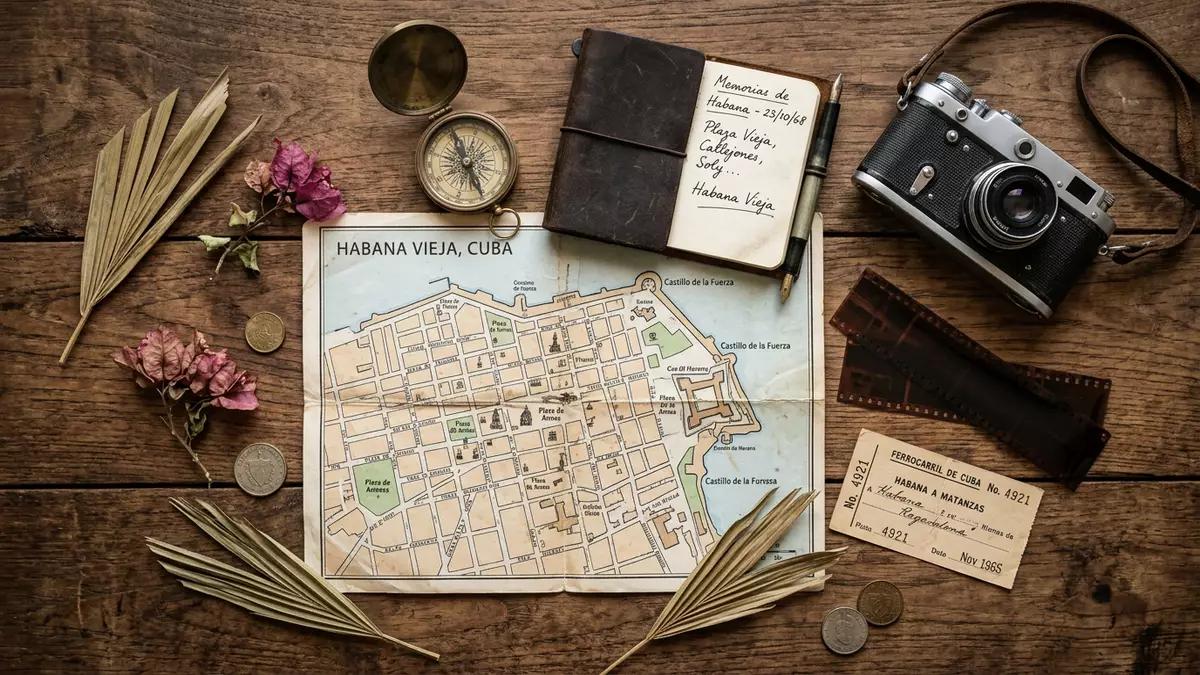
Habana Vieja, known in English as Old Havana, is the historic core of Havanna where a dense grid of stone streets, plazas and harbour defences lines the edge of Havana Bay. Founded in the early sixteenth century under Spanish rule, this part of the Cuban capital grew into a fortified port city whose colonial fabric still shapes the way visitors move between churches, palaces and the water’s edge.
Harbour city of stone beside Havana Bay
Habana Vieja occupies the western side of Havana Bay, where the first Spanish settlement of San Cristóbal de La Habana took root on Cuba’s north-western shore in the early 1500s.Founded about 1519 The historic district corresponds to the old walled city that framed the colonial harbour, with streets running back from the waterfront towards the higher ground of central Havanna.the historic core of Havana along the western side of Havana Bay
Across this compact area, stone fortifications, bastions and harbour-side castles still define the entrance channel that leads ships between the bay and the open sea.Old Havana and its Fortification System The defensive works once shielded Spanish shipping routes through the Caribbean, and their walls now form a visible belt between the historic streets and the water. From many corners of Habana Vieja, the silhouettes of these fortifications appear between tiled roofs and arcaded facades, reminding visitors that this remains both a port and a historic city.
UNESCO World Heritage townscape of plazas and fortifications
In 1982, UNESCO inscribed “Old Havana and its Fortification System” as a cultural World Heritage Site, recognising the district’s combined value as a fortified harbour and a historic urban landscape.Old Havana and its Fortification System was inscribed on the UNESCO World Heritage List in 1982 The World Heritage listing identifies the site as a historic city and urban area, with criteria that highlight both its architecture and its role as a traditional human settlement shaped by colonial trade routes.UNESCO criteria for Old Havana and its Fortification System
Within the municipal district of La Habana Vieja, hundreds of historic buildings stand along streets that still follow the outlines of the colonial grid.a historic centre of stone streets, plazas and fortifications Baroque churches, neoclassical civic buildings and rows of townhouses with arcades, balconies, wrought-iron gates and internal courtyards create a largely consistent streetscape.an interesting mix of Baroque and neoclassical monuments The formal World Heritage title emphasises that this is not only a collection of monuments but an ensemble in which domestic architecture, public squares and harbour works belong to the same historic whole.
Plazas, cathedral and domestic architecture
Habana Vieja is structured around a series of plazas where religious, civic and domestic buildings cluster around open stone-paved spaces. Travel guides describe five historic plazas as forming the backbone of Old Havana: Plaza de Armas, Plaza Vieja, Plaza de San Francisco, Plaza del Cristo and Plaza de la Catedral.five main plazas—Plaza de Armas, Plaza Vieja, Plaza de San Francisco, Plaza del Cristo, and Plaza de la Catedral Each square has its own mix of churches, palaces and former mansions, together forming a catalogue of Spanish colonial architecture adapted to a Caribbean port.
Plaza de la Catedral, described as the most uniform of the main colonial squares, presents a concentrated display of Cuban Baroque architecture.an authentic museum of Cuban Baroque The Cathedral of Havana dominates its northern side, with its uneven bell towers and richly articulated facade. Around the plaza stand former palaces such as the Palacio de los Marqueses de Aguas Claras, the Palacio de los Condes de Casa Bayona and the Palacio del Conde Lombillo, some of which now house institutions and museums dedicated to colonial art and Cuban artists.Palacio del Conde Lombillo and Museo del Arte Colonial Stone arcades edge parts of the square, and behind their facades, internal courtyards provide shaded spaces that link domestic and public life within the historic houses.
Visiting Habana Vieja: what travellers from Western Europe should know
- Habana Vieja forms one of the municipalities of Havanna and lies along the western edge of Havana Bay, where the historic harbour and the old city meet.
- Much of the district consists of narrow streets paved in stone, with kerbs and steps around plazas and courtyards that can require careful footing on longer walks.
- The official language is Spanish and the currency is the Cuban peso.
- Entry requirements depend on your nationality; UK travellers can check the FCDO travel advice at gov.uk/foreign-travel-advice, Irish travellers the Department of Foreign Affairs at ireland.ie.
Searching for Habana Vieja on social platforms
These links open searches for Habana Vieja on each platform.
Frequently asked questions about Habana Vieja
Where is Habana Vieja in Havanna?
Habana Vieja lies along the western shore of Havana Bay in Cuba’s capital, forming the historic centre where the old walled city met the harbour.
What should visitors expect on a first walk through Habana Vieja?
Visitors encounter stone-paved streets, plazas framed by Baroque and neoclassical buildings, and harbour fortifications that still mark the route between the city and the sea.
What makes Habana Vieja distinctive among historic quarters?
The combination of a fortified harbour, a grid of colonial streets and a dense ensemble of churches, palaces and domestic courtyards under a UNESCO World Heritage designation gives Habana Vieja its character.


