Granada, Nicaragua between lake and volcano
Published on 09/11/2026 at 16:57 | Editorial responsibility: Rafael Müller, Editor-in-Chief AD HOC NEWS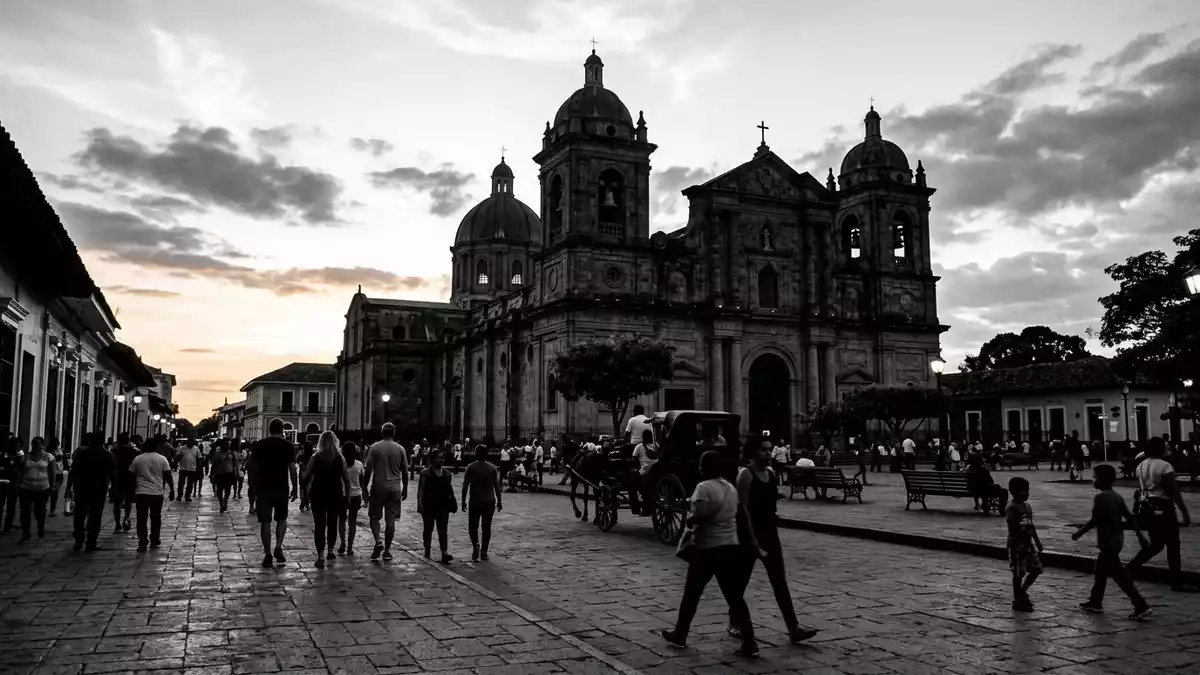
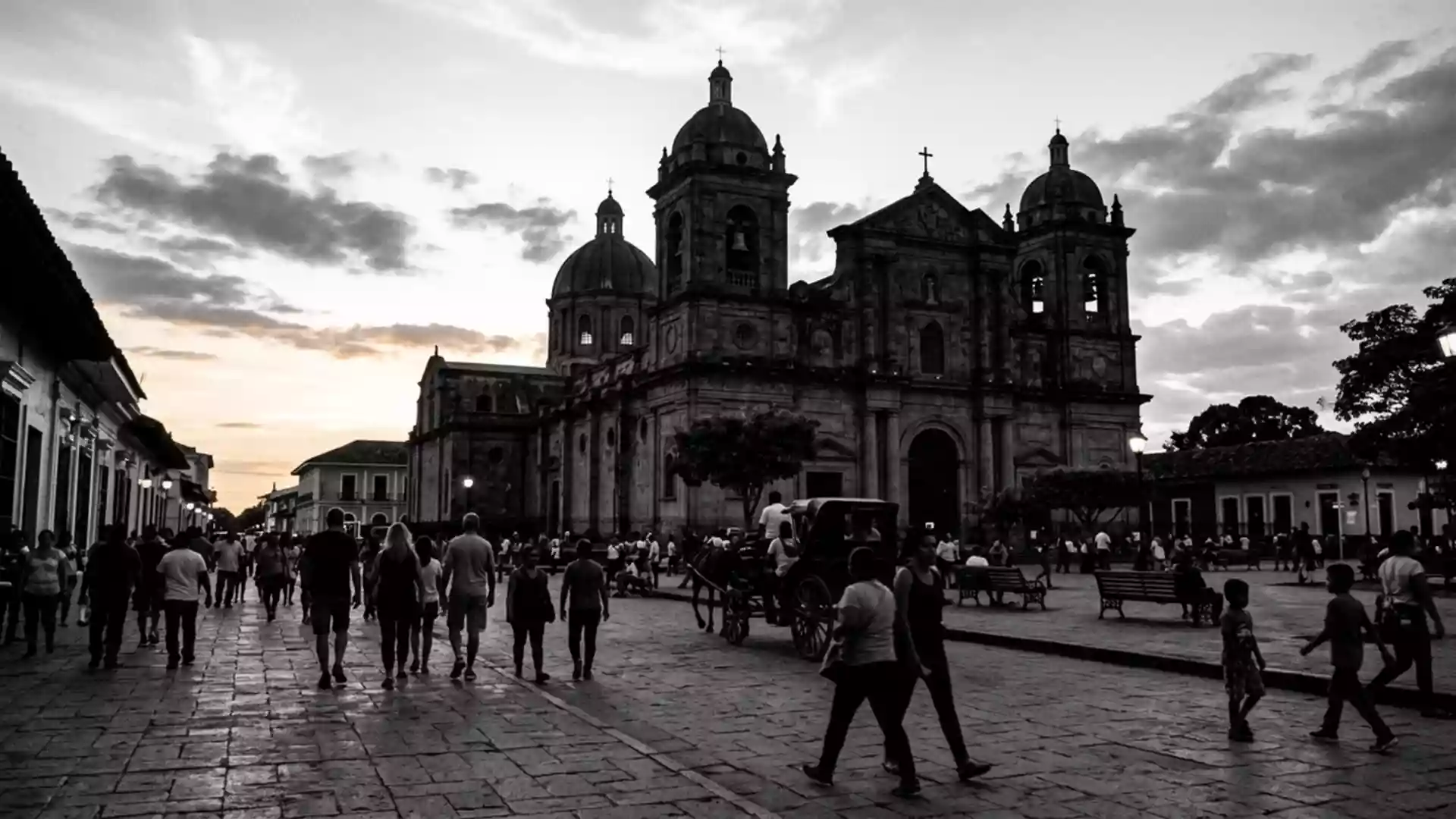
Granada in Nicaragua is a Spanish colonial city laid out beside Lake Nicaragua, also known locally as Lake Cocibolca, with its streets running between church towers and brightly painted houses. Founded in 1524 by the conquistador Francisco Hernández de Córdoba, it is one of Central America’s earliest European-founded cities that has remained on its original site, and its historic centre still follows a recognisable colonial grid of straight, intersecting streets.Granada, Nicaragua
Granada’s grid between volcano and lake
Granada lies in southwestern Nicaragua on the north-western shore of Lake Nicaragua, at the foot of Mombacho Volcano, and serves as the capital of the Granada Department.southwestern Nicaragua on Lake Nicaragua The setting is clear: water stretching away towards the horizon to one side, the slopes of Mombacho rising to the south, and between them a city plan marked by long, straight streets meeting at right angles.
The colonial centre is built on this grid plan that reflects Spanish town-making in the sixteenth century, with streets running between low buildings and opening into plazas and small parks.grid plan reflecting Spanish colonial town-making Many houses are organised around interior courtyards, where thick walls and tiled roofs enclose planted inner spaces behind heavy wooden doors, continuing a pattern that dates back to Granada’s early colonial centuries.
Colonial façades, churches and courtyards
Walking through Granada’s centre reveals façades in strong colours, from deep blues to bright yellows, set against rows of terracotta tiled roofs and arcaded fronts that recall Andalusian-influenced architecture.colourful low-rise buildings with tiled roofs Behind these façades, houses tend to be laid out around interior patios, an arrangement that keeps living spaces oriented towards shaded gardens rather than the street.
Granada’s skyline is marked by church towers and domes, including the canary-coloured Catedral de Nuestra Señora de la Asunción beside Parque Central, La Merced Church and the former convent of San Francisco.Catedral de Nuestra Señora de la Asunción beside Parque Central Around the main square, civic buildings such as the city hall and historic mansions like La Gran Francia stand beside the cathedral, giving the plaza a frame of colonial and neoclassical fronts that reflect Granada’s centuries as a regional centre.
Lake Cocibolca and the Islets of Granada
Granada stretches along the western shore of Lake Nicaragua, where streets run down towards the water and the lakeside forms a separate zone with jetties and simple docks.western shore of Lake Nicaragua The lake, known in Spanish as Lago Cocibolca, is one of Central America’s major bodies of freshwater and has long shaped Granada’s role as a port and gateway to inland routes.
Offshore, a scatter of small volcanic islands known as the Islets of Granada spreads out from the Asese peninsula close to the city’s shoreline.Las Isletas near Granada These low islands, formed by material thrown into the lake by eruptions of Mombacho thousands of years ago, give Granada a distinct lakeside landscape where views across the water include both open expanse and scattered landforms.
Visiting Granada: what travellers from Western Europe should know
- Granada lies in southwestern Nicaragua on the north-western shore of Lake Nicaragua, south of Managua, and is reached by road from the capital and other Nicaraguan cities.
- The historic centre consists of straight streets on a relatively flat grid, but routes towards the lakefront and viewpoints on Mombacho Volcano involve gradients and uneven ground.
- The official language is Spanish and the currency is the Nicaraguan córdoba.
- Entry requirements depend on your nationality; UK travellers can check the FCDO travel advice at gov.uk/foreign-travel-advice, Irish travellers the Department of Foreign Affairs at ireland.ie.
Searching for Granada on social platforms
These links open searches for Granada on each platform.
Frequently asked questions about Granada
Where is Granada in Nicaragua?
Granada is in southwestern Nicaragua, on the north-western shore of Lake Nicaragua, at the foot of Mombacho Volcano, and serves as the capital of the Granada Department.
What can visitors expect in Granada’s historic centre?
The historic centre follows a colonial grid of straight streets lined with colourful low-rise houses, interior courtyards, churches with towers and domes, and a central plaza framed by civic buildings.
What makes Granada distinctive among Nicaraguan cities?
Granada is distinctive for its early sixteenth-century foundation by Francisco Hernández de Córdoba, its long-established colonial grid plan and church ensemble, and its position between Lake Cocibolca and the volcanic slopes of Mombacho.