Granada, Nicaragua’s colonial city on Lake Cocibolca
Published on 08/28/2026 at 13:43 | Editorial responsibility: Rafael Müller, Editor-in-Chief AD HOC NEWS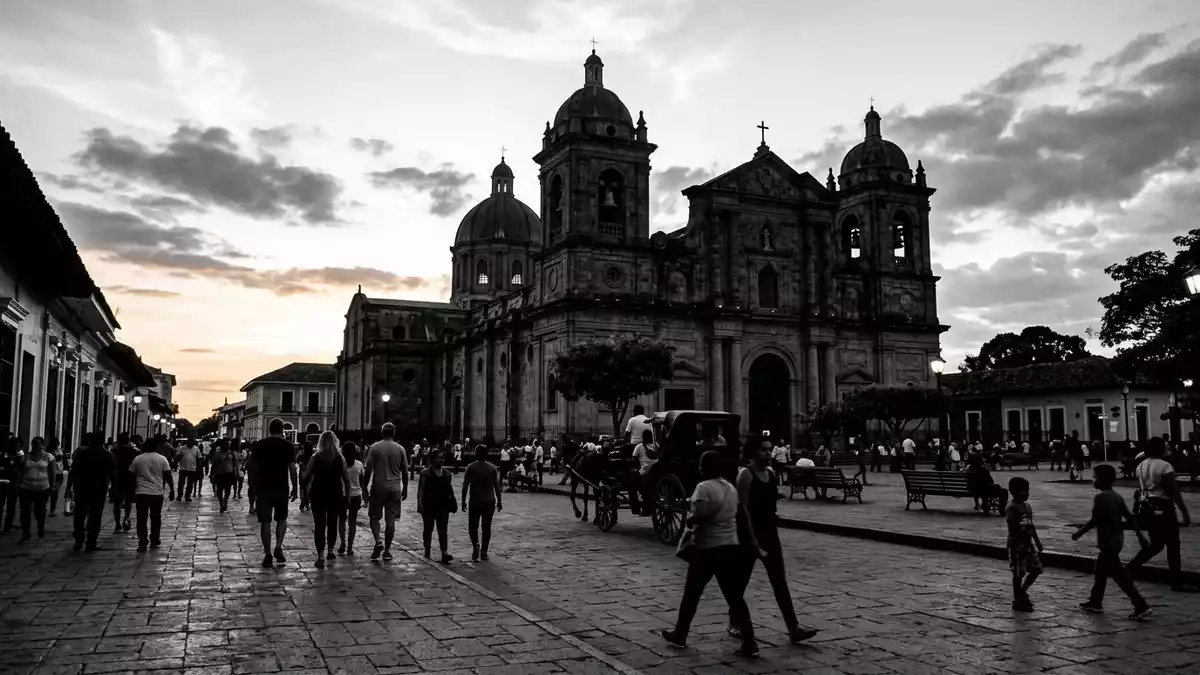
Granada in Nicaragua is a Spanish colonial city laid out beside Lake Cocibolca, with church towers, plazas and straight streets reflecting its sixteenth-century foundation by Francisco Hernández de Córdoba in 1524. The city sits at the foot of Mombacho Volcano, tying its built fabric closely to the lake shore and the volcanic landscape that frames it.
A lakeside colonial city founded in the sixteenth century
Granada lies in southwestern Nicaragua, on the north-western shore of Lake Nicaragua, also known locally as Lake Cocibolca, and serves as the capital of the Granada Department.Granada lies at the foot of Mombacho Volcano on Lake Nicaragua The setting is strikingly clear: water to one side, the slopes of Mombacho to the other, and a city plan that runs outwards in a regular grid.
The Spanish conquistador Francisco Hernández de Córdoba founded Granada in 1524, during the Spanish conquest of Nicaragua, giving it the name of the Andalusian city of Granada and establishing one of the earliest permanent European settlements on mainland Central America.The city was founded in 1524Hernández de Córdoba founded Granada during the conquest From the outset, its position on the lake and its connection via the Río San Juan to the Caribbean gave Granada an important role in regional trade.
Architecture, churches and the colonial grid
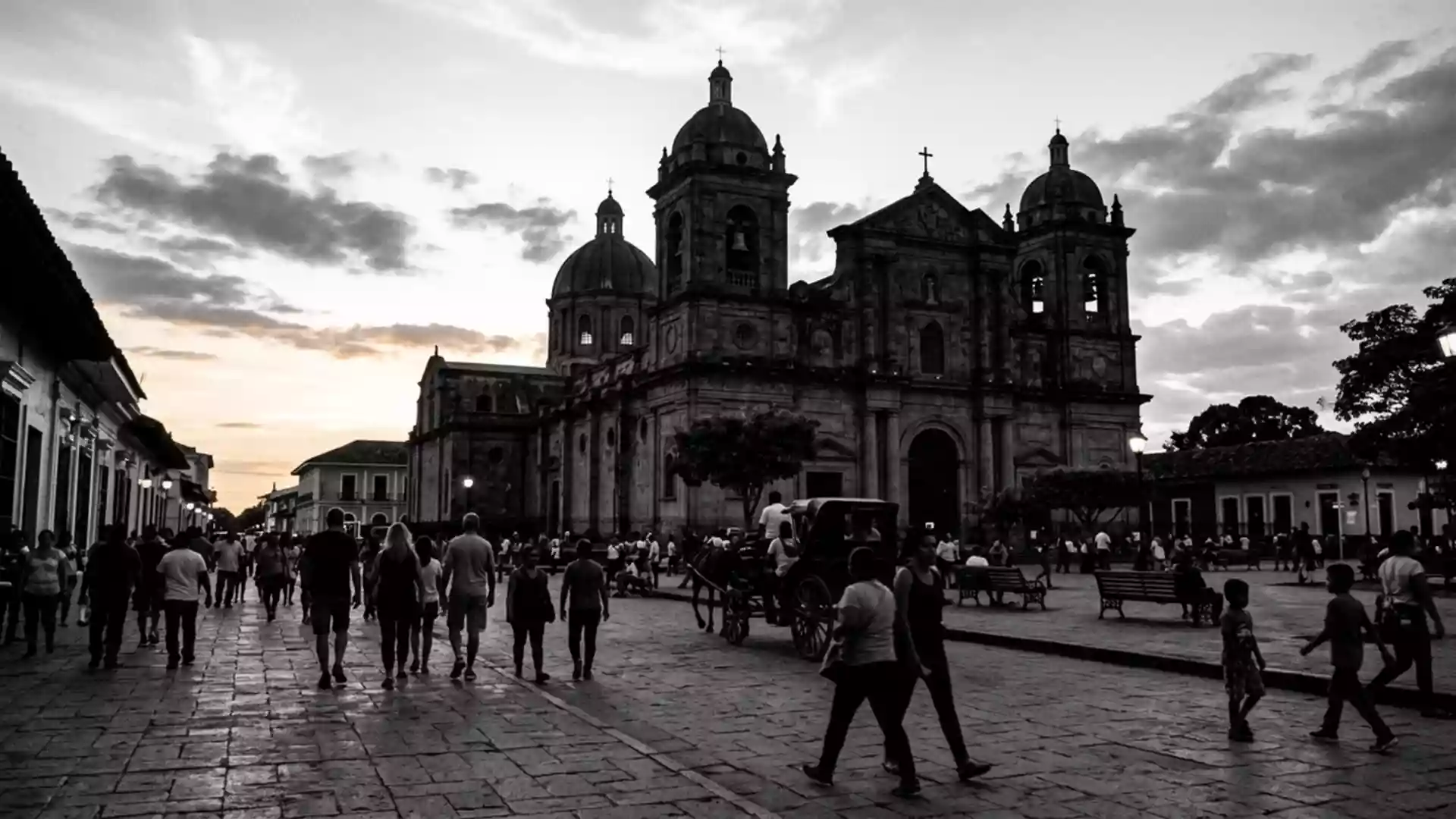
Granada’s centre is characterised by low-rise buildings with facades in strong colours, rows of tiled roofs and a consistent grid of streets that reflects Spanish colonial town-planning principles.Granada is built on a grid in Spanish colonial style The grid structure makes the relationship between its plazas, churches and houses easy to grasp: long straight streets lead towards church fronts and squares, and the city blocks tend to have internal courtyards.
Among its religious buildings, the cathedral on the central plaza stands out for its prominent position and colonial architecture, while other historic churches in the city echo similar forms with towers, arcades and vaulted interiors.Granada is described as the oldest colonial city in Nicaragua with coloured colonial buildings These structures, together with civic buildings around the main square, give Granada a coherent colonial appearance that has survived reconstruction after nineteenth-century destruction.
Trade routes, attacks and political life
In the colonial period, Granada developed into a major port and trading centre, thanks to its position on Lake Nicaragua and the San Juan River route to the Caribbean, handling goods such as cacao and tobacco for redistribution across Central America and further afield.Granada served as an important colonial portGranada was a major port reached via Río San Juan and Lake Cocibolca Ships travelled from the Caribbean up the river and across the lake to reach the city, integrating it into wider Atlantic networks.
This exposed position also made Granada a target. The city was attacked by pirates sailing up from the Caribbean in the seventeenth century and later suffered in the nineteenth century, when the American filibuster William Walker used it as a base and burned much of it in 1856, followed by further destruction in 1857.Granada was raided by pirates and burned by William WalkerWalker’s followers burned the city in the 1850s Granada was rebuilt after these episodes and retained its colonial street plan and many historic structures.
Granada’s place in Nicaraguan history
Granada and León became the two principal colonial cities in Nicaragua, founded by Francisco Hernández de Córdoba and later associated with different political currents in the country, with Granada linked to Conservative factions over long periods.Granada and León emerged as colonial centresGranada long influenced Nicaraguan political life This dual city pattern shaped Nicaragua’s political and cultural history, with Granada contributing a conservative strand and serving as an administrative and commercial hub.
Granada is frequently described as one of the oldest European-founded cities on the American mainland that still stands on its original site, and its continuous habitation from the sixteenth century through colonial rule, independence and modern Nicaraguan history has left a layered urban fabric.Granada is presented as an early colonial city on mainland AmericaGranada is described as the oldest European-founded city on continental America still in its original location The combination of lake-port history, colonial architecture and later political significance makes Granada a central reference point in understanding Nicaragua.
Visiting Granada: what travellers from Western Europe should know
- Granada lies in southwestern Nicaragua on the north-western shore of Lake Nicaragua (Lake Cocibolca), south of Managua, and is reached by road links from the capital and other Nicaraguan cities.
- The historic centre consists of paved streets laid out in a grid, with some uneven surfaces and kerbs, and walking between plazas, churches and the lakefront involves short stretches on foot along these urban blocks.
- The city stands close to Mombacho Volcano, and viewpoints and lakeside areas offer open views towards the volcanic slopes and across the freshwater lake.
- The official language is Spanish and the currency is the Nicaraguan córdoba.
- Entry requirements depend on your nationality; UK travellers can check the FCDO travel advice at gov.uk/foreign-travel-advice, Irish travellers the Department of Foreign Affairs at ireland.ie.
Searching for Granada on social platforms
These links open searches for Granada on each platform.
Frequently asked questions about Granada
Where is Granada in Nicaragua?
Granada is in southwestern Nicaragua on the north-western shore of Lake Nicaragua (Lake Cocibolca), at the foot of Mombacho Volcano and is the capital of the Granada Department.
What can visitors expect when walking through Granada?
Visitors encounter a colonial grid of streets lined with colourful low-rise buildings, churches and plazas, with routes leading towards the lakefront and views towards Mombacho.
What makes Granada distinctive among Nicaraguan cities?
Granada’s combination of sixteenth-century foundation by Francisco Hernández de Córdoba, its colonial architecture, lakeside port history and long-standing political role gives it a distinctive identity within Nicaragua.