
Ghadames and the layered oasis town of the Sahara
Published on 09/12/2026 at 07:54 | Editorial responsibility: Rafael Müller, Editor-in-Chief AD HOC NEWS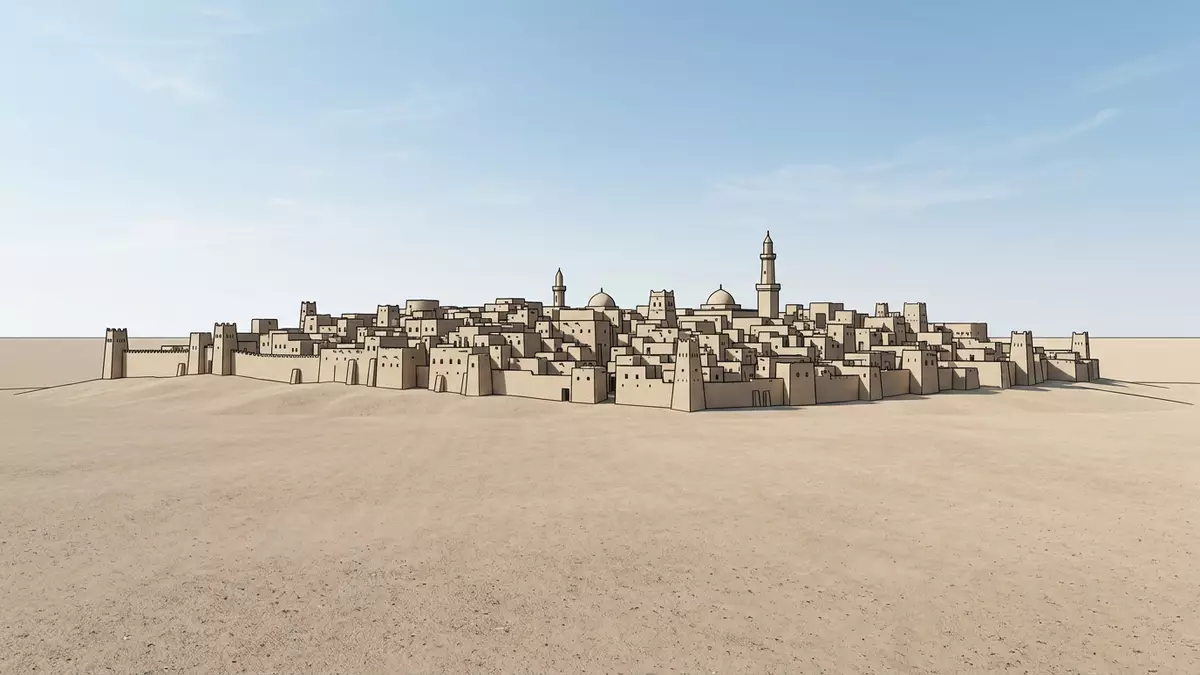
Ghadames in north-western Libya is an oasis town whose old quarter forms a compact desert settlement of mud-brick houses, shaded alleys and interconnected roof terraces. The Old Town of Ghadamès, recognised as a cultural World Heritage site since 1986, shows how a pre-Saharan community organised its architecture around an oasis and the demands of desert life in the Tripolitania region.Old Town of Ghadamès
The oasis town at the edge of the Sahara
Ghadames lies in south-western Libya near the borders with Algeria and Tunisia, on the northern fringe of the Sahara Desert where sand seas meet stone plateaux.an oasis on the edge of the Sahara The settlement grew around a natural spring called Ain al-Faras, locally known as g?husuf, which feeds the palm groves that frame the town.Ain al-Faras spring The old town is enclosed by walls, separating its dense fabric of dwellings and passages from the surrounding oasis landscape.old part of the town, surrounded by a city wall
Historically, Ghadames stood on caravan routes that linked central Africa with the Mediterranean coast, and the town’s position between the Great Erg sand sea and the Al Hamada el-Hamra plateau anchored it in trans-Saharan trade.important trade route from central Africa Arab sources refer to Ghadames as “the pearl of the desert”, a reflection of its status as one of the oldest cities in the pre-Saharan region.one of the oldest cities in the pre-Saharan region Classical texts connect the oasis with Antique Cydamae, a fortified settlement linked to Roman campaigns in 19 BC, adding another historical layer to the site.Antique Cydamae
Layered architecture of the Old Town of Ghadamès
The Old Town of Ghadamès is built largely in earthen materials, with mud-brick and palm timber forming houses that cluster in a compact urban fabric.desert urban settlement and architecture Domestic buildings are arranged on multiple levels, with storage rooms on the lowest floors, family living spaces on intermediate storeys and open roof terraces above.each storey has a distinct function The pattern creates a kind of stacked townscape in which everyday life unfolds vertically as well as horizontally.
Narrow, covered passageways carry movement at ground level, linking neighbourhoods while shielding inhabitants from desert sun.mud-brick houses and roof terraces Above these routes, the roofs of adjoining houses form continuous terraces where social life can take place in the open air yet within the town’s fabric.top-level open platforms This layered system of enclosed alleys and interconnected roofs is one of the most distinctive features of Ghadames, giving the town a three-dimensional network of spaces.
World Heritage recognition and desert settlement
The Old Town of Ghadamès entered the UNESCO World Heritage List in 1986 as cultural property C 362, recognised as an outstanding traditional human settlement.World Heritage property C 362 UNESCO documentation describes the old town as an exceptional example of desert urban settlement and architecture, highlighting the ingenuity of its builders in responding to pre-Saharan conditions.exceptional example of desert urban settlement The inscription places Ghadames within the Arab States region and aligns it with other historic oases along the desert’s northern edge.Arab States region
Within Libya, the Old Town of Ghadamès stands among several recognised heritage properties and has attracted attention for the condition of its earthen fabric.one of Libya's World Heritage properties Official records list the property area in hundreds of hectares, encompassing the dense core of the old town and related structures.Property Area; 287.590 ha. Descriptions of the town often refer to its pre-Saharan neighbours between Libya and Mauritania, underlining how Ghadames belongs to a broader belt of desert oasis settlements.series of pre-Saharan cities
Visiting Ghadames: what travellers from Western Europe should know
- Ghadames lies in north-western Libya, and the oasis town is reached overland from other Libyan cities on roads that cross desert and steppe terrain.
- The old town is compact, with passages that can be narrow and low, and movement between levels includes stairways that rise to roof terraces above the alleyways.
- The oasis landscape around Ghadames includes palm groves and irrigated plots, and the transition from cultivated ground to desert makes the town’s setting visually distinct.
- The official language is Arabic and the currency is the Libyan dinar.
- Entry requirements depend on your nationality; UK travellers can check the FCDO travel advice at gov.uk/foreign-travel-advice, Irish travellers the Department of Foreign Affairs at ireland.ie.
Searching for Ghadames on social platforms
These links open searches for Ghadames on each platform.
Frequently asked questions about Ghadames
Where is Ghadames and what kind of place is it?
Ghadames is an oasis town in north-western Libya near the borders with Algeria and Tunisia, positioned between desert sand seas and rocky plateaux.
What should visitors expect in the old town of Ghadamès?
Visitors encounter compact mud-brick architecture, shaded passageways and roof terraces above the alleys, forming a layered urban landscape around the oasis spring.
What makes the Old Town of Ghadamès distinctive among desert settlements?
Its multi-level domestic architecture, interconnected roofs and covered alleys, together with recognised World Heritage status, give Ghadames a distinctive profile among pre-Saharan towns.


