Ghadames and the layered old town of the Sahara
Published on 08/27/2026 at 09:57 | Editorial responsibility: Rafael Müller, Editor-in-Chief AD HOC NEWS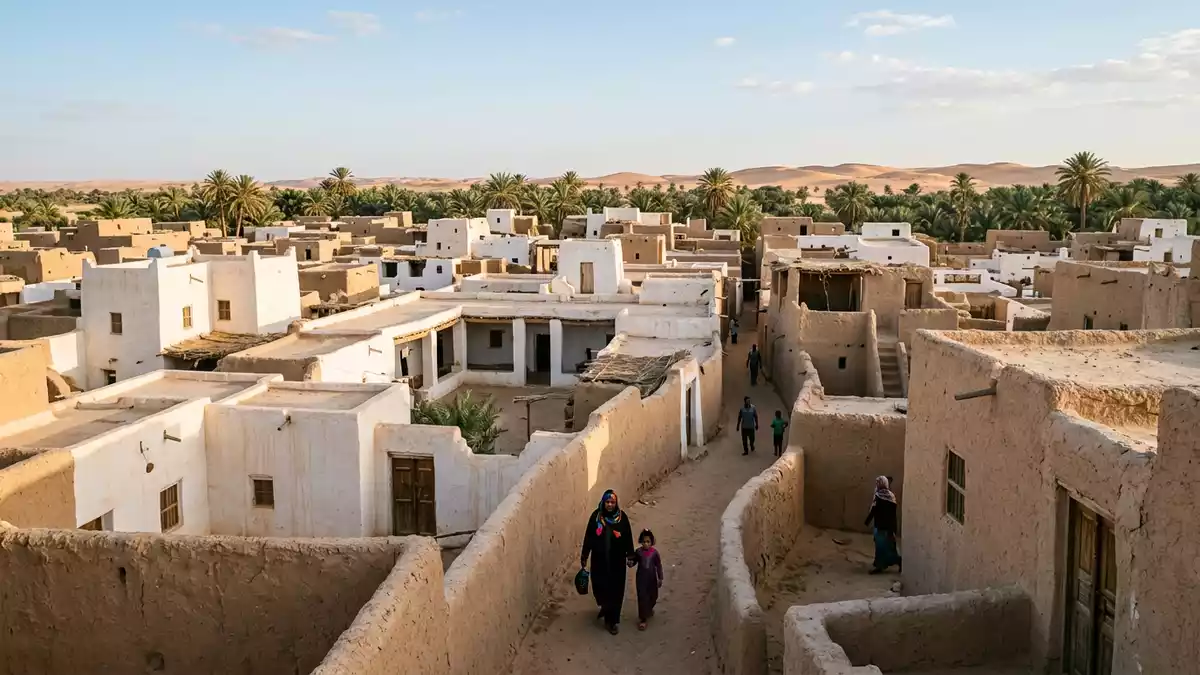
Ghadames in western Libya is known for its old town, a compact oasis settlement of mud-brick houses and roof terraces. The Old Town of Ghadamès entered the UNESCO World Heritage List in 1986, and its fabric is tied to the desert trade routes that once crossed the region.UNESCO World Heritage List
Ghadames and its layered oasis streets
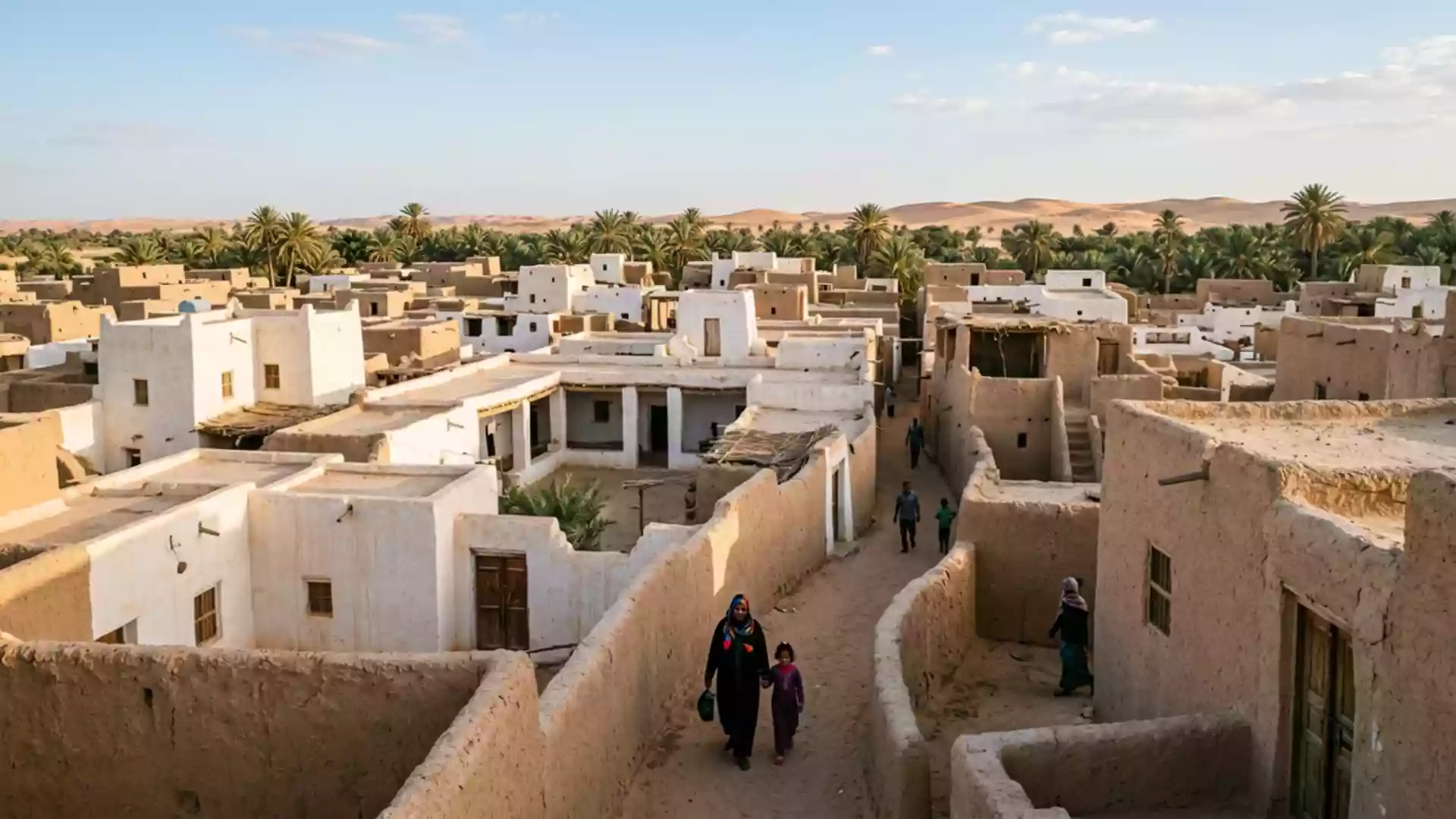
The old town is organised as a dense cluster of buildings rather than a spread-out district. Whitewashed walls, covered passages and a sequence of terraces give it a strongly ordered appearance, while the settlement sits within the palm oasis that has long sustained life here.
The town’s architecture is part of its identity: ground-level spaces serve storage and work, upper levels carry living rooms, and roof terraces link house to house. That arrangement appears in descriptions of Ghadames as a desert urban settlement shaped by local materials and climate-aware domestic planning.domestic architecture
Ghadames in the long history of caravan exchange
Ghadames was known in Roman times as Cydamus, and its position near the borders with Tunisia and Algeria made it a stopping point on Saharan routes. The old town’s present form reflects a later period of prosperity linked to trans-Saharan trade between the thirteenth and sixteenth centuries.
That historical depth is visible in the settlement itself, where thick perimeter walls, tight lanes and stacked domestic spaces create a town that reads as both dwelling place and fortified enclosure. The site is a cultural monument rather than a single isolated building, and its significance lies in the survival of that urban pattern.trans-Sahara trading routes
Ghadames as a protected heritage site
The Old Town of Ghadamès is one of Libya’s World Heritage properties and carries formal recognition for its cultural value. The heritage listing underlines the survival of an oasis town whose architecture, materials and spatial order remain closely linked.
Its desert setting is part of the visual experience, but the strongest impression comes from the town’s internal geometry: narrow lanes, flat roofs and enclosed domestic levels. Those features make Ghadames legible as a historic Saharan settlement built in mud-brick, wood and lime, with a form that still reads clearly across its neighbourhoods.World Heritage property
Visiting Ghadames: what travellers from Western Europe should know
- Ghadames lies in western Libya, close to the frontiers with Tunisia and Algeria. The town is reached by road from the wider Saharan region, and the old quarter sits within the oasis settlement.
- The old town is a compact place of narrow lanes, enclosed passages and roof levels. Its streets and domestic terraces form a tight urban fabric rather than an open grid.
- The official language is Arabic and the currency is the Libyan dinar.
- Entry requirements depend on your nationality; UK travellers can check the FCDO travel advice at gov.uk/foreign-travel-advice, Irish travellers the Department of Foreign Affairs at ireland.ie.
Searching for Ghadames on social platforms
These links open searches for Ghadames on each platform.
Frequently asked questions about Ghadames
Where is Ghadames?
Ghadames is in western Libya, near the borders with Tunisia and Algeria. The old town lies within an oasis setting on the edge of the desert.
What does a visit involve?
The place is defined by close lanes, roof terraces and mud-brick buildings rather than broad monuments. A visit centres on the old urban fabric and its quiet domestic scale.
What makes Ghadames distinctive?
Its strongest feature is the layered organisation of the old town, with storage below, living space above and interconnected roofs. The result is a rare Saharan settlement form with a clear historic character.