
Fuji-san above Fujinomiya: Japan’s solitary volcanic cone
Published on 09/16/2026 at 12:23 | Editorial responsibility: Rafael Müller, Editor-in-Chief AD HOC NEWS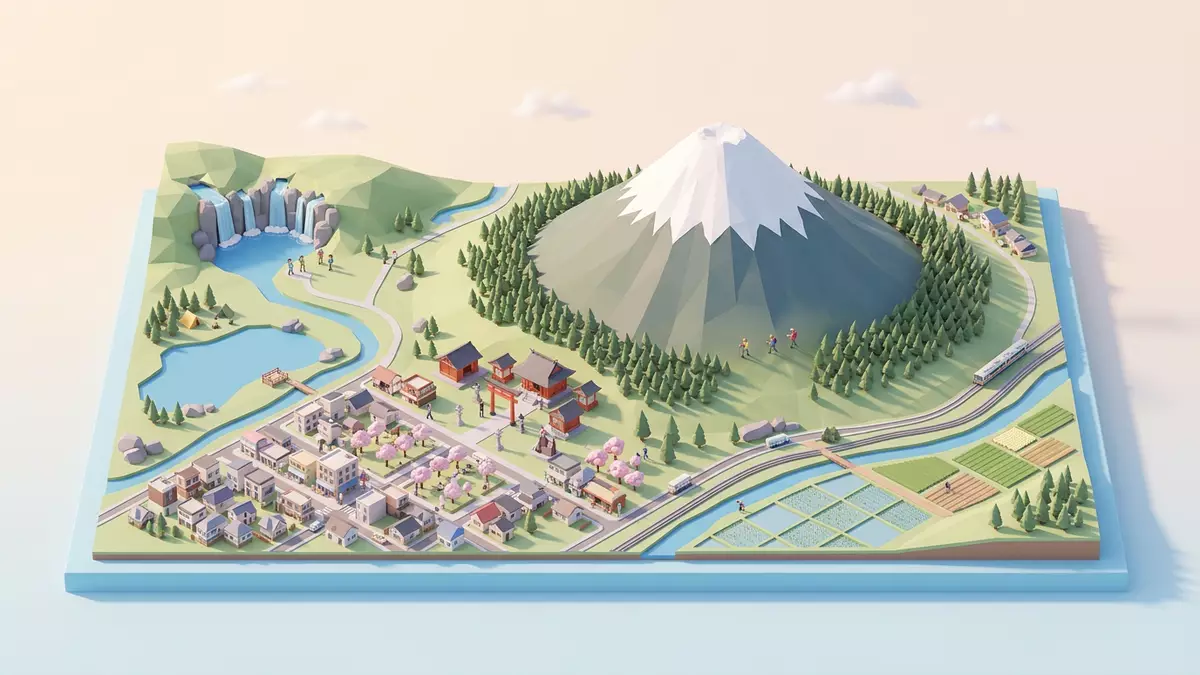
Fuji-san, known internationally as Mount Fuji, rises on the Japanese island of Honshu as a near-symmetrical volcanic cone above the city of Fujinomiya in central Japan. The mountain’s summit reaches 3,776 m (12,389 ft), making it the highest peak in Japan and a dominant landmark over the plains that extend towards Suruga Bay.
A solitary stratovolcano shaping the Fujinomiya horizon
Fuji-san is a solitary stratovolcano standing where Shizuoka and Yamanashi prefectures meet, with its broad base spreading towards the shores of Suruga Bay on the southern side.solitary stratovolcano rising to 3,776 m The mountain stands on Honshu, west of Tokyo, and its volcanic cone dominates the skyline around Fujinomiya, giving the city a direct backdrop of dark slopes and snow-covered upper reaches in colder months.volcanic cone above the city of Fujinomiya
The shape of Fuji-san, rising in a single broad cone, has become a symbol of Japan, and the mountain is recognised as a cultural landscape of national significance. The site “Fujisan, sacred place and source of artistic inspiration” is inscribed on the UNESCO World Heritage List, highlighting both the volcanic form and the long-standing role of the mountain in art and pilgrimage.UNESCO World Heritage listing
Fujisan Hongu Sengen Taisha: shrine at the mountain’s southern foot
On the south-western foot of Fuji-san in Fujinomiya stands Fujisan Hongu Sengen Taisha, the head shrine of a network of Sengen shrines dedicated to the mountain.Fujisan Hongu Sengen Taisha in Fujinomiya The shrine complex occupies a generous plot in the city centre, with pavilions, trees and water features forming a landscaped precinct connected to surrounding streets.
Fujisan Hongu Sengen Taisha enshrines Konohanasakuya-hime, a Shinto deity associated with Fuji-san, and serves as a spiritual gateway for worshippers and climbers approaching the mountain from the southern side.Konohana-no-Sakuya as Fuji-san’s deity Within the grounds lies Wakutama-ike, a pond fed by spring water connected to Fuji-san, reflecting shrine buildings and nearby greenery and underlining the link between the city and the volcanic slopes above.Wakutama-ike pond fed by Fuji-san’s water
Trails from Fujinomiya up the southern slopes
Fuji-san’s upper slopes are ringed by several ascent routes, and the Fujinomiya trail forms the principal line of approach from the southern side through Shizuoka Prefecture.Fujinomiya trail among Fuji-san routes Roads from Fujinomiya climb towards high trailheads on the flank of the mountain, from which marked paths zigzag across volcanic terrain towards the summit ridge.approach from Fujinomiya to high trailheads
From the city streets, Fuji-san’s slopes rise sharply, and the change from settled lowlands to ash-covered upper ground is visible even from lower viewpoints. Travellers approaching from Fujinomiya experience the mountain as a continuous sequence: urban districts with views of the cone, shrine precincts linked to flowing spring water, and then road and trail corridors that lead into bare volcanic landscapes and thinner air.
Visiting Fuji-san: what travellers from Western Europe should know
- Fuji-san stands on Honshu in central Japan, west of Tokyo, with Fujinomiya lying near its southern foot in Shizuoka Prefecture; rail and road links connect the city with wider transport networks.
- The southern approaches from Fujinomiya involve travel from low-lying city streets into higher volcanic slopes, where trails cross uneven, ash-covered ground and weather conditions can vary with altitude.
- Fujisan Hongu Sengen Taisha sits in central Fujinomiya and can be reached from nearby railway stations on foot, making it a convenient point from which to begin exploring the relationship between the city and the mountain.
- The official language is Japanese and the currency is the yen.
- Entry requirements depend on your nationality; UK travellers can check the FCDO travel advice at gov.uk/foreign-travel-advice, Irish travellers the Department of Foreign Affairs at ireland.ie.
Searching for Fuji-san on social platforms
These links open searches for Fuji-san on each platform.Frequently asked questions about Fuji-san
Where is Fuji-san in relation to Fujinomiya?
Fuji-san stands in central Japan on Honshu, with the city of Fujinomiya close to its southern foot in Shizuoka Prefecture and plains stretching towards Suruga Bay.
What should travellers expect when visiting Fuji-san from Fujinomiya?
Travellers encounter a sequence from city streets with views of the volcanic cone, through shrine grounds with spring-fed water features, to higher trails crossing ash-covered slopes.
What makes Fuji-san distinctive as a mountain landscape?
Fuji-san combines a solitary stratovolcano rising to 3,776 m (12,389 ft) with a recognised cultural landscape, including sacred sites such as Fujisan Hongu Sengen Taisha at its southern foot.


