Ercolano and the buried Roman city beneath it
Published on 09/09/2026 at 16:02 | Editorial responsibility: Rafael Müller, Editor-in-Chief AD HOC NEWS
Ercolano is a town in Campania where a modern urban grid sits above the buried remains of ancient Herculaneum, part of the UNESCO-listed archaeological areas of Pompeii, Herculaneum and Torre AnnunziataUNESCO-listed archaeological areas. The place is tied to the eruption of Mount Vesuvius in 79 AD, and that date still defines its historical identityeruption of Mount Vesuvius.
Ancient streets beneath a working town
The archaeological area of Ercolano preserves the street plan of a Roman coastal settlement, with cardines and decumani running through a compact townscape. The modern settlement above it gives the place a layered character, where ordinary streets and excavated remains occupy the same slope.
The site belongs to the ancient town of Herculaneum, a Roman place associated with the Bay of Naples and with the western side of Mount VesuviusBay of Naples. Its archaeological park holds visible remains of houses, public buildings and harbour-side spaces, making the settlement legible as a town rather than a single monumentvisible remains of houses.
Vesuvius, water and volcanic burial
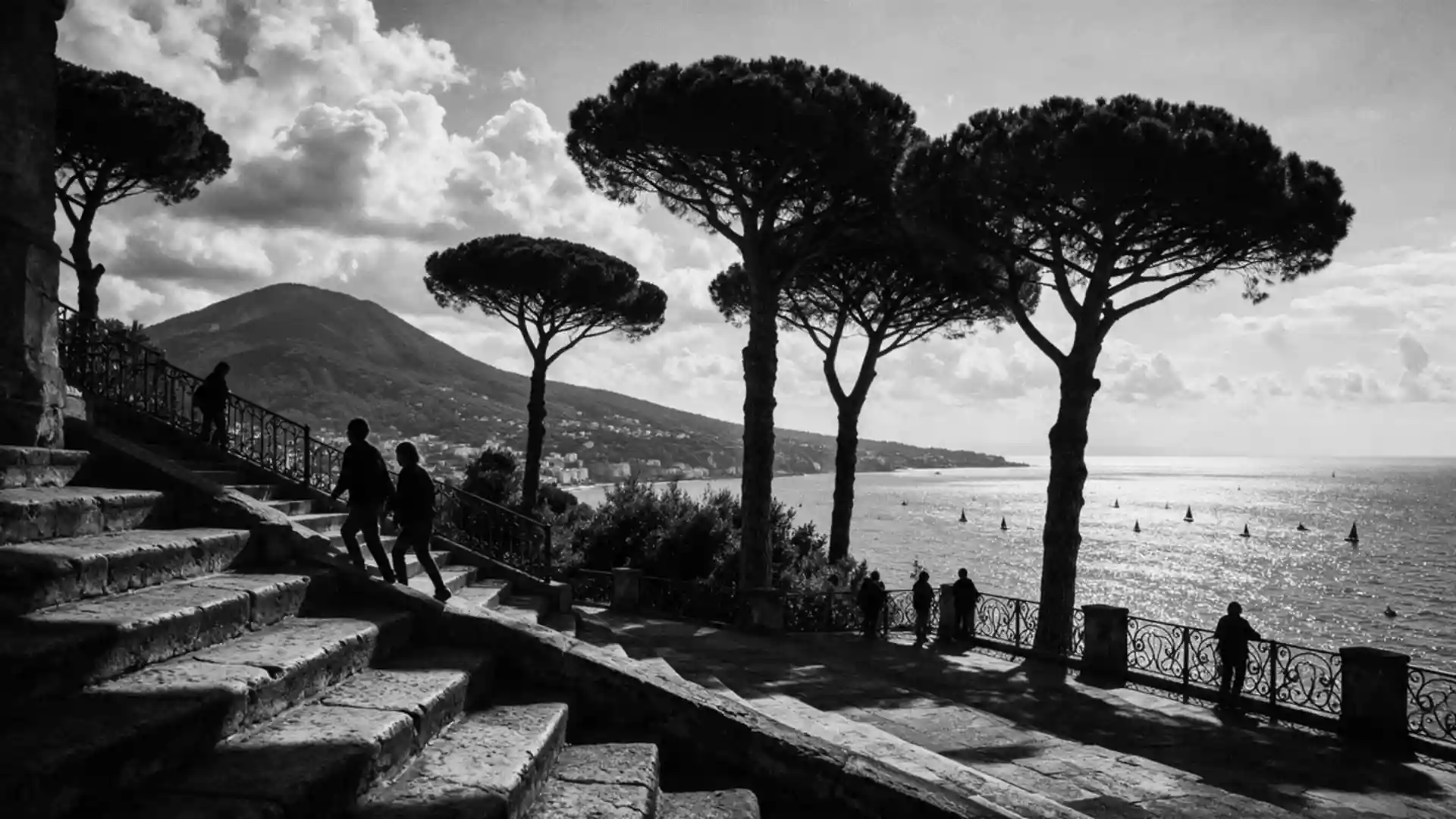
Ercolano lies within the volcanic landscape of the Gulf of Naples, with Mount Vesuvius rising inland and the sea forming the other major reference point. The ancient town was overwhelmed by the eruption in 79 AD, and the burial deposits preserved timber, masonry and interior surfaces in place.
The archaeological story of Ercolano is inseparable from that event, but the site is more than a ruin of disaster. It is also a record of Roman domestic life, with compact streets, houses and waterfront structures still visible in the excavated zonecompact streets.
From Roman town to archaeological park
The site’s modern significance lies in the contrast between the living town and the buried one. Ercolano remains a municipal place in Campania, while the archaeological park concentrates the surviving Roman fabric beneath and beside it.
Among the most important names linked to the site is the Villa dei Papiri, a Roman villa associated with Ercolano and the wider archaeological landscape of VesuviusVilla dei Papiri. The UNESCO inscription from 1997 places Ercolano within a protected group of sites that includes Pompeii and Torre AnnunziataUNESCO inscription from 1997.
Visiting Ercolano: what travellers from Western Europe should know
- Ercolano lies south-east of Naples in Campania, on the slope between Mount Vesuvius and the Bay of Naples. The archaeological area sits inside the modern town rather than apart from it.
- The excavated zone includes streets, house fronts and deeper volcanic deposits. Expect a site built around uneven ground and preserved masonry rather than a flat museum layout.
- The official language is Italian and the currency is the euro.
- Entry requirements depend on your nationality; UK travellers can check the FCDO travel advice at gov.uk/foreign-travel-advice, Irish travellers the Department of Foreign Affairs at ireland.ie.
Searching for Ercolano on social platforms
These links open searches for Ercolano on each platform.
Frequently asked questions about Ercolano
Where is Ercolano?
Ercolano is in Campania, south-east of Naples, on the slope between Mount Vesuvius and the Bay of Naples. The ancient town lies beneath the modern settlement.
What does a visit involve?
The place combines an archaeological park with a living town around it. Visitors encounter Roman streets, masonry and volcanic deposits rather than a single freestanding monument.
What makes Ercolano distinctive?
Ercolano is distinctive for the way a Roman coastal town survives beneath a modern urban layer. The association with 79 AD and the UNESCO-listed group of sites gives it a clear historical frame.