
Ercolano and its buried Roman streets between Vesuvius and the sea
Published on 08/29/2026 at 12:12 | Editorial responsibility: Rafael Müller, Editor-in-Chief AD HOC NEWS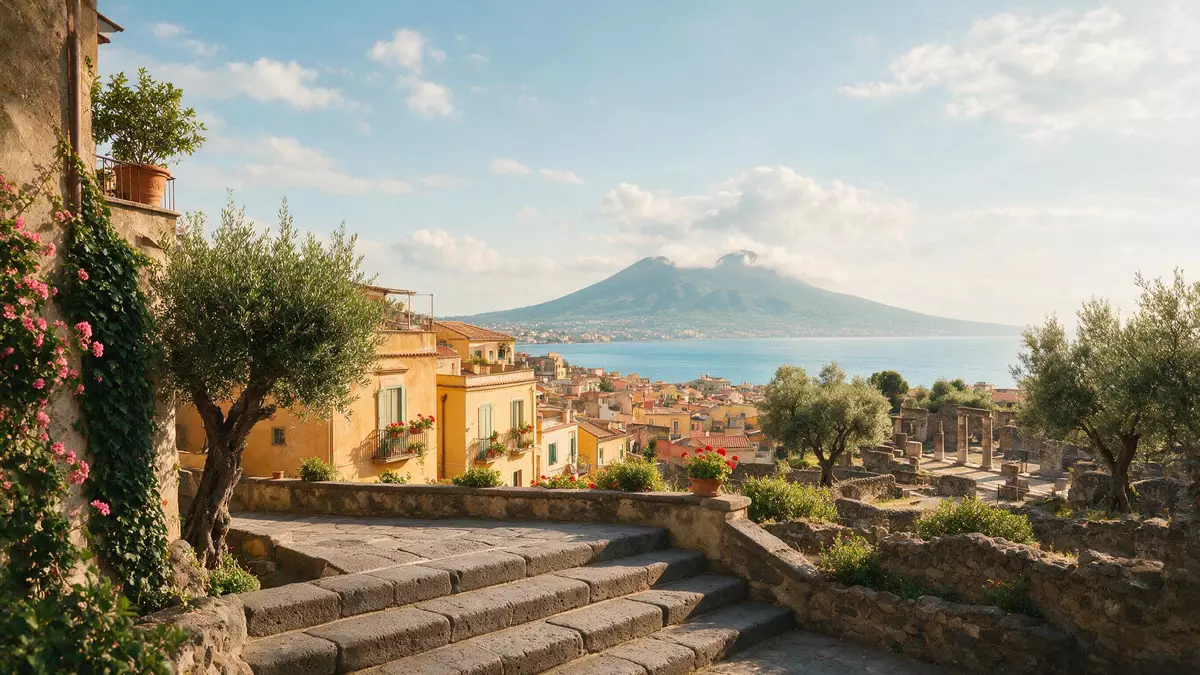
Ercolano in southern Italy offers a layered encounter with the ancient Roman town preserved beneath the streets and houses of a modern coastal city, its excavated lanes still aligned between Mount Vesuvius and the Bay of Naples. The archaeological area belongs to the wider Roman landscape around Vesuvius in the first century AD and forms part of a UNESCO World Heritage listing that also includes Pompeii and sites at Torre Annunziata.
Ercolano: a Roman town buried under Vesuvius
The ancient town at Ercolano was a compact settlement in Campania, with a walled area of about 20 hectares and an estimated population in the region of 4,000 inhabitants, laid out on a grid of streets known as decumani and cardini.walled area of about 20 hectares It stood near the shoreline of the Bay of Naples, at the western base of Mount Vesuvius, in the same volcanic belt as Pompeii and neighbouring coastal villas.western base of Mount Vesuvius In the first century, its streets carried residents from houses and public buildings down towards the harbour zone that has largely remained buried under later deposits.
In 79 AD a major eruption of Mount Vesuvius overwhelmed the town, covering it in thick pyroclastic material that extended across the built-up area and into the former harbour.eruption of Mount Vesuvius in 79 AD Unlike the lighter ash falls that struck Pompeii, the hotter, denser flows at Ercolano encased walls, roofs and interiors, preserving structural timber, furnishings and decorative finishes to a degree rarely encountered elsewhere around Vesuvius.preserved by the eruption of Mount Vesuvius This combination of sudden destruction and deep burial left the ancient fabric hidden beneath what became a different settlement on the same slope.
From early excavations to the Parco Archeologico di Ercolano
The remains of the Roman town lay unseen until exploratory digging began in the eighteenth century under the Bourbon rulers of Naples, who ordered networks of shafts and tunnels driven through the volcanic deposits to reach the buried structures.explorations in the eighteenth century These early campaigns revealed theatres, colonnades and richly decorated interiors, but their underground methods made sustained excavation difficult in the hardened volcanic material and left large parts of the city still entombed.
Systematic open-air excavation on a broader scale began in 1927 under archaeologist Amedeo Maiuri, freeing and restoring much of the area that now forms the core of the archaeological park.new excavations in 1927 Further campaigns in the twentieth century exposed the ancient shoreline and revealed the remains of residents who had gathered near the waterfront as the eruption progressed, as well as parts of the Villa dei Papiri with its long colonnades and ornamental spaces.Villa dei Papiri In 1997 the site joined Pompeii and the villas at Torre Annunziata in a single World Heritage inscription recognising the archaeological areas around Vesuvius.World Heritage Site in 1997
Walking Ercolano’s buried streets beneath a modern town
Visitors to Ercolano descend from the level of the modern town into a wide excavation that exposes several blocks of the Roman settlement, with streets running between rows of houses, workshops and public buildings. The area open to the sky covers around 4.5 hectares within the larger buried city, so the visible remains form a substantial but still partial cross-section of the ancient town.area visible a cielo aperto Above the excavated terraces, contemporary Ercolano continues on its own street pattern, so the archaeological park lies embedded in an urban district rather than separated in open countryside.embedded in the modern town
Within the exposed area, richly decorated domus with mosaics and wall paintings stand beside more functional premises, creating a close view of different layers of Roman domestic life in the first century AD.ancient domus and public buildings Baths, colonnaded courtyards and food shops line the streets, and the contrast between the excavated Roman levels and the modern buildings above makes Ercolano one of the clearest places to see how an ancient town, a later coastal settlement and the volcano that destroyed them share the same slope.archaeological area
Visiting Ercolano: what travellers from Western Europe should know
- Ercolano stands south-east of Naples in Campania, between Mount Vesuvius and the Bay of Naples, with the archaeological area lying within the built-up zone of the town.
- The Parco Archeologico di Ercolano occupies terraced ground cut into deep volcanic deposits, so reaching the Roman streets involves descending ramps and stairways between the modern surface and the excavated levels.
- The town is served by the Circumvesuviana railway, with trains running between Naples and Sorrento and a station named Ercolano Scavi providing access to the archaeological park.
- The official language is Italian and the currency is the euro.
Searching for Ercolano on social platforms
These links open searches for Ercolano on each platform.Frequently asked questions about Ercolano
Where is Ercolano and what is found there?
Ercolano is a town in Campania south-east of Naples, where an archaeological park reveals part of a buried Roman settlement preserved under volcanic deposits.
What can visitors expect when exploring Ercolano?
Visitors walk along excavated Roman streets between houses, baths and public buildings, descending from the level of the modern town into terraces cut into volcanic material.
What makes Ercolano distinctive among sites near Vesuvius?
Ercolano is distinctive for the depth of its burial, the preservation of structures and interiors, and the way the ancient town lies beneath an active coastal community on the same slope.


