Eje Cafetero and Salento in Colombia's coffee hills
Published on 09/03/2026 at 13:52 | Editorial responsibility: Rafael Müller, Editor-in-Chief AD HOC NEWS
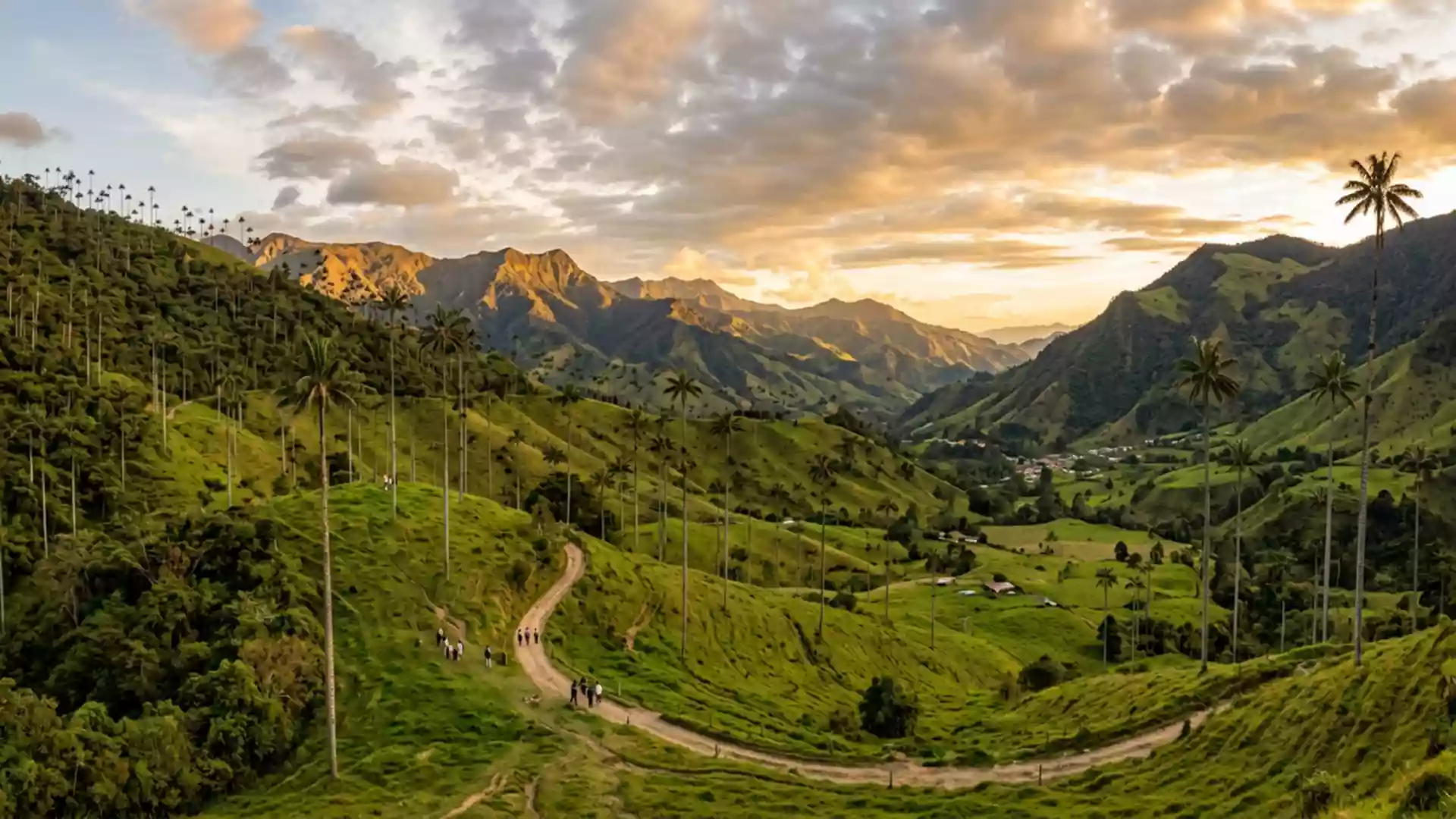
Eje Cafetero in Colombia is a coffee region of steep Andean hills, small towns and productive farmland around Salento. The Coffee Cultural Landscape of Colombia was inscribed on the UNESCO World Heritage List in 2011, and its fabric still links fields, settlements and road corridors.
Salento and the Andean coffee corridor
Salento sits in Quindío, within the broader coffee-growing axis of central Colombia. The region extends through the departments of Caldas, Quindío and Risaralda, with parts reaching Valle del Cauca and Tolima, and its hills rise within the Cordillera de los Andes.UNESCO inscription
The landscape combines farming land with urban settlements on hilltops above sloping coffee fields. In the World Heritage description, the towns are associated with Antioquian colonisation and Spanish influence, with cob, cane and clay tiles among the recorded building materials.
Architecture, land use and living tradition
The World Heritage area includes six farming landscapes and 18 urban centres. That combination matters: the coffee region is not only agricultural land, but also a chain of settlements that keep the working landscape legible.six farming landscapes
The place is tied to a centennial tradition of coffee growing in small plots, and its urban architecture reflects that long continuity. Bahareque walls, clay roofs and hillside streets give many settlements a consistent appearance without making them uniform.
The landscape around Salento
Salento is closely associated with the Cocora Valley and the slopes that rise beyond the town. The local terrain is steep, with roads and paths climbing through hills, farm plots and forested sections.Salento in Quindío
At a broader scale, Eje Cafetero sits in the Andean highlands rather than on a flat plateau. The result is a region where agricultural land, transport routes and town centres sit in close relation on a mountainous diagonal across central Colombia.central Colombia
Visiting Eje Cafetero: what travellers from Western Europe should know
- Salento lies in Quindío, and road links connect it with the regional cities of Armenia and Pereira.
- The area around Salento has steep ground, cobbled streets and rural paths that climb through coffee country.
- The official language is Spanish and the currency is the Colombian peso.
- Entry requirements depend on your nationality; UK travellers can check the FCDO travel advice at gov.uk/foreign-travel-advice, Irish travellers the Department of Foreign Affairs at ireland.ie.
Searching for Eje Cafetero on social platforms
These links open searches for Eje Cafetero on each platform.
Frequently asked questions about Eje Cafetero
Where is Eje Cafetero?
Eje Cafetero is in central Colombia’s Andes, with Salento in Quindío and the broader coffee region spreading through Caldas, Risaralda and parts of neighbouring departments.
What does a visit involve?
It involves hill towns, coffee-growing slopes and roads that climb into a mountainous landscape. Salento provides access to the surrounding coffee country and the Cocora Valley.
What makes the place distinctive?
The region combines coffee farming, hillside settlements and a UNESCO-listed cultural landscape. Its architecture and land use reflect a long coffee-growing tradition in the Andes.