Eje Cafetero, where Colombia’s coffee hills meet Salento
Published on 08/23/2026 at 10:30 | Editorial responsibility: Rafael Müller, Editor-in-Chief AD HOC NEWS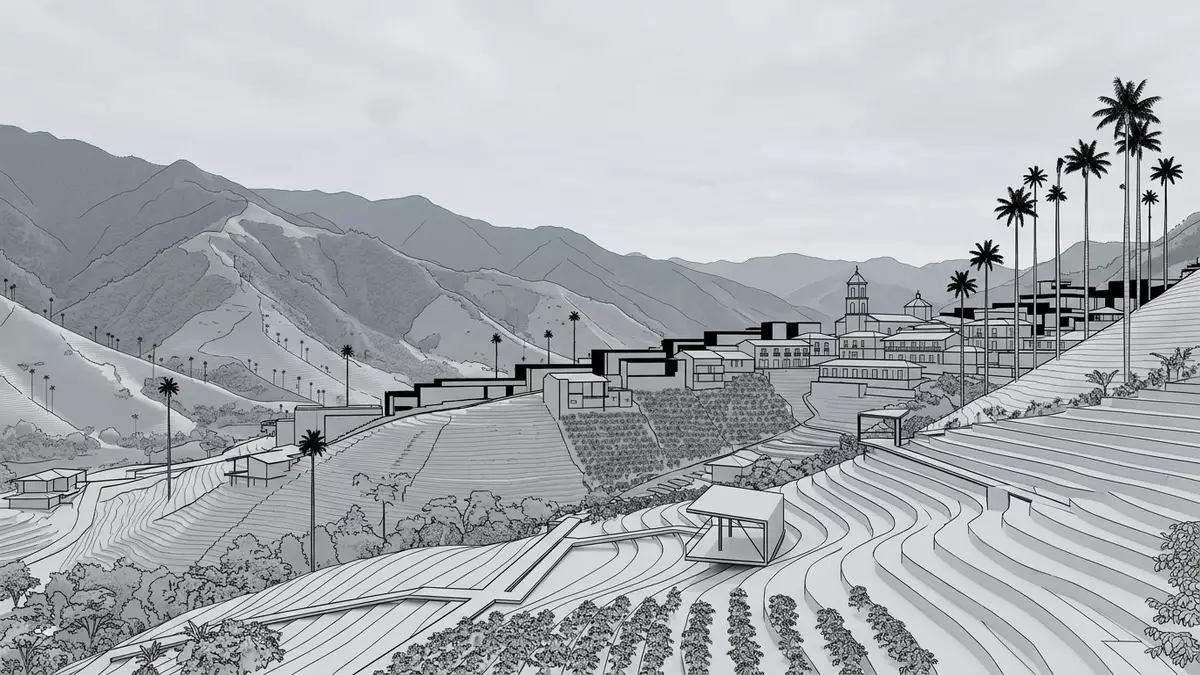
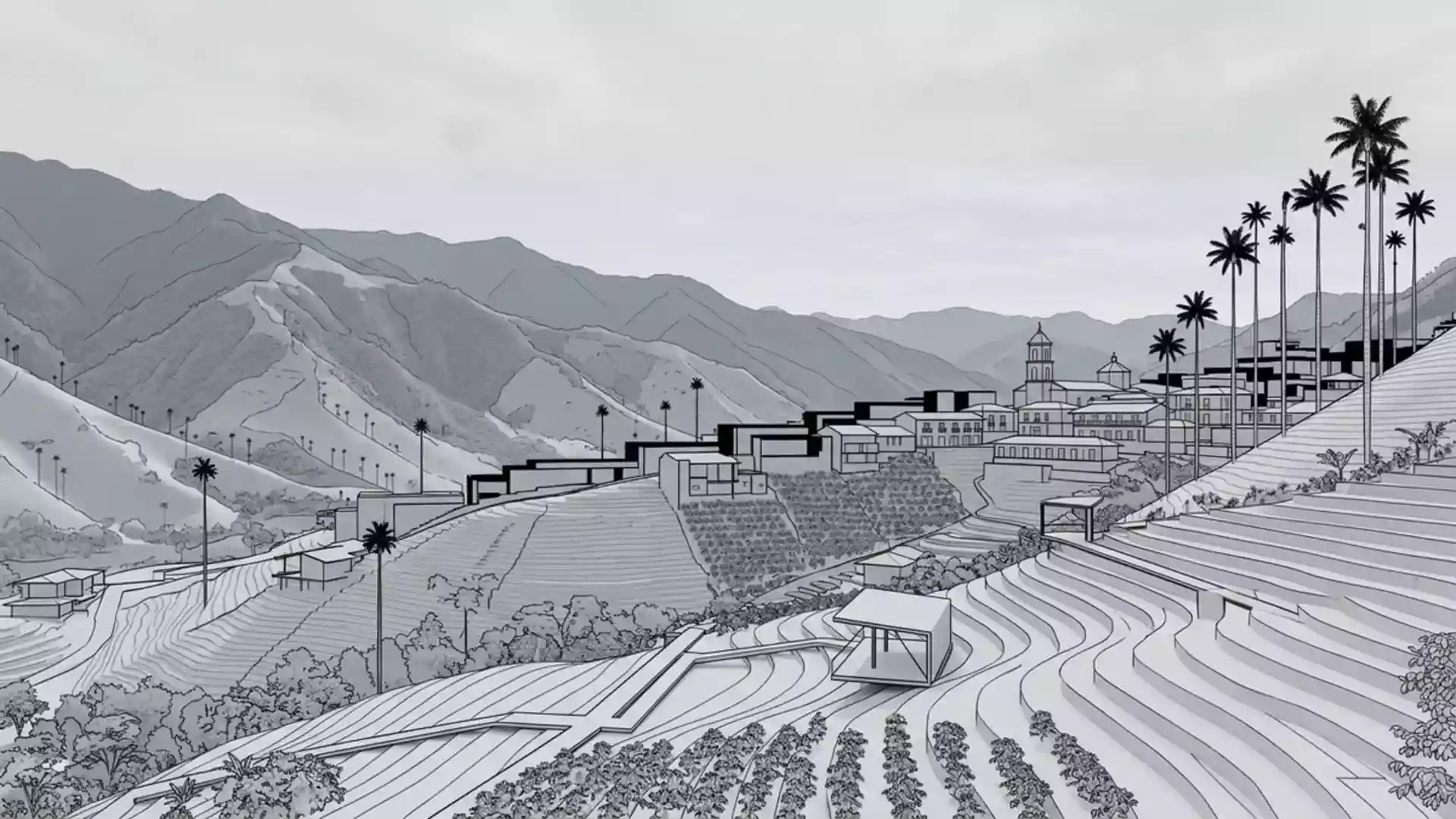
Eje Cafetero, the Coffee Axis of central Colombia, spreads around Salento in a sweep of steep Andean hills terraced with coffee shrubs and dotted with brightly painted towns. Since 2011, part of this landscape has been recognised as the Coffee Cultural Landscape of Colombia on the UNESCO World Heritage List, tying the daily work of small farms to a formally protected cultural region.
Coffee hills and Andean geography
The Eje Cafetero lies in Colombia’s central Andes, with Salento set in the department of Quindío among ridges that climb between about 1,300 and 2,200 m (4,265–7,218 ft) above sea level.Central Andes elevations The Coffee Axis runs through the departments of Caldas, Risaralda and Quindío, extending into neighbouring Valle del Cauca and Tolima along a diagonal band of mountains.
These coffee hills sit on the flanks of the Cordillera Central and Cordillera Occidental, part of the wider Andean chain that crosses Colombia.Coffee Cultural Landscape of Colombia Deep valleys carry rivers and cloud forest, while roads climb to small towns such as Salento, Filandia and Montenegro, which serve as local gateways between the farms and the higher, wilder terrain.
A World Heritage coffee landscape
UNESCO inscribed the Coffee Cultural Landscape of Colombia on the World Heritage List in 2011, recognising a cultural region shaped by generations of small-scale coffee growers.World Heritage inscription in 2011 The listed area lies within the broader Eje Cafetero and covers selected zones in Caldas, Quindío, Risaralda and Valle del Cauca, bringing together towns, hamlets and rural land where coffee, housing and transport form a single cultural fabric.Extent of the Coffee Cultural Landscape
Within this landscape, coffee fincas operate on steep slopes where rows of shrubs share space with banana and other shade trees. Traditional town centres, including that of Salento, show timber-and-masonry construction and balconies painted in strong colours, with long axes of streets framing views towards the surrounding hills.
Salento and the Cocora Valley
Salento stands in eastern Quindío and functions as one of the best-known small towns of the Eje Cafetero, with streets lined by low Bahareque-style houses painted in bright combinations of white, blue, green, red and yellow.Colourful Bahareque houses in Salento Around the main square, arcades, balconies and small shops emphasise the town’s role as a local hub between farms and visitors.
From Salento, a road follows the valley of the Río Quindío towards the Cocora Valley, a high Andean basin where cloud forest fragments give way to grassy slopes punctuated by wax palms. These palms, known in Spanish as palmas de cera, are Colombia’s national tree and can reach heights of around 60 m (197 ft), making them the tallest palm species in the world.Wax palms of the Cocora Valley Trails in the valley climb steadily, with stretches of farm track and sections of narrower path crossing pastures and forested ravines.
Visiting Eje Cafetero: what travellers from Western Europe should know
- Eje Cafetero lies in central Colombia, around the departments of Caldas, Quindío and Risaralda. Salento is in Quindío and is linked by road to the regional cities of Armenia and Pereira.
- The terrain around Salento and the Cocora Valley is steep and uneven, with cobbled streets in town and dirt paths, farm tracks and stepped sections on rural walks.
- The region sits at mid to high elevations in the Andes, and walks in the Cocora Valley involve noticeable altitude gain between the trailheads and the higher viewpoints.
- The official language is Spanish and the currency is the Colombian peso.
- Entry requirements depend on your nationality; UK travellers can check the FCDO travel advice at gov.uk/foreign-travel-advice, Irish travellers the Department of Foreign Affairs at ireland.ie.
Searching for Eje Cafetero on social platforms
These links open searches for Eje Cafetero on each platform.
Frequently asked questions about Eje Cafetero
Where is Eje Cafetero in Colombia?
Eje Cafetero is in central Colombia’s Andes, covering coffee-growing areas in the departments of Caldas, Risaralda, Quindío and parts of Valle del Cauca and Tolima.
What can visitors expect around Salento?
Visitors encounter steep coffee-covered hills, a compact town of brightly painted Bahareque houses, and access to trails leading into the Cocora Valley and surrounding countryside.
What makes Eje Cafetero distinctive among coffee regions?
The combination of smallholder coffee farms, colourful Andean towns and the UNESCO-listed Coffee Cultural Landscape gives Eje Cafetero a blend of agriculture and heritage tied to specific terrain.