

Douz, palm oasis at the gateway to the Tunisian Sahara
Published on 08/28/2026 at 09:06 | Editorial responsibility: Rafael Müller, Editor-in-Chief AD HOC NEWS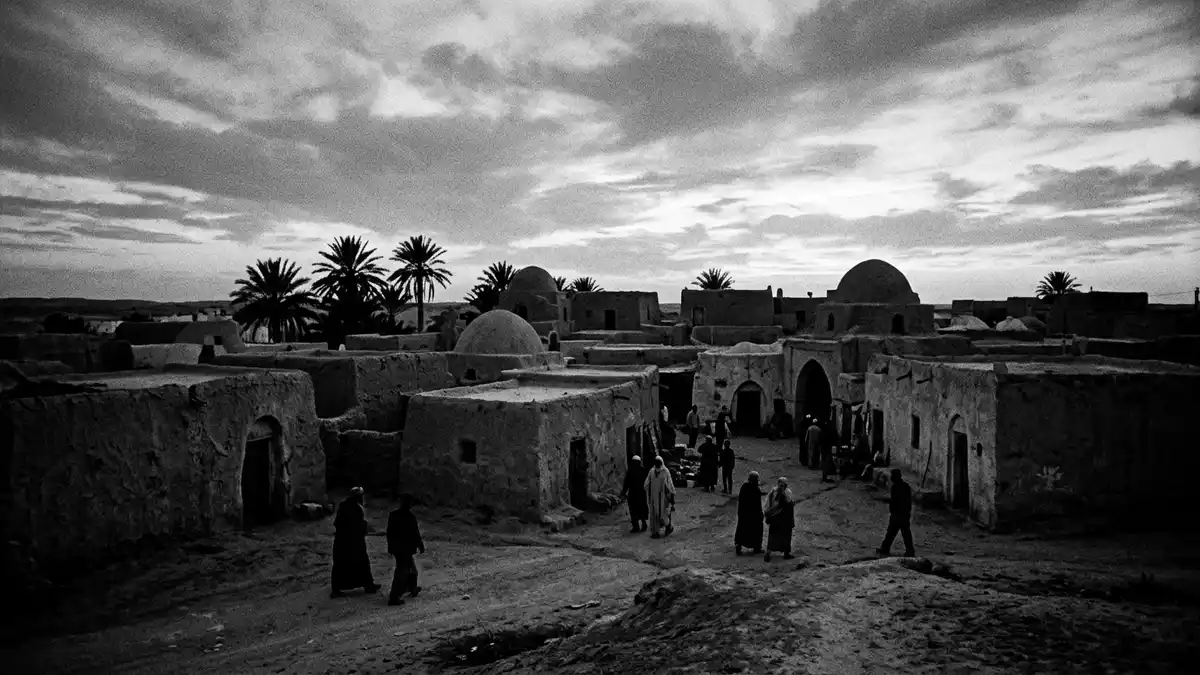
On the southern fringe of Tunisia, Douz marks a clear frontier between cultivated oasis and open desert, a town where dense palm groves end and the first high dunes of the Sahara begin. In the Kebili Governorate, Douz has grown around its oasis and is widely known by its nickname “gateway to the Sahara”, reflecting its position beside the sand sea of the Grand Erg Oriental and its long-standing role as a staging point for desert journeys.
Douz and its oasis on the edge of the Sahara
Douz stands in the Nefzaoua oasis region of southern Tunisia, south of the broad salt lake of Chott el Djerid and linked by roads to towns such as Kebili and Tozeur.Nefzaoua oasis region Administratively, Douz forms part of Kebili Governorate, described as a municipality of just over 30,000 inhabitants in the mid-2010s.municipality of 30,245 inhabitants The settlement occupies slightly raised ground at the northern edge of the Grand Erg Oriental, the vast sand sea that stretches into Algeria and defines this part of the Sahara.northern edge of the Grand Erg Oriental
Geographically, Douz lies in a belt of oases south of Chott el Djerid, a salt lake that separates the desert from more temperate inland plains.south of the Chott Djerid The oasis itself is densely planted with date palms, forming a canopy above irrigated plots and tracks leading towards the dunes; some descriptions emphasise how palm trees outnumber residents by a large margin, underlining the agricultural character of the town.palm oasis and major producer of dates Around the groves, desert scrub and sand take over and the landscape opens into the rolling forms of the Sahara.
From caravan stop to desert gateway town
Douz has long functioned as a stop on routes crossing the Sahara, positioned where reliable water and shade meet the open desert beyond.important stop on trans-Saharan caravan routes The town is frequently described as the “gateway to the Sahara”, a phrase that has become part of its identity and appears across travel guides and maps.Gateway to the Sahara By road, Douz is situated in the south-central part of Tunisia, with connections leading north towards Tunis, west to Tozeur and east through Kebili to other desert settlements.town in the Kebili Governorate
The population of Douz is linked to the Mrazig, or Merazig, people, whose ancestry is associated with Arab tribes such as Banu Sulaym that moved into Tunisia in the thirteenth century, giving the town a strong nomadic cultural background.Mrazig people from Banu Sulaym Bedouin traditions are reflected in local festivals, in camel handling and in desert crafts presented in Douz’s Museum of the Sahara, where exhibits focus on clothing, tools and objects from nomadic life in the surrounding region.Museum of the Sahara and Mrazig culture Together, the oasis setting and caravanning past make Douz a town where the practicalities of desert travel and the culture of the Sahara are unusually visible in daily life.
Desert approaches and everyday life among the palms
In Douz, streets lined with palm trees are only a short walk from the open dunes, making it possible to step from cultivated plots directly onto desert sand without any long overland journey.walk straight from streets into dunes Guides based in the town organise camel treks and vehicle trips into the Grand Erg Oriental, using Douz as a starting point for bivouacs and camps deeper into the dunes.launch point for camel treks and bivouacs The proximity of the desert means the sandy horizon remains part of the town’s visual field, even while day-to-day activity centres on the oasis and its produce.
Around the market area, stalls display dates from the surrounding groves, including varieties such as “deglet nour” that are associated with this part of Tunisia.diglat noor dates from local palm groves Seasonal gatherings and festivals focus on Sahara traditions, with events such as camel wrestling and desert music underscoring Douz’s role as a meeting place for communities from across the region.camel wrestlers and festival of the Sahara Everyday structures in the town include low-rise houses, small hotels and service buildings lining roads that lead out towards Kebili, Matmata and other desert towns, while the oasis continues to form a green band between the built-up area and the sand.
Visiting Douz: what travellers from Western Europe should know
- Douz is in southern Tunisia in Kebili Governorate, reached by road from Tunis via inland highways and from other towns such as Tozeur, Kebili and Matmata.
- The town itself is largely level, but approaches to the dunes involve walking on loose sand, and camel treks or vehicle excursions cross undulating terrain without paved paths.
- Douz lies in a hot, dry region with a climate described as Mediterranean with Saharan influence, and temperatures in the dune areas can be high even outside midsummer.
- The official language is Arabic and the currency is the Tunisian dinar.
- Entry requirements depend on your nationality; UK travellers can check the FCDO travel advice at gov.uk/foreign-travel-advice, Irish travellers the Department of Foreign Affairs at ireland.ie.
Searching for Douz on social platforms
These links open searches for Douz on each platform.
Frequently asked questions about Douz
Where is Douz in Tunisia?
Douz is an oasis town in the Kebili Governorate of southern Tunisia, lying in the Nefzaoua region south of the salt lake Chott el Djerid and reached by road from surrounding towns.
What should travellers expect on a visit to Douz?
Travellers encounter a palm-filled oasis where date cultivation, desert markets and camel handling are part of everyday life, with the open dunes of the Grand Erg Oriental beginning a short distance beyond the town.
What makes Douz distinctive among Tunisian towns?
Douz is closely associated with the Sahara, combining a large palm oasis, nomadic Mrazig cultural heritage and direct access to dunes, which together underpin its reputation as the “gateway to the Sahara”.


