
Deadvlei’s white clay pan and blackened trees in Namib-Naukluft
Published on 09/17/2026 at 07:56 | Editorial responsibility: Rafael Müller, Editor-in-Chief AD HOC NEWS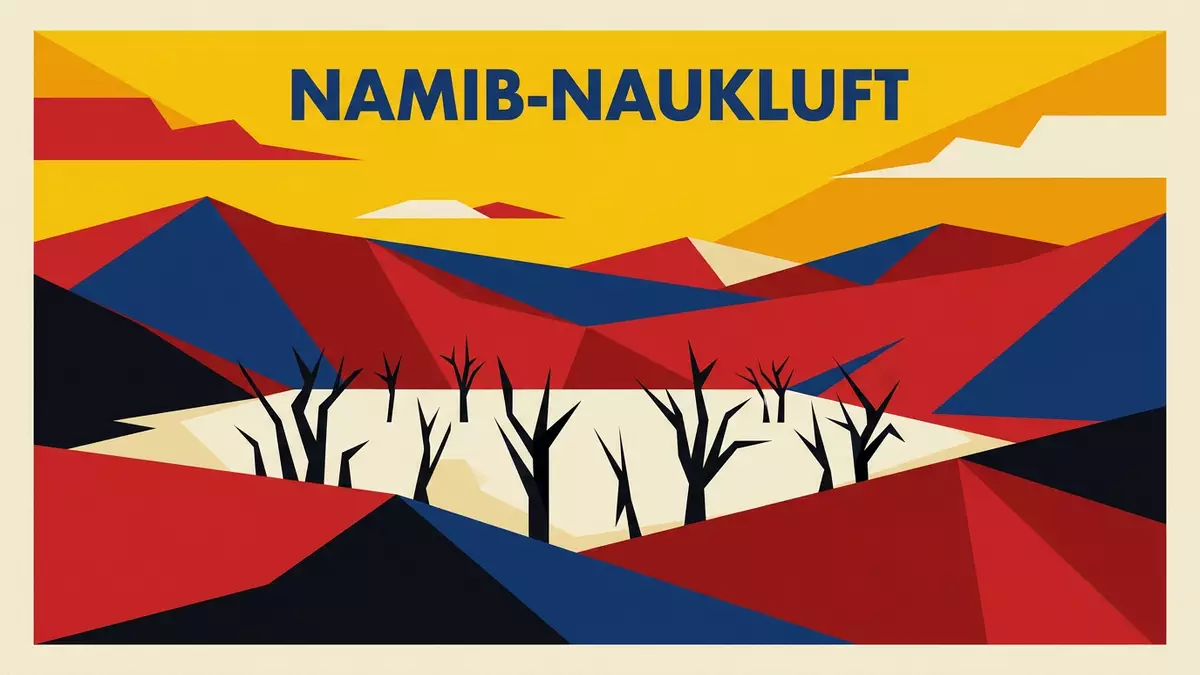
In the southern Namib Desert of Namibia, Deadvlei is a clay pan where blackened camel thorn trees rise from a cracked, pale floor, enclosed by high red-orange dunes in Namib-Naukluft National Park.
Clay pan, dead trees and surrounding dunes
Deadvlei lies in a hollow among dunes in the Sossusvlei area of Namib-Naukluft National Park, within the wider Namib Desert of south-western Namibia.Deadvlei is described as a white clay pan near Sossusvlei The basin’s surface is pale clay, its crust broken into irregular polygons that stand out sharply against the deep colour of the surrounding sand.Descriptions present the pan as a light-coloured clay floor ringed by high dunes
Across this clay floor stand dark trunks and branches of dead camel thorn trees, leafless and stripped of bark, set against the dunes in all directions.Visitor information identifies the trees as camel thorn acacias The name “Deadvlei” combines English “dead” with the Afrikaans word “vlei” for a shallow pan or marsh, a label that reflects both the form of the basin and the lifeless trunks that occupy it.Explanations of the name translate it as “dead marsh”
From seasonal pools to a dried-out basin
Deadvlei was once an oasis where floodwater from the Tsauchab River reached this basin, forming temporary pools on the clay and allowing camel thorn trees to grow.Accounts of the pan’s origin describe floodwater from the Tsauchab spreading into the basin The trees took root in the damp ground and formed a pocket of woodland within the surrounding dunes, distinct from the broader salt-and-clay pan at nearby Sossusvlei where the river’s course comes to an end.Sossusvlei is described as the terminal basin of the Tsauchab River
Later, the dunes blocked the Tsauchab’s access to this hollow and surface water stopped reaching Deadvlei, leaving the clay pan dry and cutting off the trees from their former supply of floodwater.Descriptions explain that shifting dunes blocked the river and the clay pan dried The camel thorn trees died centuries ago, yet their trunks and branches remain standing because the hyper-arid Namib Desert climate offers almost no moisture for fungi and bacteria to break down the wood.Information on Deadvlei notes that the dead trees have dried without rotting The result is a clay basin that no longer carries standing water or living trees on its floor, yet still holds the skeletons of the former woodland.
Age, preservation and visual character
The dead camel thorn trees at Deadvlei are dated to several centuries old, with documented estimates converging in a range between roughly 600 and 900 years.One summary places their death between about 1340 and 1430 Guides and site information describe them as about 900 years in age, giving the basin a direct link to environmental changes in the Namib Desert over the last millennium.Visitor notes estimate the trees to be approximately 900 years old
Although the trunks appear black and hardened, the wood is not petrified; it has simply dried and darkened under intense sun and exceptionally low humidity, remaining upright in the clay.Explanations emphasise that the trees are preserved, not petrified Against the pale, cracked clay floor and the high dunes that rise in tones of red and orange around the basin, these blackened camel thorn skeletons form a striking composition of materials and colours in the centre of Namib-Naukluft National Park.Travel features describe dark trees set against a white pan and red dunes
Visiting Deadvlei: what travellers from Western Europe should know
- Deadvlei lies in the Sossusvlei sector of Namib-Naukluft National Park in south-western Namibia, reached by road from the park entrance towards the end of the Tsauchab River’s dune corridor.
- The pan itself is accessed on foot across soft desert sand from the nearest vehicle parking area, with a stretch that involves walking over a dune slope before reaching the clay basin.
- The terrain within Deadvlei is level but uneven underfoot, with sun-exposed clay and patches of sand around the dead camel thorn trees and along the edges of the basin.
- The surrounding Namib Desert has an arid climate, and conditions in the Sossusvlei area include strong sunlight and dry air, making head covering and water important considerations for a visit.
- The official language is English and the currency is the Namibian dollar.
Searching for Deadvlei on social platforms
These links open searches for Deadvlei on each platform.
Frequently asked questions about Deadvlei
Where is Deadvlei located?
Deadvlei is a clay pan in the Sossusvlei area of Namib-Naukluft National Park, within the Namib Desert of south-western Namibia.
What should visitors expect on a visit?
Visitors encounter a flat clay basin with dead camel thorn trees rooted in its cracked surface, surrounded by high sand dunes and exposed to strong desert sun.
What makes Deadvlei distinctive?
Deadvlei is distinctive for its centuries-old dead camel thorn trees preserved on a pale clay floor, framed by red-orange dunes in a hyper-arid desert basin.


