
Dazu Shike and the sandstone scriptures of Chongqing
Published on 08/31/2026 at 12:49 | Editorial responsibility: Rafael Müller, Editor-in-Chief AD HOC NEWS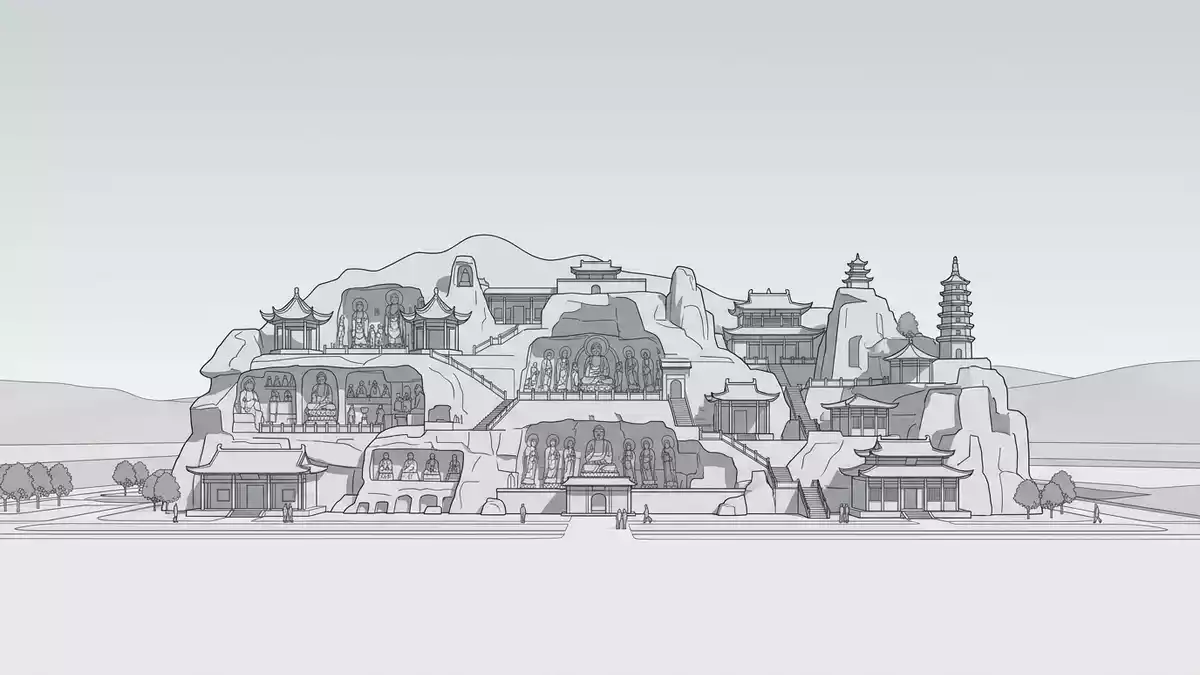
Dazu Shike is the Chinese name for the Dazu Rock Carvings, an extensive group of cliffside sculptures cut into sandstone hills in Dazu District west of Chongqing in south-west China. Carved between the ninth and thirteenth centuries, these reliefs and figures turn whole valley slopes into panels of religious imagery and carved text that together form one of the country’s major ensembles of cave temple art.Dazu Rock Carvings
Sandstone hillsides turned into carved narratives
The core character of Dazu Shike lies in the way sandstone cliffs on steep hillsides have been systematically carved into terraces of sculpture. In the Dazu area the carvings are concentrated in several clusters, including Beishan and Baodingshan, where continuous bands of figures and reliefs follow the contours of the rock across the slopes.steep hillsides in the Dazu area Many panels combine seated and standing figures with carved architectural frames, giving the rock faces the appearance of stone altarpieces set in the landscape.
The carvings form part of a much wider group of cliffside sites in the district. Under the collective name of Dazu Rock Carvings, authorities recognise dozens of protected cliff temples spread across the hills, representing different phases of carving and different religious emphases.all of the cliffside carvings in Dazu district Visitors encounter the works as outdoor galleries, with paths and stairways running along the base of the cliffs and viewpoints on raised platforms where entire scenes are visible at once.
Ninth- to thirteenth-century religious sculpture in stone
The carvings at Dazu Shike are widely dated from the ninth to the thirteenth centuries, spanning late Tang and Song dynasties and preserving a long sequence of religious art in stone.rock carvings dating from the 9th to 13th centuries Across the district, inscriptions in Chinese characters accompany many of the scenes, recording donors, explaining doctrines or describing the depicted episodes. Figures range from small, densely packed reliefs to much larger sculpted images cut directly into the cliff.
The thematic range reflects the coexistence of Buddhism, Daoism and Confucianism in medieval China, with carvings dedicated to bodhisattvas, Buddhas, Daoist deities and scenes that refer to moral teachings associated with Confucian thought.harmonious coexistence of Tantric Buddhism, Taoism, and Confucianism Everyday life appears alongside religious imagery, so that processions, domestic scenes and depictions of work stand near more overtly devotional panels.
UNESCO recognition and the scale of the ensemble
Dazu Shike holds formal recognition as a World Heritage Site. The Dazu Rock Carvings were inscribed on the UNESCO World Heritage List in 1999, highlighting their artistic quality, variety of subject matter and the insight they offer into life and religion in China between the ninth and thirteenth centuries.inscribed on the World Heritage List in 1999 Under the inscription, the protected corpus includes a large number of sites around the district rather than a single cliff.
Within that corpus, documentation records dozens of protected cliff temples containing tens of thousands of sculpted figures and a very large body of carved text.made up of 75 protected sites containing some 50,000 statues The density of carving on individual rock faces is striking: panels can hold rows of seated figures in ordered grids, haloed images framed by carved rocks and narrative scenes that unfold from one end of a cliff to the other. Taken together, the scattered hill sites form a landscape-scale work of religious art.
Visiting Dazu Shike: what travellers from Western Europe should know
- Dazu Shike lies in Dazu District to the west of central Chongqing in south-west China, reached from the city by road links that run towards the hill country around the town of Dazu.located in Dazu District, west of central Chongqing
- On site, paths follow the base of carved cliffs and climb to viewpoints via stairways, so a visit involves walking on sloping routes and negotiating stairs along the sandstone terraces where the sculptures are carved.
- The carved hillsides sit in cultivated and wooded terrain around Dazu town, where fields, low hills and small valleys form the broader landscape in which the cliff temples appear.
- The official language is Chinese and the currency is the renminbi.
- Entry requirements depend on your nationality; UK travellers can check the FCDO travel advice at gov.uk/foreign-travel-advice, Irish travellers the Department of Foreign Affairs at ireland.ie.
Searching for Dazu Shike on social platforms
These links open searches for Dazu Shike on each platform.
Frequently asked questions about Dazu Shike
Where is Dazu Shike located?
Dazu Shike refers to the rock carvings in Dazu District in Chongqing Municipality in south-west China, on sandstone hillsides near the town of Dazu.rock carvings in Dazu District
What should visitors expect on a visit?
A visit centres on following paths beneath carved cliffs, viewing large ensembles of figures and reliefs, and reading carved inscriptions that present religious and everyday scenes across the sandstone faces.
What makes Dazu Shike distinctive among Chinese heritage sites?
Dazu Shike stands out for the concentration of ninth- to thirteenth-century cliff sculptures, the mix of Buddhist, Daoist and Confucian imagery, and its recognition as a UNESCO World Heritage Site.harmonious coexistence of religious traditions


