
Dazu Shike and the cliffside sculptures of Chongqing
Published on 08/20/2026 at 21:15 | Editorial responsibility: Rafael Müller, Editor-in-Chief AD HOC NEWS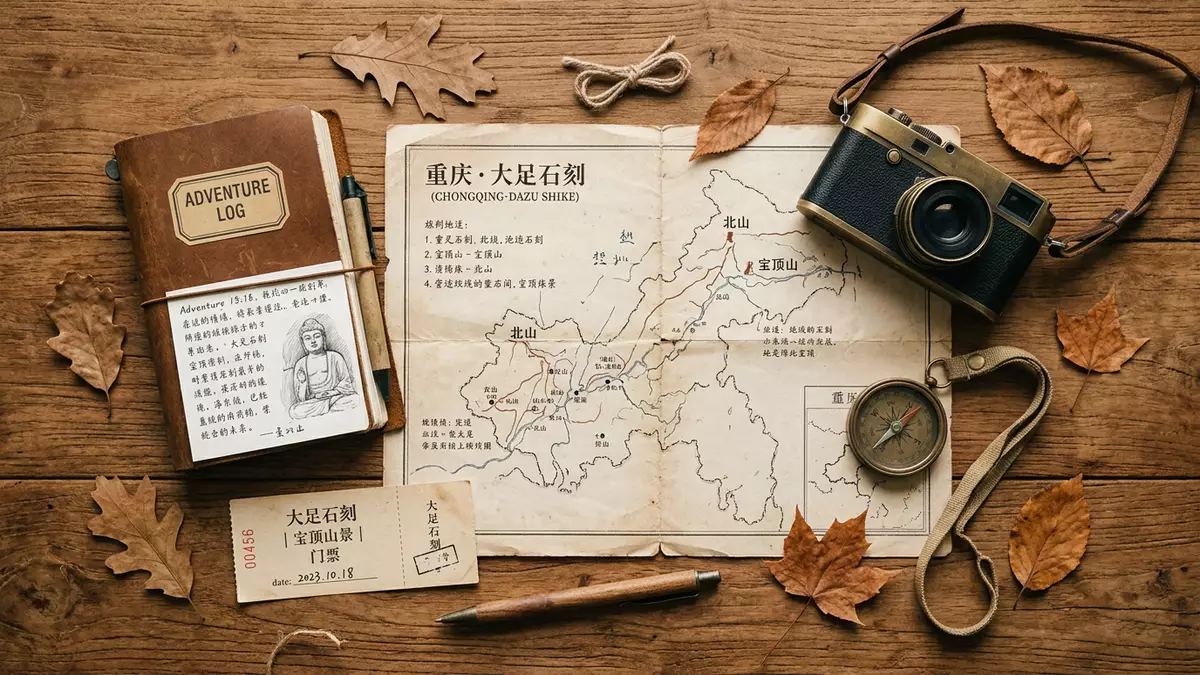
Dazu Shike is the Chinese name for the Dazu Rock Carvings, an extensive group of religious sculptures carved into the sandstone hills of Dazu District in Chongqing, China. The carvings are widely dated to between the ninth and thirteenth centuries and together form one of China’s most significant ensembles of cave temple art.
Sandstone hills filled with sculpture
The steep hillsides around Dazu contain clusters of carvings cut directly into the rock, forming long walls of figures, narrative scenes and inscriptions. In total the Dazu Rock Carvings are described as comprising around seventy?five protected sites, united under the name Dazu Shike as a single cultural landscape of cliffside sculpture.seventy?five different sites Across these sites the carvings number in the tens of thousands, with statues and reliefs arranged along ledges, in shallow grottoes and on broad rock faces.
The sandstone itself is part of the experience: figures emerge from reddish and grey rock outcrops, with carved niches and ledges following the natural contours of the cliffs. Many groupings are set along valley slopes or beside streams, creating a landscape where sculpture, vegetation and exposed rock sit together. At Baodingshan and Beishan, two of the best known concentrations of carvings, long panels of figures line the hillsides, giving a sense of an outdoor gallery shaped by geography as much as by hand.Baodingshan and Beishan
From the Tang to the Song: a stone record of Chinese faiths
Carving at Dazu began in the seventh century during the Tang dynasty and continued for centuries, reaching particular intensity between the ninth and thirteenth centuries.carving of Dazu Grottoes started The work spans several dynasties, including Tang and Song, and extends later into periods corresponding to the Ming and Qing dynasties, making Dazu Shike a long?running project of religious and artistic expression.
The carvings represent Buddhist, Taoist and Confucian themes side by side, a coexistence that is one of the most striking aspects of the site.Buddhist, Taoist and Confucian At Baodingshan, large panels show episodes from Buddhist sutras, scenes of paradise and hell, and images of bodhisattvas and guardians. At other sites in the Dazu group, figures associated with Taoist deities and Confucian moral teachings appear, carved into the same cliffs. Together these works form a stone record of religious life in south?west China across many centuries.
A World Heritage cultural landscape of five main clusters
Dazu Shike holds formal recognition as a World Heritage Site. The Dazu Rock Carvings were inscribed on the UNESCO World Heritage List in December 1999, underlining their status as an outstanding example of cave temple art and religious sculpture in China.inscribed on the World Heritage List The UNESCO description highlights both the artistic quality and the diversity of the carvings across the steep hillsides of Dazu County near Chongqing.
Within this wider designation sit several particularly significant clusters. The group commonly described as the core of the World Heritage inscription consists of Beishan, Baodingshan, Nanshan, Shizhuanshan and Shimenshan, each with its own set of cliffside panels and grottoes.five locations in Dazu District Across all the protected cliffside sites in Dazu County, the number of statues is placed at more than 50,000, accompanied by a very large body of carved Chinese text.over 50,000 statues
Visiting Dazu Shike: what travellers from Western Europe should know
- Dazu Shike lies in Dazu District, west of the urban area of Chongqing in south?west China. Long?distance buses and regional rail services link Chongqing with Dazu County, from where local transport reaches the main carving sites.
- The carvings are set on steep hillsides and rock faces, and visiting them involves walking along stone paths and terraces, with staircases and uneven ground in places.
- The climate in this part of Chongqing can be humid, and many of the sculptures are outdoors or in shallow grottoes, so weather affects how the rock surfaces and carved details appear on any given day.
- Dazu District is part of China, where the official language is Chinese and the currency is the renminbi (yuan).
- Entry requirements depend on your nationality; UK travellers can check the FCDO travel advice at gov.uk/foreign-travel-advice, Irish travellers the Department of Foreign Affairs at ireland.ie.
Searching for Dazu Shike on social platforms
These links open searches for Dazu Shike on each platform.
Frequently asked questions about Dazu Shike
Where is Dazu Shike located?
Dazu Shike refers to the rock carvings in Dazu District in Chongqing Municipality in south?west China, on steep sandstone hillsides near the town of Dazu.
What can visitors expect to see at Dazu Shike?
Visitors encounter extensive cliffside panels of carved figures, grottoes, and walls of inscriptions, with Buddhist, Taoist and Confucian imagery arranged across several hill groups.
What makes Dazu Shike distinctive among Chinese grotto sites?
Dazu Shike is distinctive for its very large number of statues, its long span of carving activity from the seventh century onwards, and its combination of several Chinese religious traditions on one landscape.


