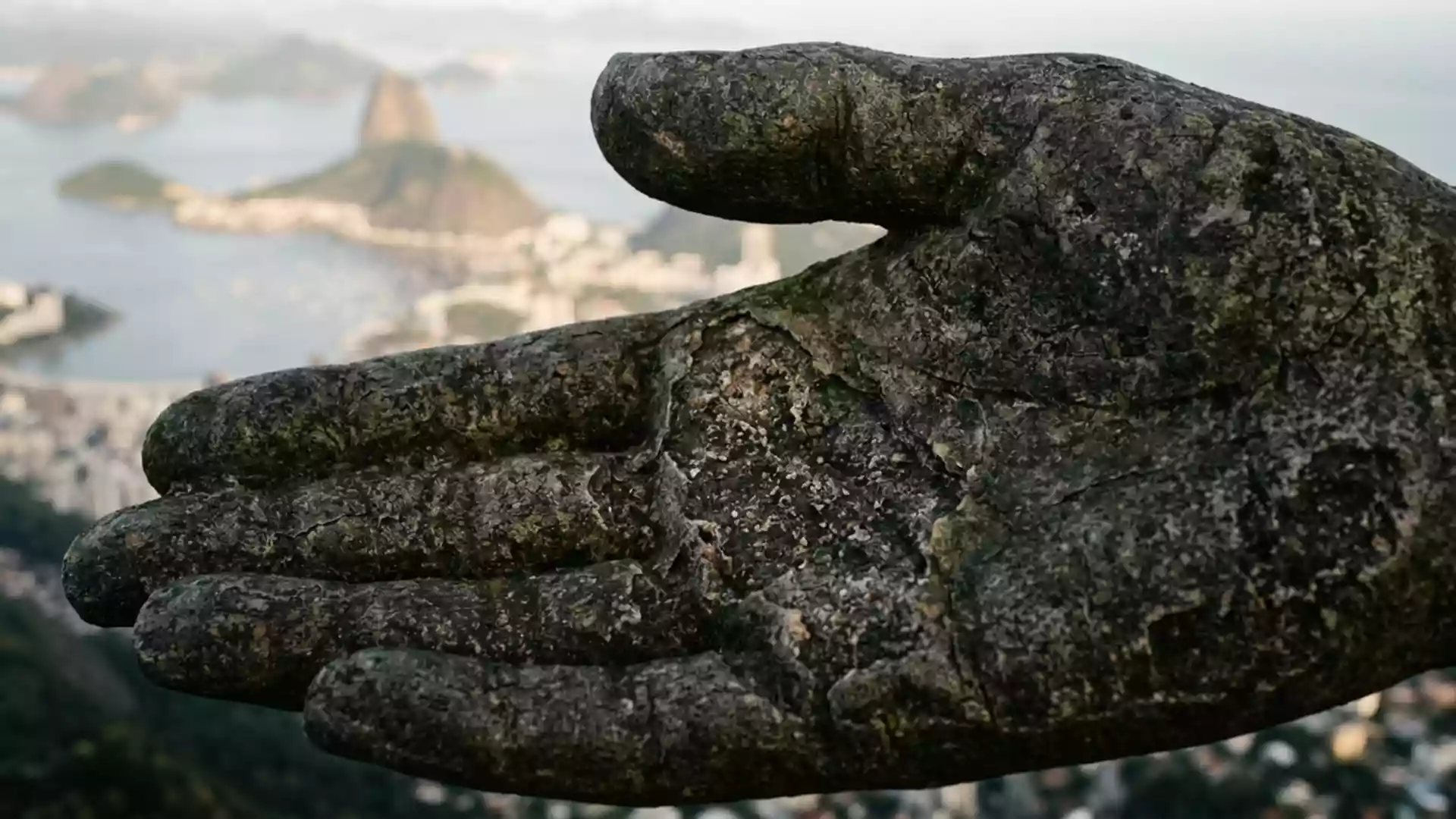
Cristo Redentor above Rio de Janeiro’s mountain skyline
Published on 09/09/2026 at 09:02 | Editorial responsibility: Rafael Müller, Editor-in-Chief AD HOC NEWS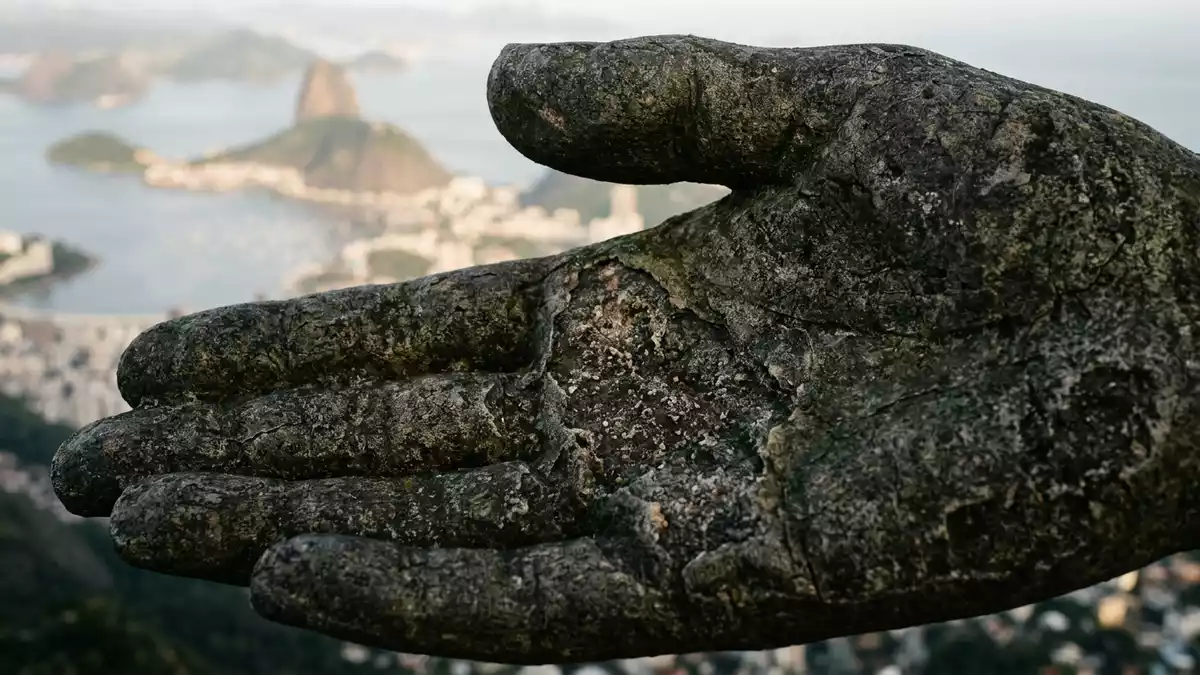
Cristo Redentor, known in English as Christ the Redeemer, stands with open arms above Rio de Janeiro on the summit of Corcovado, a mountain that lifts the statue high over the city and the green folds of the Tijuca Forest. Completed in 1931 as an Art Deco figure of Jesus Christ, it is made of reinforced concrete clad in pale soapstone, giving the monument a distinctive light-coloured presence against the changing Atlantic sky.
An Art Deco Christ figure on Corcovado
Cristo Redentor is an Art Deco statue of Jesus Christ, designed in Brazil and sculpted in France at a time when monumental figurative sculpture was embracing simplified forms and bold outlines.Art Deco statue of Jesus The figure itself is about 30 m (98 ft) tall, set on a pedestal that brings the total height to about 38 m (125 ft), a scale that makes the statue visible from many districts along Guanabara Bay.98 feet (30 metres) tall
With arms stretching roughly 28 m (92 ft) from fingertip to fingertip, Cristo Redentor forms a horizontal span that reads as a cross-like silhouette when seen from the city below.arms reach out across a span of 28 m The robe is rendered as strong vertical pleats of concrete, while the head and hands are modelled with restrained detail, placing the statue firmly in the Art Deco period of the early twentieth century.Art Déco period
Concrete, soapstone and mountain engineering
The structural core of Cristo Redentor is made from reinforced concrete, a material that allowed engineers to create a hollow figure capable of standing on a relatively narrow mountain summit.reinforced concrete with soapstone mosaic Over this frame, thousands of small soapstone tiles were fixed, forming a mosaic skin that gives the surface a subtle texture and a pale tone rather than the sharper lines of bare concrete.skin of small soapstone tiles
The project brought together Brazilian engineer Heitor da Silva Costa, who provided the overall engineering concept, and French sculptor Paul Landowski, who worked on the sculptural form of the figure, including the head and hands.designed by Paul Landowski and Heitor da Silva Costa Construction is traditionally dated to the period between 1922 and 1931, with the foundation stone laid in 1922 and the statue officially dedicated on 12 October 1931, marking the end of nearly a decade of work on the mountain.foundation stone laid in 1922 and dedicated on 12 October 1931
Cristo Redentor in Rio’s landscape
Cristo Redentor stands on the summit terrace of Corcovado, a peak within Tijuca Forest National Park that rises above the central and southern districts of Rio de Janeiro.located on Corcovado in Tijuca Forest From the viewing platforms around the base of the pedestal, visitors look out over the city’s bays, islands and surrounding hills, with Guanabara Bay, the Atlantic coastline and the forested slopes of Tijuca forming a layered panorama.
The monument belongs to the wider era in which Rio de Janeiro, then the capital of Brazil, gained grand civic avenues and public monuments in the early twentieth century.project belongs to the broader era The statue’s open-armed pose, its position above the city and its height over the surrounding terrain have made Cristo Redentor a recognised symbol of Rio de Janeiro and of Brazil as a whole, visible both from urban neighbourhoods and from the forest below.
Visiting Cristo Redentor: what travellers from Western Europe should know
- Cristo Redentor stands on Corcovado, a peak in the Tijuca Forest National Park within the city of Rio de Janeiro, reached by road and by a rack railway.
- The monument stands on a mountain terrace high above sea level, with stepped approaches and stairways between the arrival area and the viewing platforms around the pedestal.
- The surroundings include dense Atlantic forest, steep slopes and exposed viewpoints, so weather on the mountain can differ markedly from conditions at street level in central Rio de Janeiro.
- The official language is Portuguese and the currency is the Brazilian real.
- Entry requirements depend on your nationality; UK travellers can check the FCDO travel advice at gov.uk/foreign-travel-advice, Irish travellers the Department of Foreign Affairs at ireland.ie.
Searching for Cristo Redentor on social platforms
These links open searches for Cristo Redentor on each platform.
Frequently asked questions about Cristo Redentor
Where is Cristo Redentor located in Rio de Janeiro?
Cristo Redentor stands on the summit of Corcovado, a mountain within Tijuca Forest National Park overlooking the bays and districts of Rio de Janeiro.
What can visitors expect when they reach the monument?
Visitors arrive on a mountain terrace with stairways and stepped paths leading to viewing platforms around the pedestal, with expansive views over city, forest and coastline.
What makes Cristo Redentor distinctive among monumental statues?
The statue combines an early twentieth-century Art Deco design, reinforced concrete structure, soapstone mosaic surface and an open-armed pose above a major coastal city.