
Cristo Redentor and the open-armed skyline of Rio de Janeiro
Published on 08/27/2026 at 16:15 | Editorial responsibility: Rafael Müller, Editor-in-Chief AD HOC NEWS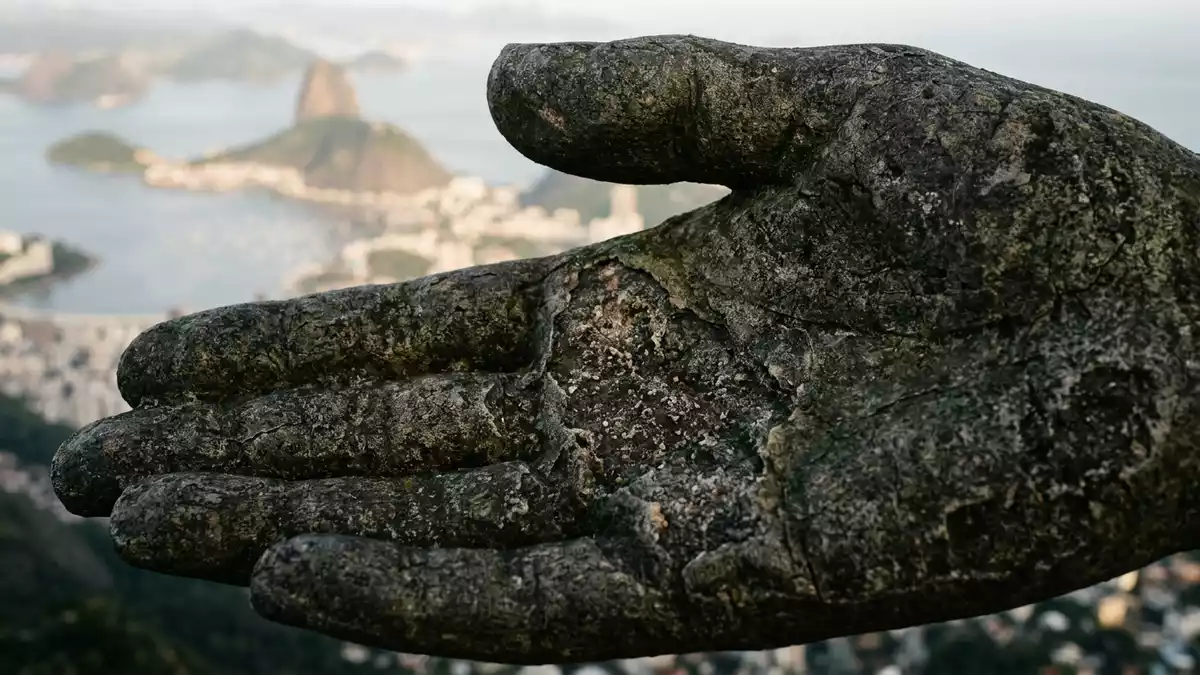
Cristo Redentor, known in English as Christ the Redeemer, stands high on Corcovado above Rio de Janeiro as a vast Art Deco statue of Jesus Christ and a landmark for Brazil. Completed in 1931 and clad in pale soapstone over a concrete frame, it stretches its arms over Guanabara Bay and the dense hills of the Tijuca Forest National Park.
An Art Deco figure carved into the skyline
The figure of Cristo Redentor rises 30 m (98 ft) above its stone base, with a total height of about 38 m (125 ft) from pedestal to the top of the head.The statue is 30 metres high Its arms reach out across a span of 28 m (92 ft), forming a cross-like silhouette that is visible from many parts of Rio de Janeiro.arms spanning 92 feet The figure combines a reinforced concrete structure with a skin of thousands of small soapstone tiles, giving the surface a subtly textured sheen rather than the sharp edges of bare concrete.
Christo Redentor belongs firmly to the Art Deco period, an era of stylised forms and clear outlines in the early twentieth century.constructed between 1922 and 1931 Work on the monument ran from 1922 into 1931, and the finished statue was formally dedicated in October 1931.Constructed between 1922 and 1931 The strong vertical lines of the robe, the simplified features of the face and the tapering form of the sleeves place the figure among the largest Art Deco sculptures created.
From Corcovado’s peak to Guanabara Bay
Cristo Redentor stands on the summit of Corcovado, a peak that rises to about 700 m (2,300 ft) in the Tijuca National Park above the city.sits atop Brazil’s 2,300-foot Corcovado Mountain The mountain forms part of a reforested hillside landscape, and the monument’s base platform gives wide views over the bays, beaches and districts of Rio de Janeiro.Parque Nacional da Tijuca On clear days, the outlines of Sugarloaf Mountain, the curve of the Atlantic shoreline and the patchwork of urban neighbourhoods lie below.
The statue belongs structurally to the mountain as much as to the city skyline. The reinforced concrete frame anchors into the rock, and the pedestal rises as a solid stone block beneath the feet of the figure.stands approximately 100 feet tall The summit area forms a compact terrace with railings and steps leading around the base, so that visitors can walk under the outstretched arms and look outward along the same axis as the statue’s gaze toward the city and bay.
Engineers, sculptors and a national symbol
The project that created Cristo Redentor brought together Brazilian and European designers. The principal engineer was Heitor da Silva Costa, a Brazilian civil engineer, while the sculptural design was developed by the French-Polish sculptor Paul Landowski.created by French-Polish sculptor Paul Landowski The face of the statue is attributed to the Romanian sculptor Gheorghe Leonida, whose work gave the figure its characteristic calm expression.designed by engineer Heitor da Silva Costa
The monument has long served as a religious and cultural symbol. It represents Jesus Christ with open arms and stands as an emblem of both Rio de Janeiro and Brazil as a whole.emblematic of both the city of Rio de Janeiro and the whole nation of Brazil The statue was later recognised among the New7Wonders of the World, a list compiled in the early twenty-first century, which reinforced its profile alongside long-established monuments elsewhere.Christ the Redeemer - 7 Wonders
Visiting Cristo Redentor: what travellers from Western Europe should know
- Cristo Redentor stands on Corcovado, a peak within the Tijuca National Park above central Rio de Janeiro, and is approached by road and by a mountain railway.
- The summit terrace around the statue includes steps and sloping paths, and visitors reach the base of the figure by staircases, escalators and lifts integrated into the hillside.
- The terrain at the top of Corcovado is at an elevation of about 700 m (2,300 ft), so the air can feel noticeably different from the lower-lying districts beside the bay.
- The official language of Brazil is Portuguese and the currency is the Brazilian real.
- Entry requirements depend on your nationality; UK travellers can check the FCDO travel advice at gov.uk/foreign-travel-advice, Irish travellers the Department of Foreign Affairs at ireland.ie.
Searching for Cristo Redentor on social platforms
These links open searches for Cristo Redentor on each platform.
Frequently asked questions about Cristo Redentor
Where is Cristo Redentor located?
Cristo Redentor stands on the summit of Corcovado in Rio de Janeiro, within the Tijuca National Park in south-eastern Brazil.
What can visitors expect at the monument?
Visitors find a large terrace around the base of the statue, with steps, escalators and lifts leading to viewpoints over Guanabara Bay and the city.
What makes Cristo Redentor distinctive?
Its combination of Art Deco style, soapstone cladding and its position on a mountain above Rio de Janeiro has made Cristo Redentor a defining symbol of Brazil.


