
Cradle Mountain’s jagged peak above Tasmania’s high country
Published on 08/29/2026 at 08:27 | Editorial responsibility: Rafael Müller, Editor-in-Chief AD HOC NEWS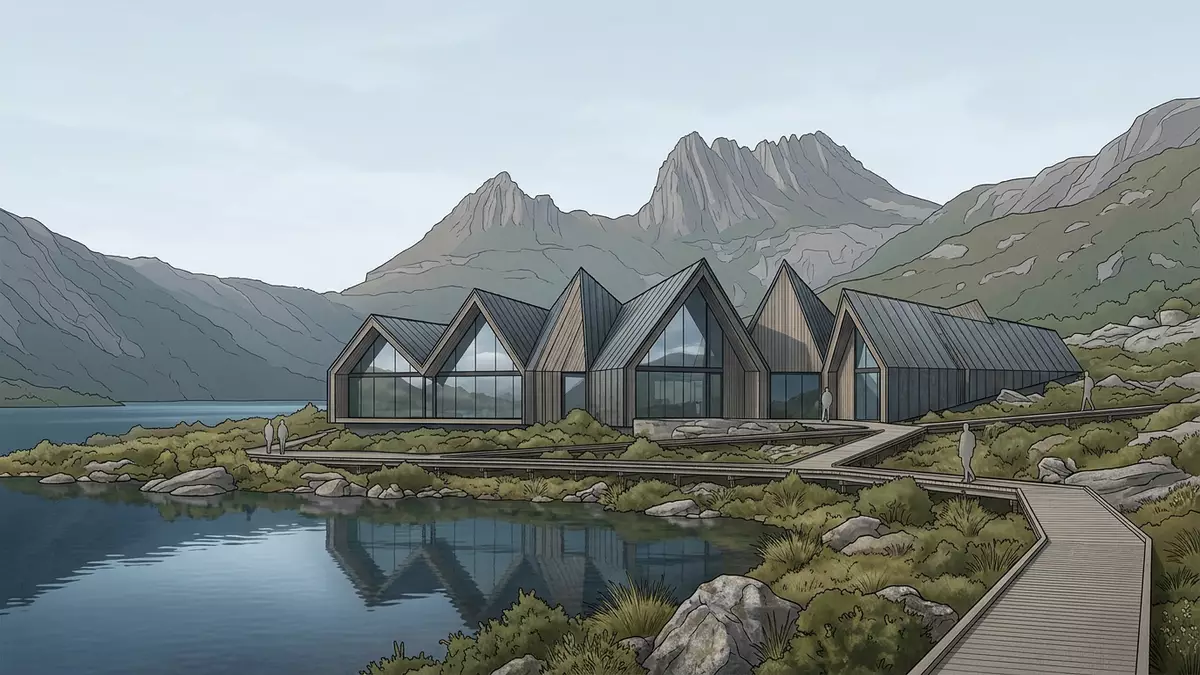
Cradle Mountain rises above the Central Highlands of Tasmania as a jagged summit surrounded by alpine plateaus, glacial lakes and heathland, forming one of Australia’s best-known high-country landscapes.mountain situated at the northern boundary It forms part of Cradle Mountain–Lake St Clair National Park, which is included in the Tasmanian Wilderness World Heritage Area.
A dolerite peak on Tasmania’s central plateau
Cradle Mountain stands on Tasmania’s central plateau in northwest-central Australia, forming the northern gateway to Cradle Mountain–Lake St Clair National Park.located in the Central Highlands area of Tasmania The broader park covers more than 1,600 km² (around 620 sq mi), extending between Cradle Valley in the north and Lake St Clair in the south.covers more than 1614 km²
The mountain’s summit reaches 1,545 m (5,069 ft) above sea level, its narrow, serrated skyline giving the peak its distinctive cradle-like profile.lava basalt peak rises to 5,069 feet Cradle Mountain and neighbouring summits such as Barn Bluff and Mount Ossa rise above a landscape of glacial lakes and valleys, with Cradle Mountain forming one of the main landmarks in the northern half of the park.major features are Cradle Mountain and Barn Bluff
Glacial landforms and World Heritage wilderness
Cradle Mountain–Lake St Clair National Park preserves rugged alpine scenery shaped by large Pleistocene glaciers, which carved cirques, valleys and basins now occupied by lakes.displays rugged alpine scenery carved by Australia’s biggest Pleistocene glaciers Within the park, habitats range from temperate rainforest along riverbanks to alpine heath and buttongrass moorland on exposed plateaus, giving the area varied vegetation over short distances.habitats range from temperate rainforest along riverbanks to alpine heath and buttongrass moorland
Geologically, the park contains folded and metamorphosed Precambrian and early Palaeozoic sedimentary rocks overlain by conglomerate of the Upper Carboniferous–Permian Wynyard Formation, capped in many places by Jurassic dolerite.consists of folded and metamorphosed Precambrian and early Paleozoic sedimentary rocks Cradle Mountain itself is part of this dolerite-dominated high country, its jagged skyline reflected in nearby lakes such as Dove Lake within the World Heritage-listed Tasmanian Wilderness.part of the Cradle Mountain-Lake St. Clair National Park in Tasmania’s Central Highlands
Approaching the summit and the surrounding valleys
Cradle Mountain occupies a small area at the northern end of the national park, rising above Cradle Valley and a network of lakes and tarns.occupies the northern half of Cradle Mountain-Lake St Clair National Park The peak forms part of a chain of summits that includes named points such as Barn Bluff and Mount Ossa further south, linked by walking routes through alpine terrain.contains several of Tasmania’s highest summits
Tracks on the northern side of the park lead from the valley floor towards the higher ground, passing lakes and heathland before reaching rockier slopes closer to the summit ridge. The wider park is also known for multi-day routes such as the Overland Track, which traverses the high plateau between Cradle Mountain and Lake St Clair through a mix of forest, moorland and alpine vegetation.
Visiting Cradle Mountain: what travellers from Western Europe should know
- Cradle Mountain stands in the Central Highlands of Tasmania in southern Australia, with access on the northern side of Cradle Mountain–Lake St Clair National Park from the Cradle Valley area via Tasmanian roads.
- The terrain around the mountain includes alpine plateaus, moorland and rocky slopes; approaches on foot involve uneven ground and sections of boardwalk, with steeper, rougher paths nearer the summit.
- The national park has two widely separated access points, at Cradle Mountain in the north and Lake St Clair in the south, which are not linked by a through road across the park.
- The official language is English and the currency is the Australian dollar.
- Entry requirements depend on your nationality; UK travellers can check the FCDO travel advice at gov.uk/foreign-travel-advice, Irish travellers the Department of Foreign Affairs at ireland.ie.
Searching for Cradle Mountain on social platforms
These links open searches for Cradle Mountain on each platform.Frequently asked questions about Cradle Mountain
Where is Cradle Mountain?
Cradle Mountain is in the Central Highlands of Tasmania in southern Australia, forming the northern boundary of Cradle Mountain–Lake St Clair National Park.
What should visitors expect on a visit to Cradle Mountain?
Visitors encounter a high-country landscape of alpine plateaus, glacial lakes, heathland and forest, with walking tracks ranging from valley-floor boardwalks to steeper, rockier routes.
What makes Cradle Mountain distinctive among Tasmanian landscapes?
The mountain’s jagged dolerite skyline, its elevation above 1,500 m and its setting within a World Heritage-listed wilderness of lakes and plateaus give this area a characteristic alpine character.


