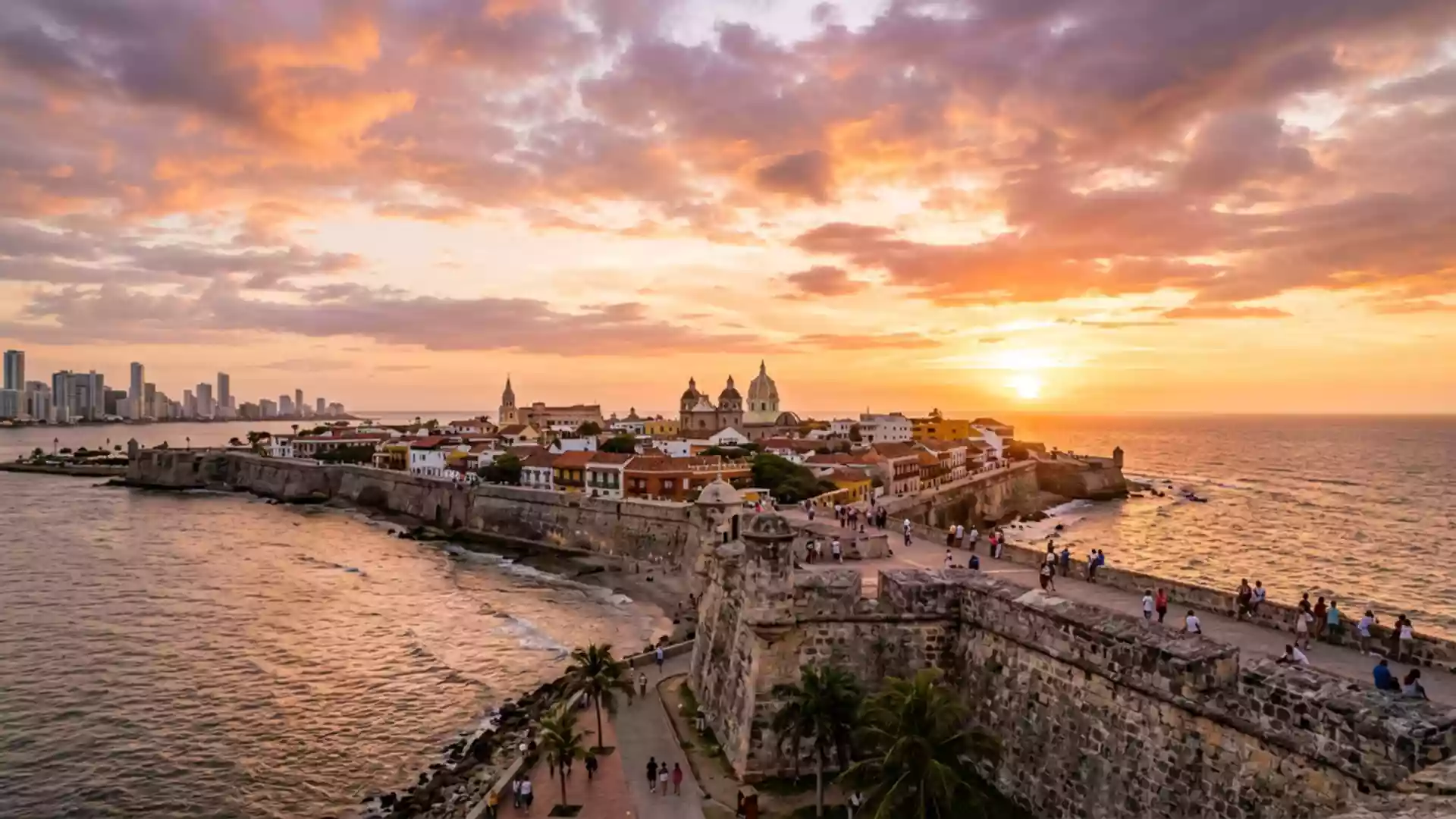
Ciudad Amurallada de Cartagena and its stone ring of walls
Published on 09/12/2026 at 06:32 | Editorial responsibility: Rafael Müller, Editor-in-Chief AD HOC NEWS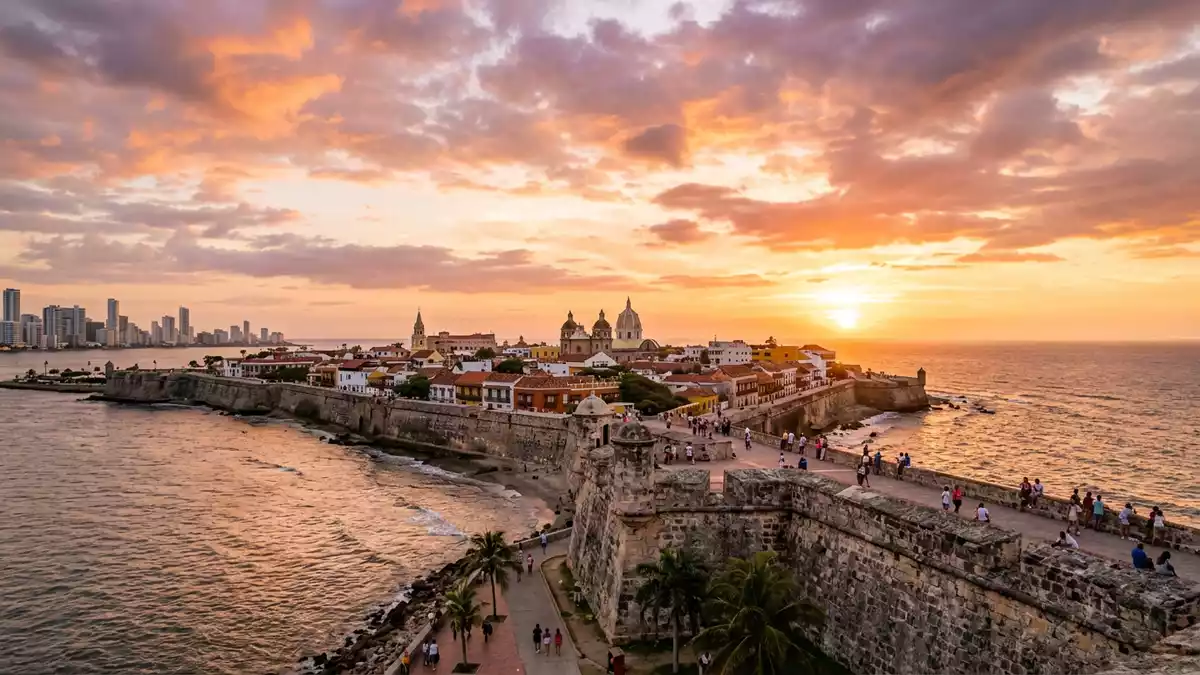
Ciudad Amurallada de Cartagena is the historic walled centre of Cartagena in Colombia, enclosed by a broad ring of stone fortifications beside the Caribbean coast. Within this defensive belt, colonial streets, plazas and churches form a compact urban core that has been recognised as part of Cartagena’s UNESCO World Heritage listing since 1984.
The stone fortifications that define the walled city
The defining feature of Ciudad Amurallada de Cartagena is the continuous system of walls and bastions that encircle the historic centre, forming a stone ring between the streets and the sea. Construction of this defensive circuit began in the late sixteenth century and reached its completed form towards the end of the eighteenth century, creating a fortified perimeter that responded to repeated attacks on one of Spain’s principal Caribbean ports.Construction of the city walls The walls run for roughly 11 km (6.8 miles) around the old city, their broad stone ramparts still reading as an almost uninterrupted line when seen from the bay and the modern districts outside.11 kilometres of coral-stone walls
Rather than a simple curtain wall, the fortifications are articulated into bastions and platforms, joined by stretches of rampart that turn with the coastline and the edges of the reclaimed ground. Many of these bastions retain their original stone geometry, giving clear views along the successive faces of the walls and out towards the Caribbean. Sections on the western side of the old town, facing the open sea, form some of the most imposing stretches of the circuit, with long walks above the urban fabric and the water beyond.The walls extend around the old city
A colonial core shaped between plazas and churches
Inside the walls, Ciudad Amurallada de Cartagena forms the historic centre of Cartagena de Indias, laid out in a dense network of streets that open onto plazas and small parks. This urban core, together with the surrounding fortresses and harbour works, is inscribed on the UNESCO World Heritage List under the title “Port, Fortresses and Group of Monuments, Cartagena”, reflecting the combined value of the colonial townscape and its defensive system.Port, Fortresses and Group of Monuments, Cartagena Many buildings within the perimeter date from the seventeenth and eighteenth centuries, with thick-walled houses, balconied facades and internal courtyards that follow Spanish colonial patterns adapted to Caribbean conditions.
The historic centre is commonly divided into sectors that help to organise the streets and monuments. El Centro occupies the area around the Torre del Reloj, Plaza de los Coches and key civic and religious buildings, including the Cathedral of Cartagena and former inquisitorial premises. To the north, the quarter of San Diego has long-standing associations with merchants and craftsmen, while Getsemaní, to the south, developed as a district of artisans and working residents just beyond the main commercial core.Centro, San Diego and Getsemaní Together these neighbourhoods form a compact, walkable area where religious buildings, houses and former administrative structures stand within sight of the walls.
Cartagena’s walled city in its wider Caribbean setting
Ciudad Amurallada de Cartagena stands on Colombia’s Caribbean coast overlooking the Bay of Cartagena, a natural harbour that helped make the city one of the principal ports of the Spanish empire in northern South America.Cartagena founded as a treasure port The walled city occupies the north-western part of the urban area, with the bay and shipping channels on one side and later districts extending inland.
The World Heritage inscription granted in 1984 recognises both the defensive works and the urban fabric within them as a single cultural ensemble.Historic centre recognised by UNESCO Beyond the perimeter, further fortresses such as Castillo San Felipe de Barajas rise on higher ground, forming additional elements of Cartagena’s military landscape and underlining how central defence was to the city’s historic role on the Caribbean trade routes. Taken together, the city walls, bastions, harbour works and inner streets make Ciudad Amurallada de Cartagena a distinctive example of a colonial walled port town in the region.
Visiting Ciudad Amurallada de Cartagena: what travellers from Western Europe should know
- Ciudad Amurallada de Cartagena occupies the historic centre of Cartagena on Colombia’s Caribbean coast, beside the Bay of Cartagena and within reach of Rafael Núñez International Airport.
- The terrain inside the walls is largely level, with paved streets and occasional ramps or staircases leading up to the ramparts.
- The historic centre lies close to the waterfront, so some stretches of the walls offer direct views over the Caribbean and the harbour.
- The official language is Spanish and the currency is the Colombian peso.
- Entry requirements depend on your nationality; UK travellers can check the FCDO travel advice at gov.uk/foreign-travel-advice, Irish travellers the Department of Foreign Affairs at ireland.ie.
Searching for Ciudad Amurallada de Cartagena on social platforms
These links open searches for Ciudad Amurallada de Cartagena on each platform.
Frequently asked questions about Ciudad Amurallada de Cartagena
Where is Ciudad Amurallada de Cartagena located?
Ciudad Amurallada de Cartagena forms the historic walled centre of Cartagena, a port city on Colombia’s Caribbean coast overlooking the Bay of Cartagena.
What can visitors expect inside the walled city?
Visitors find colonial streets, plazas, churches and historic houses within the stone walls, divided into neighbourhoods such as Centro, San Diego and Getsemaní.
What makes Ciudad Amurallada de Cartagena distinctive?
Its long ring of sixteenth- to eighteenth-century defensive walls, combined with the compact colonial urban fabric and UNESCO recognition, give the walled city a distinctive character on the Caribbean coast.