
Ciudad Amurallada de Cartagena and its stone ring by the Caribbean
Published on 08/27/2026 at 21:36 | Editorial responsibility: Rafael Müller, Editor-in-Chief AD HOC NEWS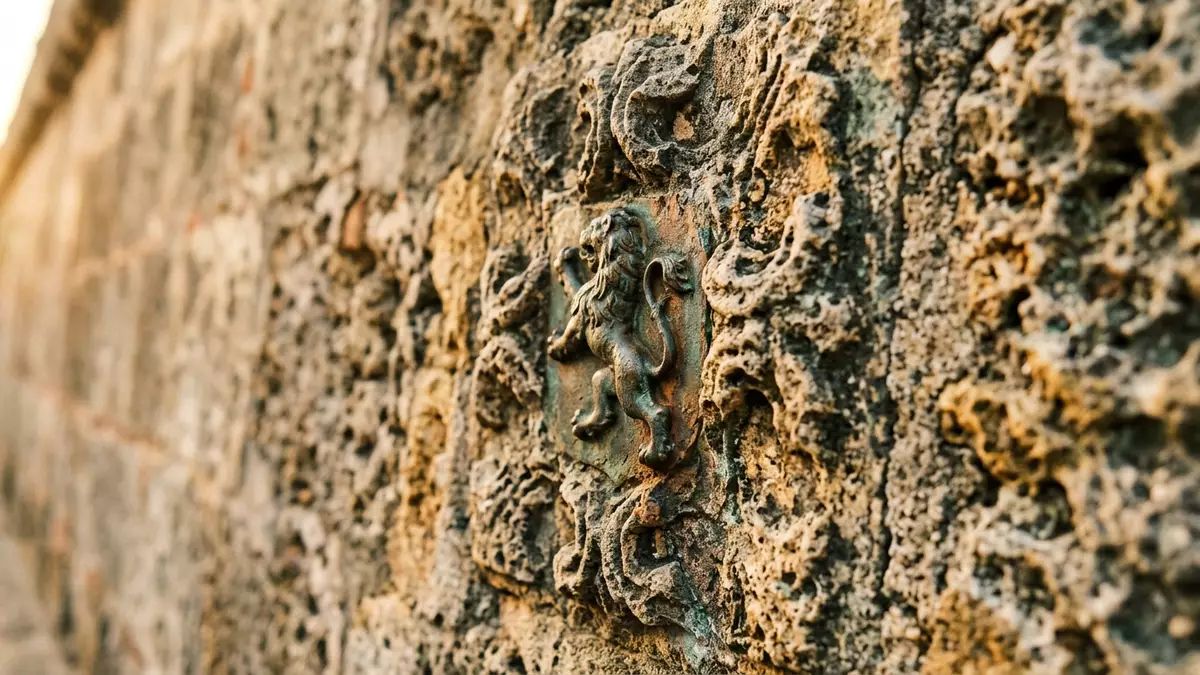
Ciudad Amurallada de Cartagena, the historic walled core of Cartagena in Colombia, wraps its colonial streets in a continuous belt of stone facing the Caribbean Sea. Within this ring, Spanish-era churches, palaces and plazas sit close together, creating a compact cityscape that can be crossed on foot in minutes yet holds centuries of history. Cartagena de Indias itself was founded in 1533 by Pedro de Heredia, and the fortified centre later gained World Heritage status for its port, walls and group of monuments.
A Caribbean city held within stone walls
The defining feature of Ciudad Amurallada de Cartagena is the extensive fortification system that encircles the historic centre. The walls were developed between the late sixteenth and late eighteenth centuries as part of a broader defence network of bastions and batteries protecting the Bay of Cartagena.The historic center is surrounded by 11 km of stone walls that still read as a continuous line when viewed from the sea or from the modern districts outside. Their ramparts, parapets and lookout points form a raised promenade above the streets.
Together with the outer fortresses and harbour structures, these walls form the heart of the property inscribed by UNESCO in 1984 as “Port, Fortresses and Group of Monuments, Cartagena”, recognised as a prime example of Spanish colonial military architecture from the sixteenth to eighteenth centuries.The World Heritage listing for Port, Fortresses and Group of Monuments, Cartagena underlines how tightly the fortifications, the historic quarters and the natural harbour are bound together. Walking along the ramparts, the contrast between the stone belt and the flat blue of the Caribbean is evident at almost every turn.
Neighbourhoods, plazas and church towers within the walls
Inside the walls, Ciudad Amurallada de Cartagena divides into historic neighbourhoods with distinct characters. The World Heritage description names three principal quarters within the protective perimeter: Centro, with the Cathedral of Cartagena, the Palace of the Inquisition and several government buildings; San Diego, associated with merchants and craftsmen; and Getsemaní, once home to many artisans and enslaved workers who supported the city’s economy.The division into Centro, San Diego and Getsemaní still offers a useful way to navigate the historic core, as each area has its own mix of religious, civic and residential buildings.
The architecture ranges from austere stone churches to houses with wooden balconies projecting above narrow streets. Around Plaza de Bolívar and other main squares, arcaded frontages and civic buildings recall Cartagena’s role as a key Caribbean port of the Spanish Empire.Descriptions of Cartagena’s colonial plazas and buildings highlight how closely the urban fabric still follows its colonial outline. Church towers and convents rise above tiled roofs, giving visitors frequent vertical reference points as they move through the grid of streets and alleys.
From colonial stronghold to protected World Heritage city
The fortified historic centre of Cartagena grew from a sixteenth-century colonial port into a major Caribbean stronghold of the Spanish Crown. Over generations, military engineers added bastions, sea walls and landward defences to respond to changing technology and perceived threats, culminating in the completion of the main wall circuit by 1796.The wall circuit was completed in 1796 after almost two centuries of work and remains one of the most extensive preserved fortification systems in South America.
In 1984, the historic ensemble of port, walls and monuments entered the World Heritage List as a cultural site, under criteria that recognise both its military architecture and its role in the history of transatlantic trade and empire.Cartagena’s World Heritage status, granted in 1984 gave international recognition to a city whose colonial streets, museums and fortresses present a concentrated record of Colombia’s colonial and independence-era history.UNESCO documentation on Cartagena’s inscription places Ciudad Amurallada de Cartagena alongside Havana and San Juan as a key fortified port on the West Indies route.
Visiting Ciudad Amurallada de Cartagena: what travellers from Western Europe should know
- Ciudad Amurallada de Cartagena forms the historic centre of Cartagena on Colombia’s Caribbean coast, enclosed by stone walls beside the Bay of Cartagena.
- The terrain inside the walls is largely flat, with narrow paved streets and occasional short flights of steps up to the ramparts and bastions.
- Rafael Núñez International Airport lies to the north of the historic centre, and taxis and local transport run between the airport area and the walled city.
- Spanish is the official language and the currency is the Colombian peso.
- Entry requirements depend on your nationality; UK travellers can check the FCDO travel advice at gov.uk/foreign-travel-advice, Irish travellers the Department of Foreign Affairs at ireland.ie.
Searching for Ciudad Amurallada de Cartagena on social platforms
These links open searches for Ciudad Amurallada de Cartagena on each platform.
Frequently asked questions about Ciudad Amurallada de Cartagena
Where is Ciudad Amurallada de Cartagena?
Ciudad Amurallada de Cartagena is the historic walled centre of Cartagena, a port city on Colombia’s Caribbean coast overlooking the Bay of Cartagena.
What can visitors expect inside the walls?
Visitors encounter narrow colonial streets, plazas with churches and civic buildings, and a continuous stone wall with bastions and walkways overlooking the sea and modern districts.
What makes Ciudad Amurallada de Cartagena distinctive?
The combination of extensive Spanish colonial fortifications, well-preserved historic quarters and a waterfront Caribbean setting led to its inscription as a UNESCO World Heritage city.


