
Chua Tran Quoc, a sixth?century pagoda on Hanoi’s West Lake
Published on 09/04/2026 at 21:22 | Editorial responsibility: Rafael Müller, Editor-in-Chief AD HOC NEWS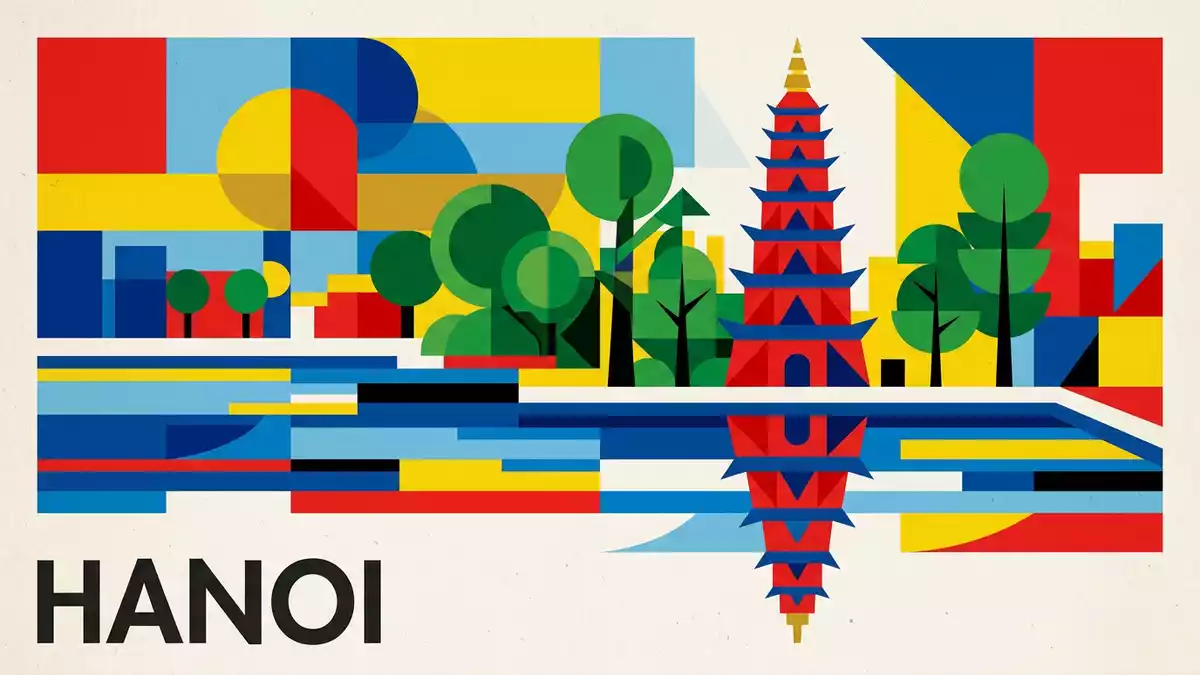
Chua Tran Quoc, known in English as Tran Quoc Pagoda, is a Buddhist temple on a small island in Hanoi’s West Lake whose history reaches back to the sixth century and the reign of Emperor Ly Nam De. Rooted in that early era and reshaped under later dynasties, it combines traditional Vietnamese pagoda architecture with a distinctive lakeside setting that makes the relationship between water, courtyards and towers part of the experience of the place.
A lakeside pagoda with deep historical roots
Chua Tran Quoc stands on Kim Ng? Islet in West Lake, linked to the shore by a causeway along Thanh Nien Road that leaves the impression of the temple as a compact enclave surrounded by water.Kim Ng? Islet on West Lake Within this small island boundary, the pagoda forms one of the most recognisable religious landmarks in Hanoi’s lakeside landscape.
The origins of Chua Tran Quoc lie beside the Red River in the mid?sixth century, when a Buddhist temple called Khai Quoc was founded during the reign of Emperor Ly Nam De.built between 541 and 547 during Ly Nam De’s reign Over time the temple became a centre of Buddhist life for Thang Long, the earlier name of Hanoi, receiving rulers of the Ly and Tran dynasties on major Buddhist days and accumulating stone steles and inscriptions that still form part of the site’s historic fabric.Buddhist centre of Thang Long
Names, dynasties and relocations
The temple’s different names echo changes in Vietnamese history and royal patronage. In its earliest phase under Ly Nam De it bore the name Khai Quoc, commonly translated as “Founding the Nation”, linking the pagoda to the Van Xuan kingdom and the emerging identity of the Vietnamese state.Khai Quoc meaning Founding the Nation During the fifteenth century reign of King Le Thai Tong it became known as An Quoc, a name associated with ideas of a peaceful or secure realm, before taking the name Tran Quoc in the seventeenth century under King Le Hy Tong, a phrase usually rendered as “Protecting the Nation”.renamed An Quoc and later Tran Quoc
The physical position of Chua Tran Quoc shifted along with its names. Erosion and landslides on the Red River bank made the original foundation unstable, leading to a relocation to West Lake in the early seventeenth century, when King Le Hy Tong moved the complex to the island site that visitors see.moved to West Lake in the early seventeenth century Over subsequent centuries the pagoda received attention from Nguyen?period rulers such as Minh Mang and Thieu Tri, who donated bells and Buddha statues, and it underwent renovations that added new architectural details while preserving the temple’s religious role.Nguyen dynasty renovations and royal donations
Architecture, layout and sacred spaces
Within its island boundary, Chua Tran Quoc follows a traditional northern Vietnamese pagoda layout with main structures aligned along a central axis and subsidiary spaces grouped around courtyards and gardens.traditional pagoda layout with axial arrangement Key components include the Front Hall, Incense Ward, Upper Edifice, bell tower, ancestral shrine and house of steles, giving a sequence of spaces that leads from entrance areas to inner halls dedicated to worship and commemoration.
The pagoda’s principal stupa rises near the lakefront, built from red bricks and articulated with multiple tiers that form one of the most familiar silhouettes on West Lake.main multi?tiered stupa of red bricks Surrounding halls display statues of the Buddha and bodhisattvas, lacquered altars and carved wooden elements, many of them dating from Nguyen?period restorations that introduced characteristic roof forms and decorative work while leaving older stone steles and inscriptions in place.statues, steles and Nguyen?style features Courtyards, potted trees and small shrines fill the spaces between buildings, with the water of West Lake visible through gateways and along the perimeter, so the temple’s architecture and its lakeside setting appear closely linked.
Visiting Chua Tran Quoc: what travellers from Western Europe should know
- Chua Tran Quoc sits on Kim Ng? Islet in West Lake, reached by a short causeway from Thanh Nien Road in the northern part of central Hanoi.
- The approach to the pagoda includes steps and paved paths through courtyards, with some interior staircases in towers that are narrow compared with ordinary domestic stairs.
- West Lake forms a broad expanse of water around the pagoda, and lakeside paths and nearby viewpoints offer extended views of the temple’s stupa and surrounding halls.
- The official language is Vietnamese and the currency is the Vietnamese ??ng; English is present mainly through signage for visitors and tour information.
- Entry requirements depend on your nationality; UK travellers can check the FCDO travel advice at gov.uk/foreign-travel-advice, Irish travellers the Department of Foreign Affairs at ireland.ie.
Searching for Chua Tran Quoc on social platforms
These links open searches for Chua Tran Quoc on each platform.
Frequently asked questions about Chua Tran Quoc
Where is Chua Tran Quoc located within Hanoi?
Chua Tran Quoc stands on Kim Ng? Islet in West Lake, reached from Thanh Nien Road in the northern part of central Hanoi.
What should visitors expect when entering the pagoda complex?
Visitors encounter a sequence of halls, courtyards, shrines and a prominent multi?tiered stupa, with statues, altars and stone steles arranged along a main axis.
What makes Chua Tran Quoc distinctive among Hanoi’s pagodas?
Its combination of sixth?century origins, royal associations under Ly, Le, Tran and Nguyen dynasties, and its compact island setting on West Lake gives the pagoda a distinctive historical and spatial character.


