Chua Tran Quoc, Hanoi’s lakeside Buddhist landmark
Published on 08/22/2026 at 17:01 | Editorial responsibility: Rafael Müller, Editor-in-Chief AD HOC NEWS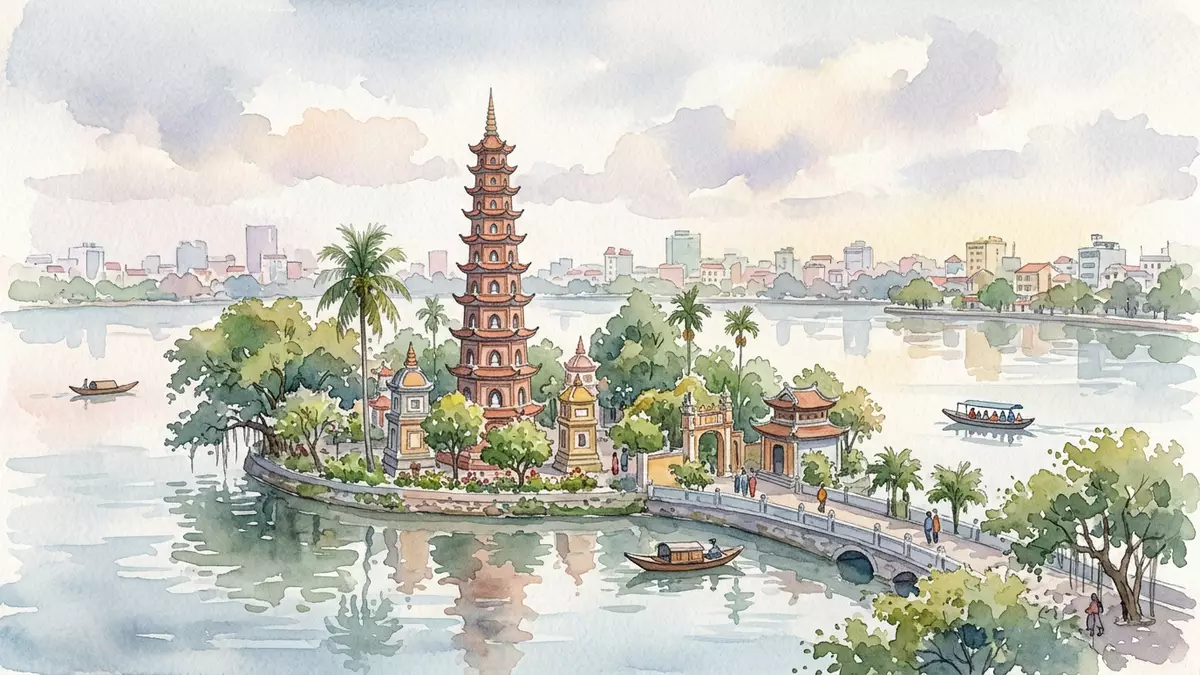
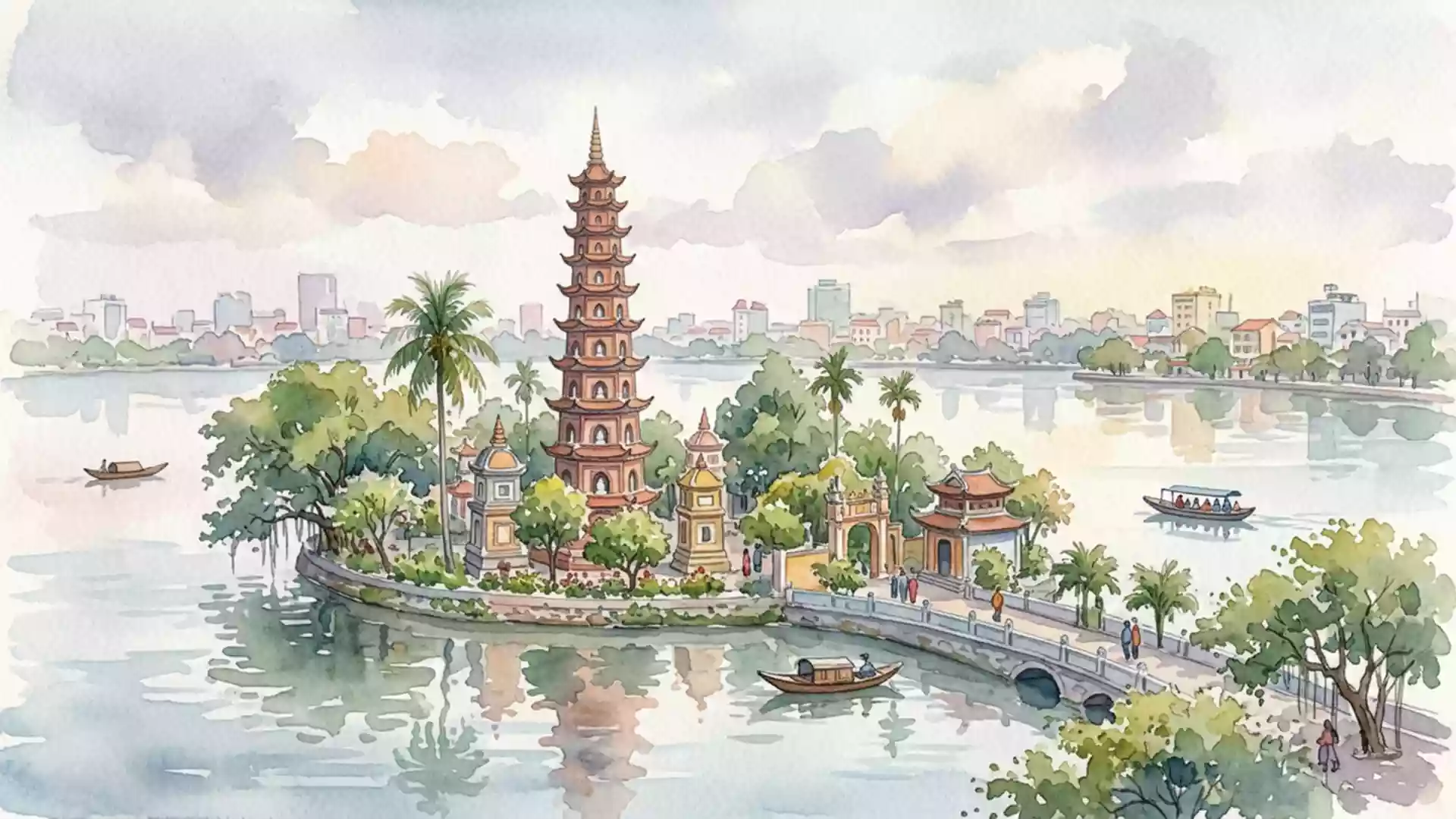
Chua Tran Quoc, known in English as Tran Quoc Pagoda, is a Buddhist temple on a small island in Hanoi’s West Lake that combines a long history with a distinctive lakeside setting.The pagoda is widely recognised as the oldest Buddhist temple in Hanoi, with origins in the sixth century under Emperor Ly Nam De.The original foundation was known as Khai Quoc, meaning “Found the Nation”, and later acquired the name Tran Quoc as dynasties and rulers reshaped the capital and its religious landscape.
An island pagoda on West Lake
Chua Tran Quoc stands on Kim Ngu Islet, a small piece of land linked to Thanh Nien Road by a causeway, surrounded on all sides by the broad waters of West Lake.The site lies in Yen Phu Ward in Hanoi’s Tay Ho District, a short distance north-west of the city centre where the Red River bends away from the old streets.The main gate faces Thanh Nien Road, a narrow strip of land between West Lake and Truc Bach Lake, so the approach brings water into view even before entering the precinct.
The pagoda complex is laid out along the axis from the entrance towards the inner halls, with the island’s edge marked by planted terraces and stone balustrades where West Lake comes right up to the boundary.From the lakeside paths around the pagoda there are open views across West Lake, and in clear weather the water stretches towards the urban skyline of Tay Ho and Ba Dinh districts.The pagoda occupies the western side of central Hanoi, roughly north of the Ho Chi Minh Complex and beyond the formal streets of the Old Quarter, which gives the island a slightly removed, contemplative character even though it sits beside a busy road.
From Khai Quoc to Tran Quoc: 1,500 years of history
The history of Chua Tran Quoc reaches back to the reign of Emperor Ly Nam De in the sixth century, when the original pagoda called Khai Quoc was founded near the banks of the Red River.Historical accounts record its establishment during Ly Nam De’s rule between 541 and 547, with the first buildings standing in Yen Hoa village, a riverside settlement that later became Yen Phu.Over successive centuries the pagoda served as a Buddhist centre for the Ly and Tran dynasties, receiving kings on major Buddhist memorial days, and hosting monks whose names still appear in historical records and stone inscriptions at the site.
Changes in the course and stability of the Red River led to several relocations of the pagoda, bringing it eventually to Kim Ngu Islet on West Lake.In the seventeenth century the foundations were moved from a mid?river site to the island that later became part of Thanh Nien Road’s alignment, fixing the temple in the position visitors see today.Renovations during the Nguyen Dynasty in the nineteenth century brought new bells, Buddha statues and structural repairs, reinforcing the pagoda’s place in the religious life of the capital while layering architectural details from different eras onto the older core.
Architectural layout and lakeside atmosphere
Within the island boundary, Chua Tran Quoc follows a traditional northern Vietnamese pagoda layout, with major structures arranged along a main axis and subsidiary spaces grouped around courtyards and gardens.The principal units include the Front Hall, Incense Ward, Upper Edifice, Bell Tower, Ancestral Shrine and House of Steles, each playing a part in the sequence of worship and commemoration.Architectural descriptions emphasise three main layers of space – front house, upper hall and incense area – linked in a configuration likened to the Chinese character “Công”, which creates a compact yet legible plan on the confined ground of the island.
The materials throughout the complex reflect repeated restoration, with brick and timber structures, tiled roofs and carved details combining elements associated with different dynasties.Accounts of the site note that architecture from the Nguyen Dynasty is particularly prominent, overlaying earlier forms while preserving the axial arrangement and key ritual spaces.The precinct covers an area of more than 3,000 m² (over 32,000 sq ft), so even though the island is modest in size there is room for an ornamental tower garden, shrines aligned to the water and shaded walkways where the lake and the buildings are in constant dialogue.
Visiting Chua Tran Quoc: what travellers from Western Europe should know
- Chua Tran Quoc stands on Kim Ngu Islet within West Lake in Hanoi’s Tay Ho District, linked to Thanh Nien Road between West Lake and Truc Bach Lake and reached on foot from the lakeside pavement.
- The pagoda complex occupies a compact island with paved paths, internal courtyards and a sequence of halls; visiting involves walking on level surfaces, negotiating temple thresholds and moving through covered interior spaces.
- Hanoi is the capital of Vietnam, where the official language is Vietnamese and the currency is the Vietnamese dong.
- Entry requirements depend on your nationality; UK travellers can check the FCDO travel advice at gov.uk/foreign-travel-advice, Irish travellers the Department of Foreign Affairs at ireland.ie.
Searching for Chua Tran Quoc on social platforms
These links open searches for Chua Tran Quoc on each platform.
Frequently asked questions about Chua Tran Quoc
Where is Chua Tran Quoc in Hanoi?
Chua Tran Quoc stands on Kim Ngu Islet in West Lake, in Yen Phu Ward of Tay Ho District, linked to Thanh Nien Road between West Lake and Truc Bach Lake.
What can visitors expect during a visit?
Visitors encounter a compact island temple with traditional halls, tower structures, courtyards and lakeside paths, where Buddhist worship spaces sit alongside gardens and stone inscriptions.
What makes Chua Tran Quoc distinctive among Hanoi’s temples?
Its sixth?century origins, long association with ruling dynasties and position on a small island in West Lake give Chua Tran Quoc a combination of historical depth and lakeside setting unusual for an urban pagoda.