
Chengdu Xiongmao Jidi and its bamboo landscape of panda conservation
Published on 09/10/2026 at 16:08 | Editorial responsibility: Rafael Müller, Editor-in-Chief AD HOC NEWS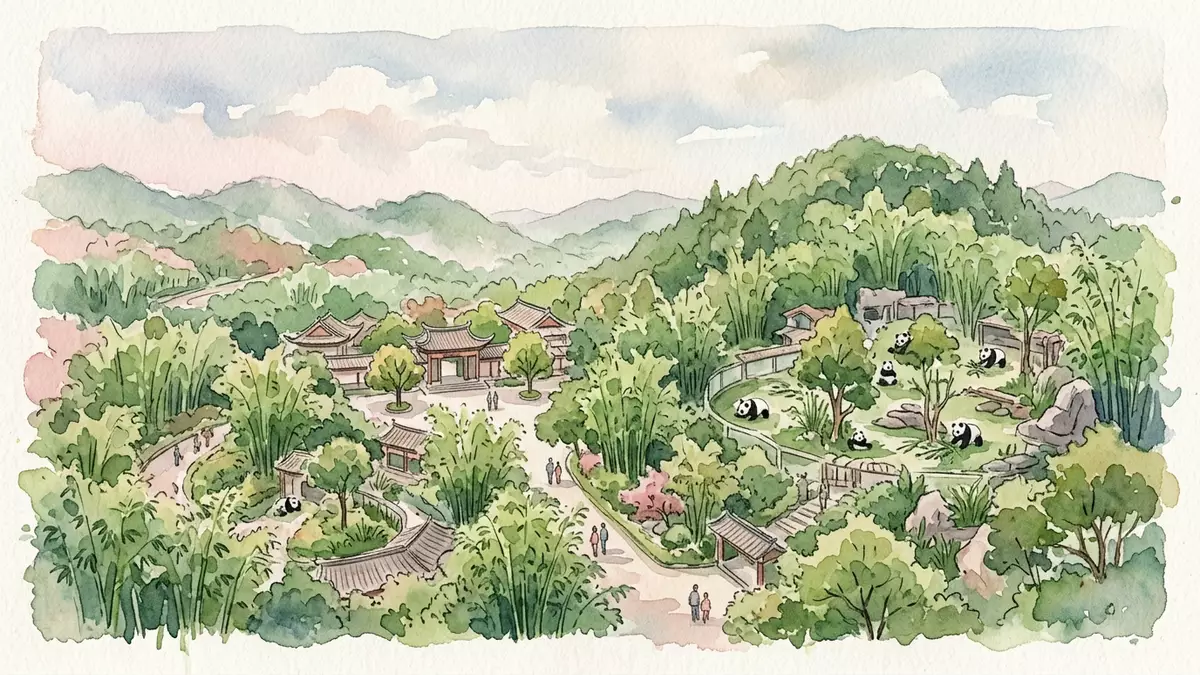
On the northern side of Chengdu in China, Chengdu Xiongmao Jidi brings giant panda conservation, research and a park-like landscape together in one extensive campus. Established in 1987 as the Chengdu Research Base of Giant Panda Breeding, it was created as a government-funded non-profit institute dedicated to giant pandas and other rare species.
A campus devoted to giant pandas
Chengdu Xiongmao Jidi is formally known as the Chengdu Research Base of Giant Panda Breeding, a specialised institution for the protection and breeding of giant pandas, red pandas and other endangered animals endemic to China.government-funded non-profit The base lies in Chenghua District and occupies a sizeable tract of land laid out as bamboo woodland, open enclosures, indoor nurseries and service buildings on the edge of the city.covering an area of 3.07 square kilometres
The institution grew from work with rescued wild giant pandas and developed into an ecological demonstration project for ex-situ conservation, meaning conservation work carried out away from the species’ natural mountain habitats.ecological demonstration project for giant panda ex-situ conservation Within the campus, giant pandas live in outdoor pens planted with dense bamboo and trees, linked to indoor dens and nursery rooms where young animals and mothers are monitored and cared for by staff.
From rescue work in 1987 to a leading conservation base
The base was founded in March 1987 by the municipal authorities of Chengdu, arising from a small group of weakened wild giant pandas that had been rescued after bamboo flowering in the Qionglai Mountains west of the city.founded in March 1987 Early work focused on stabilising these animals and building up expertise in veterinary care, nutrition and enclosure design suitable for a species adapted to cool, forested uplands.grew out of work with rescued wild pandas
Over the decades following its establishment, breeding programmes, long-term population management and cooperation with other institutions increased the number of captive-bred giant pandas living at Chengdu Xiongmao Jidi, turning it into one of the principal centres for the species.principal ex-situ conservation centre Alongside the well-known black-and-white bears, the base also maintains populations of red pandas in separate woodland enclosures, reflecting a broader remit of research on rare animals from Sichuan and other regions of China.red pandas and other rare animals
Landscape, layout and visitor experience
The grounds of Chengdu Xiongmao Jidi are organised as a sequence of green hills, winding paths and water features, with bamboo stands and mixed forest providing shade for enclosures and walkways.bamboo groves, open enclosures, nursery houses Visitors move between different zones dedicated to adult giant pandas, sub-adults and cubs, as well as areas focusing on education and interpretation that explain conservation work in Sichuan and beyond.
Within the public parts of the base, buildings such as the Giant Panda Museum and education centres present exhibitions on panda biology, habitat and conservation history, while laboratories and veterinary facilities are located in restricted zones reserved for staff and researchers.scientific research and breeding, popular science education, and cultural tourism The combination of research infrastructure and landscaped enclosures gives Chengdu Xiongmao Jidi the character of a living campus where conservation science, animal care and public visits share the same physical environment.
Visiting Chengdu Xiongmao Jidi: what travellers from Western Europe should know
- Chengdu Xiongmao Jidi stands around 10 km north of central Chengdu in Sichuan, in Chenghua District, reached along Panda Avenue or Xiongmao Boulevard by road or local transport.
- The base occupies undulating ground with long walking routes, with many paths between enclosures involving gentle slopes and staircases rather than level floors.
- The wider campus includes separate field facilities such as the Chengdu Field Research Center for Giant Pandas, known as Panda Valley, located outside the city in more mountainous terrain.
- The official language is Chinese and the currency is the Chinese yuan (renminbi).
- Entry requirements depend on your nationality; UK travellers can check the FCDO travel advice at gov.uk/foreign-travel-advice, Irish travellers the Department of Foreign Affairs at ireland.ie.
Searching for Chengdu Xiongmao Jidi on social platforms
These links open searches for Chengdu Xiongmao Jidi on each platform.
Frequently asked questions about Chengdu Xiongmao Jidi
Where is Chengdu Xiongmao Jidi located?
Chengdu Xiongmao Jidi lies in Chenghua District in the northern suburbs of Chengdu, on Panda Avenue or Xiongmao Boulevard in Sichuan province in China.
What can visitors expect on a visit?
Visitors encounter landscaped grounds with bamboo groves, outdoor enclosures for giant and red pandas, nurseries for cubs and education facilities explaining conservation, research and breeding work.
What makes Chengdu Xiongmao Jidi distinctive?
It combines a large-scale ex-situ conservation base for giant pandas, established in 1987, with a park-like setting where research, animal care and public education share the same campus.


