
Centro Historico de Puebla and its tiled colonial streets
Published on 09/10/2026 at 17:13 | Editorial responsibility: Rafael Müller, Editor-in-Chief AD HOC NEWS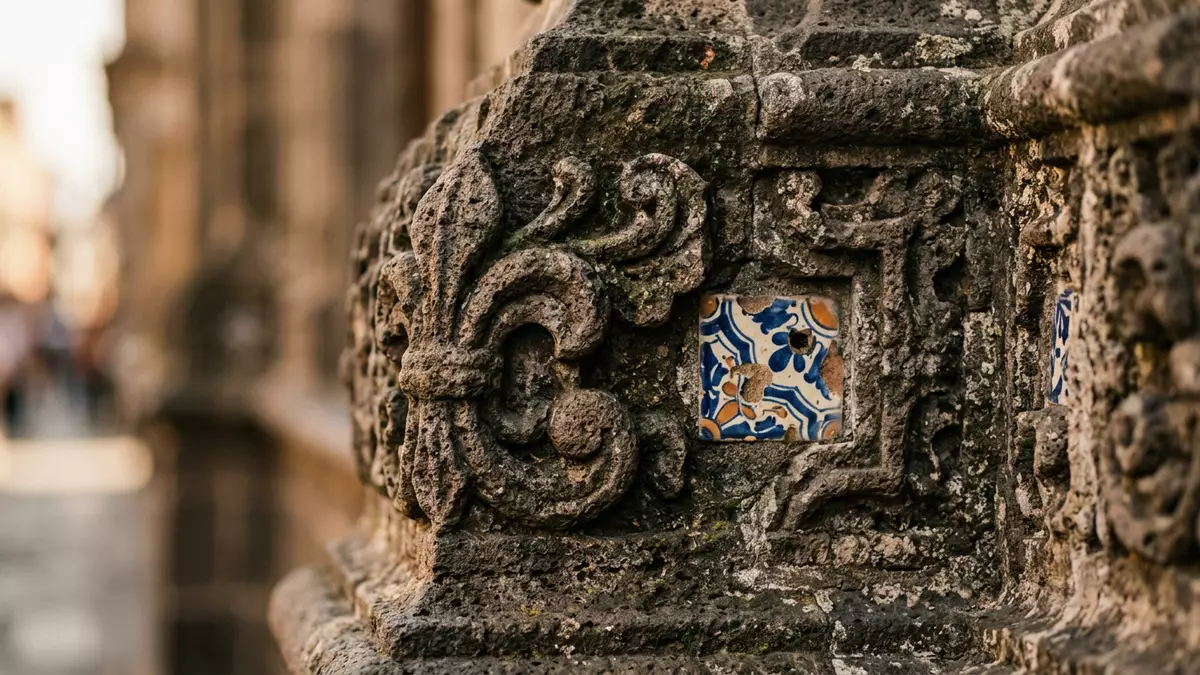
Centro Historico de Puebla in the Mexican city of Puebla is a colonial-era urban core laid out on a regular grid and known for streets lined with tiled façades and churches. It forms the protected historic centre of Puebla, recognised on the UNESCO World Heritage List as the “Historic Centre of Puebla” for its preserved city plan and dense stock of historic buildings dating from the sixteenth to nineteenth centuries.Historic Centre of Puebla
The colonial grid and the heart of Puebla
Centro Historico de Puebla corresponds to the historic centre of Puebla, planned soon after the city’s foundation in 1531 as a Spanish colonial town with straight streets laid out in a grid and a central main square or zócalo.city of Puebla was founded ex nihilo in 1531 The protected zone covers many blocks of dense streets lined with religious complexes, civic buildings and townhouses, and remains closely integrated into the wider urban fabric rather than separated as an isolated museum district.historic centre of Puebla
The historic grid converges on Puebla’s main square, where wide paved areas sit between civic façades and arcaded walkways. From this core, streets run out in straight lines, creating long urban vistas in which churches, tiled houses and small plazas appear in sequence. The layout makes the centre legible at street level, with major religious and civic landmarks closely spaced along the principal axes.
UNESCO World Heritage and layers of architecture
Centro Historico de Puebla holds formal protection as a Historic Monuments Zone under Mexican law and as a World Heritage Site under the name Historic Centre of Puebla. The Mexican federal government decreed the area a Historic Monuments Zone in 1977, recognising the concentration of significant buildings, and UNESCO added it to the World Heritage List on 11 December 1987 as a cultural property under criteria (ii) and (iv).Historic Monuments Zone in 1977 and 11 December 1987 inscriptionWorld Heritage Site under criteria (ii) and (iv)
The centre preserves major religious structures from the sixteenth and seventeenth centuries, notably Puebla Cathedral with its prominent towers and spacious interior, and complexes such as Santo Domingo, San Francisco and Jesuit churches that stand along the grid streets.religious structures such as the cathedral Alongside these stand palaces including the former archbishop’s palace that houses the Biblioteca Palafoxiana, founded in 1646 and regarded as one of the earliest public libraries of the Americas.Biblioteca Palafoxiana founded in 1646 Between the large complexes, many streets are lined with houses and commercial buildings whose façades, roofs and interiors reflect successive phases of baroque and later neoclassical design.
Tiles, brick and baroque façades
One of the most distinctive visual features of Centro Historico de Puebla is the frequent use of glazed ceramic tiles, known locally as azulejos and strongly associated with Puebla’s Talavera tradition, on the walls of houses and public buildings. Brick walls, stone detailing and coloured ceramic tiles combine on façades, with patterns framed by carved stone pilasters, balconies and cornices.walls covered with tiles (azulejos)baroque façades with Talavera tiles
This tile work appears across a range of building types, from large palaces to smaller townhouses, giving whole streets a patchwork character. Many façades combine ceramic panels with plaster and stone, and domes and tower roofs often carry coloured tile decoration visible along the street perspectives. Inside some churches and chapels, such as the richly decorated Capilla del Rosario attached to Santo Domingo, gilded altarpieces and stucco work continue the baroque emphasis on surface detail.
Visiting Centro Historico de Puebla: what travellers from Western Europe should know
- Centro Historico de Puebla lies in the centre of the city of Puebla in central Mexico, east of Mexico City, and is reached overland from Mexico City and through transport links connected with Puebla’s airport.lies in the city of Puebla in central Mexico, east of Mexico City
- The historic centre consists of paved streets and plazas arranged on a grid, with many junctions, kerbs and building entrances; walking involves regular changes of level and frequent street crossings.
- The official language is Spanish and the currency is the Mexican peso.
- Entry requirements depend on your nationality; UK travellers can check the FCDO travel advice at gov.uk/foreign-travel-advice, Irish travellers the Department of Foreign Affairs at ireland.ie.
Searching for Centro Historico de Puebla on social platforms
These links open searches for Centro Historico de Puebla on each platform.
Frequently asked questions about Centro Historico de Puebla
Where is Centro Historico de Puebla?
Centro Historico de Puebla is the historic centre of the city of Puebla in central Mexico, east of Mexico City, and forms the colonial-era core of the urban area.historic centre of Puebla in central Mexico, east of Mexico City
What can visitors expect on a visit?
Visitors encounter a planned grid of streets, plazas and arcades, with major churches, convents, palaces and townhouses whose façades often combine brick, stone and glazed ceramic tiles.
What makes Centro Historico de Puebla distinctive?
The centre is distinctive for its preserved colonial urban plan, its concentration of sixteenth to eighteenth-century religious and civic architecture, and its frequent use of Talavera-related azulejo tile decoration on façades and domes.preserved colonial urban plan and architecture


