
Centro Historico de Managua and the lakefront ruins
Published on 08/27/2026 at 19:36 | Editorial responsibility: Rafael Müller, Editor-in-Chief AD HOC NEWS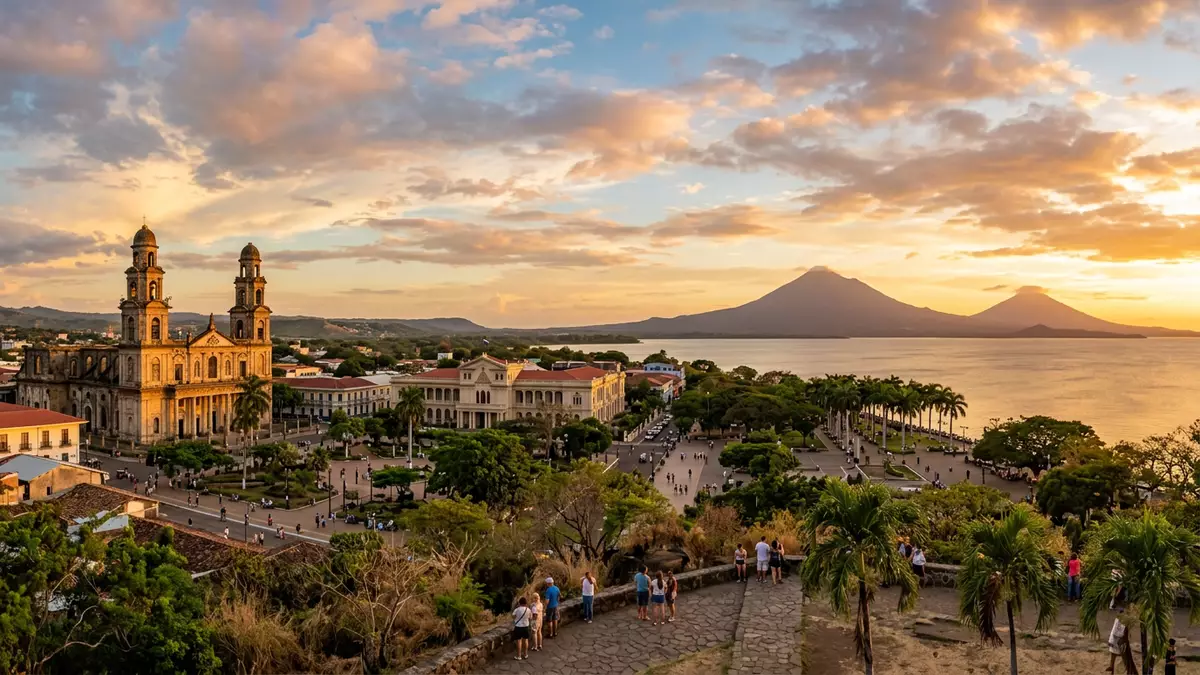
Centro Historico de Managua is the old civic core of Managua, with Plaza de la Revolución, ruined cathedral walls and the edge of Lake Managua in one compact district.
The area belongs to the historic centre of Nicaragua’s capital and gathers civic, religious and cultural landmarks from different periods into a single urban setting.
Plazas, ruins and the old civic heart
The strongest visual element is the broad open space around Plaza de la Revolución, framed by the historic centre of Managua and the remains of the old cathedral.
That square gives the district its character: open paving, low walls, scattered monuments and large gaps where dense city blocks once stood. The setting is urban, but the scale feels unusually spread out for a capital centre.
Cathedral ruins and civic buildings
The best-known landmark is the Old Cathedral of Managua, also called the Catedral de Santiago, with its damaged shell still standing near the main plaza. Nearby stand the Palacio Nacional de la Cultura and the National Theater Rubén Darío, both key names in Managua’s cultural landscape.
Plaza de la Revolución brings together these civic landmarks with wide paved surroundings and a clear line towards the lakefront. The district is a record of Managua as a capital shaped by public buildings, squares and visible remains.
Lake shore and the wider historic district
Centro Historico de Managua lies near the southern shore of Lake Managua, also called Lake Xolotlán, in the northern part of the city. That position gives the district a lakeside edge as well as an inland network of streets leading back into Managua.
The area includes open squares, civic blocks and the waterfront promenade along the lake. It reads less like a closed historic quarter and more like a spread of connected public spaces.
The southern shoreline and the main plaza form the district’s clearest geographical frame, with the water on one side and Managua’s streets on the other.
Visiting Centro Historico de Managua: what travellers from Western Europe should know
- Centro Historico de Managua is in northern Managua near the southern shore of Lake Managua. City streets and taxi routes link the district with the rest of the capital.
- The area is flat and open, with broad paved squares rather than steep ground. The main walking is between plazas, civic buildings and the lakeside edge.
- The Old Cathedral of Managua, the Palacio Nacional de la Cultura and the National Theater Rubén Darío cluster around the same civic core. Their façades and ruins create the district’s main landmarks.
- The official language is Spanish and the currency is the Nicaraguan córdoba.
- Entry requirements depend on your nationality; UK travellers can check the FCDO travel advice at gov.uk/foreign-travel-advice, Irish travellers the Department of Foreign Affairs at ireland.ie.
Searching for Centro Historico de Managua on social platforms
These links open searches for Centro Historico de Managua on each platform.
Frequently asked questions about Centro Historico de Managua
Where is Centro Historico de Managua?
It lies in northern Managua, close to Lake Managua’s southern shore. Plaza de la Revolución and the old cathedral area form its main reference points.
What does a visit involve?
The district is an urban landscape of plazas, ruins and civic buildings. Most of the interest comes from walking between the cathedral shell, the cultural buildings and the open square.
What makes it distinctive?
The mix of damaged cathedral walls, broad open space and lakeside setting gives the district a clear identity. It is a historic core read through its public spaces rather than through dense streets.


