
Centro Historico de Managua and its open-air scars of history
Published on 08/13/2026 at 14:26 | Editorial responsibility: Rafael Müller, Editor-in-Chief AD HOC NEWS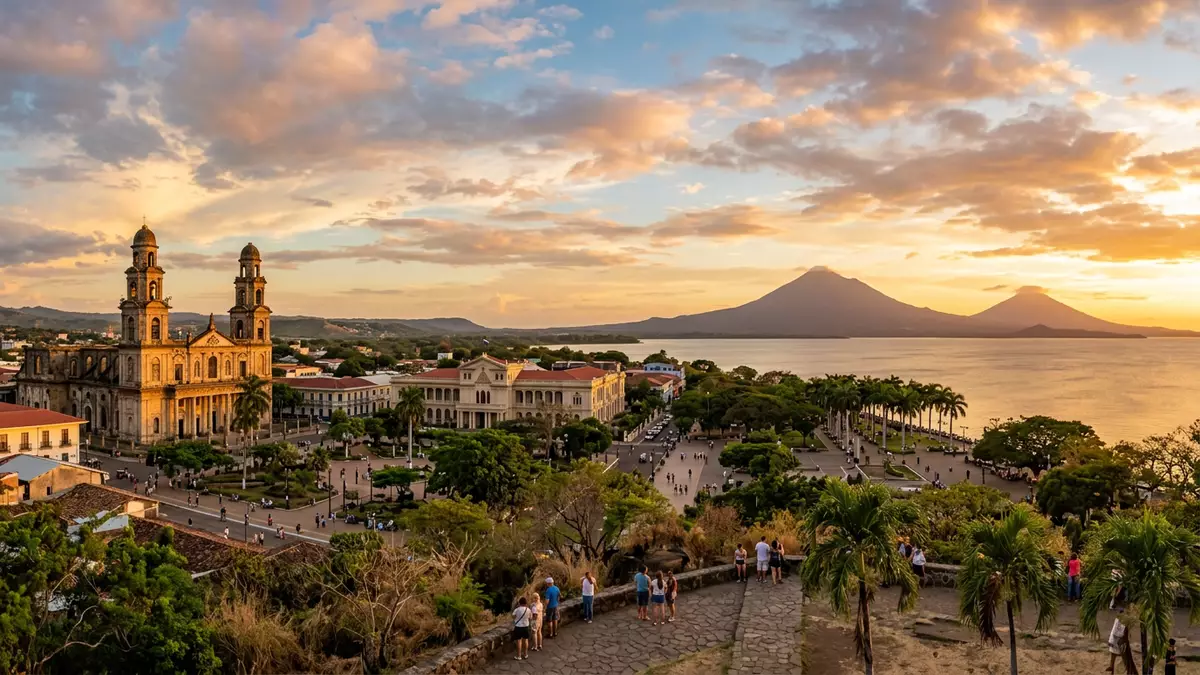
Centro Historico de Managua is the historic core of Managua, capital of Nicaragua, where damaged cathedral walls, wide plazas and the shoreline of Lake Managua define a compact urban landscape shaped by a major twentieth-century earthquake. The area developed as the city’s political and cultural centre in the twentieth century and still concentrates key government and cultural buildings around its main square.
Ruined cathedral and ceremonial square
The most striking landmark in Centro Historico de Managua is the Old Cathedral of Managua, also known as Catedral de Santiago, a neoclassical church that was severely damaged in the earthquake of 23 December 1972 and has since remained closed to the public as a stabilised ruin.Old Cathedral of Managua Its façade, towers and fenced-off interior stand on the eastern side of the main square, creating a permanent reminder of the former city centre that once surrounded it.old Managua Cathedral
Opposite the cathedral rises the National Palace of Culture, a substantial neoclassical building that functions as a national museum and one of Managua’s principal civic monuments.National Palace of Culture Together with the Central Park and surrounding monuments, these structures frame Plaza de la Revolución, formerly Plaza de la República, which forms the ceremonial heart of the Centro Historico and gathers memorials to figures such as Carlos Fonseca Amador and Rubén Darío.Plaza de la Revolución
Lakefront setting and dispersed city around it
Centro Historico de Managua occupies ground near the southern shore of Lake Managua, also known as Lago Xolotlán, giving its plazas and streets a direct relationship with the water and distant views across the lake.southern shore of Lake Managua A lakeside promenade known as Paseo Xolotlán extends from the historic core, linking formal squares with landscaped walkways and viewpoints along the shoreline.Paseo Xolotlán promenade
The earthquake that struck Managua in 1972 destroyed much of the former dense centre and led to commercial districts and shopping areas being rebuilt elsewhere in the city, leaving Centro Historico de Managua as a zone where ruins, open spaces and later government buildings coexist.former centre destroyed The result is a historic district that functions as a symbolic nucleus of the capital’s history, while everyday business life has shifted to other neighbourhoods.
Government buildings, theatre and memory landscape
Alongside the Old Cathedral and the National Palace of Culture, Centro Historico de Managua includes the Rubén Darío National Theatre, a major performance venue that survived the 1972 earthquake and continues to anchor the area’s cultural role.Rubén Darío National Theatre Modern presidential and administrative buildings stand near the main square, forming a cluster where different eras of Nicaraguan politics and architecture meet within walking distance.presidential house and National Palace
Monuments and memorials scattered through Central Park and the surrounding plazas mark key figures and episodes in national history, turning Centro Historico de Managua into an open-air landscape of memory that combines damaged religious architecture, functioning civic institutions and broad paved spaces. Visitors encounter stabilised ruins, museums, theatres and official buildings arranged around the same square, making the district a concise introduction to Managua’s twentieth-century urban story.
Visiting Centro Historico de Managua: what travellers from Western Europe should know
- Centro Historico de Managua lies near the southern shore of Lake Managua in the northern part of the urban area, with Plaza de la Revolución and the Old Cathedral as its central reference points.
- The district is largely level, but exploring it on foot involves walking across broad paved plazas and streets with limited shade, and approaching monuments and buildings that are separated by open urban spaces.
- The area forms part of Managua’s District I and is reached by city streets; taxis and local buses run to the vicinity of Plaza de la República and the lakeside promenade.
- The official language is Spanish and the currency is the Nicaraguan córdoba.
- Entry requirements depend on your nationality; UK travellers can check the FCDO travel advice at gov.uk/foreign-travel-advice, Irish travellers the Department of Foreign Affairs at ireland.ie.
Searching for Centro Historico de Managua on social platforms
These links open searches for Centro Historico de Managua on each platform.
Frequently asked questions about Centro Historico de Managua
Where is Centro Historico de Managua located within the city?
Centro Historico de Managua occupies the area around Plaza de la Revolución near the southern shore of Lake Managua in the northern part of the urban zone.
What should visitors expect when exploring the historic centre?
Visitors encounter stabilised ruins of the Old Cathedral, broad plazas, the National Palace of Culture, the Rubén Darío National Theatre and memorials arranged within a compact district.
What makes Centro Historico de Managua distinctive among Managua’s neighbourhoods?
The district combines damaged religious architecture, functioning government and cultural buildings and an immediate lakeside setting, making it a concentrated record of Managua’s twentieth-century history.


