
Centro Historico de Managua and its earthquake-scarred heart
Published on 09/07/2026 at 06:43 | Editorial responsibility: Rafael Müller, Editor-in-Chief AD HOC NEWS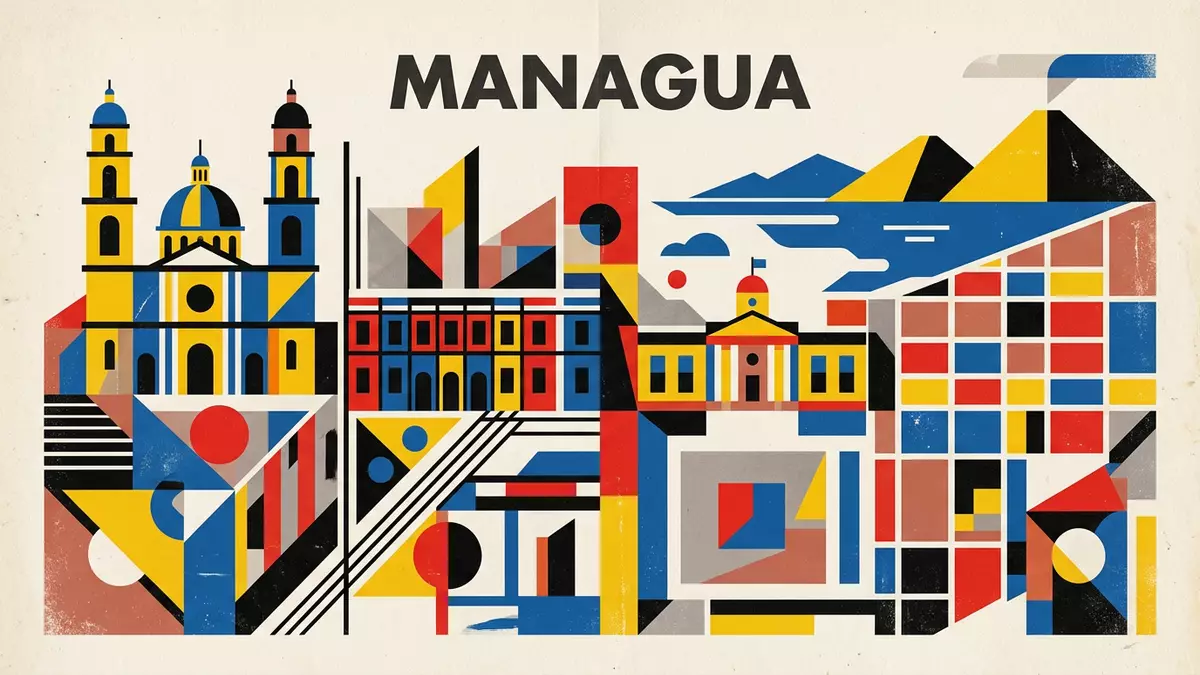
Centro Historico de Managua is the historic core of Managua, where Nicaragua’s former civic heart still gathers around Plaza de la Revolución, the Old Cathedral and the southern shore of Lake Managua. In this compact district, a neoclassical cathedral frozen as a ruin, a pale stone palace and broad paved squares keep the memory of the pre-1972 city visible in the open air.
Plaza de la Revolución and the shape of the old centre
The clearest way to understand Centro Historico de Managua is to stand in Plaza de la Revolución, the broad square that once carried the name Plaza de la República and anchored Managua’s historic downtown.Plaza de la Revolución The plaza lies near the southern shore of Lake Managua, with the waterline and the low lakeside promenade forming one edge of the historic district.southern shore of Lake Managua
Around this square, the Centro Historico de Managua stretches through civic blocks that once concentrated ministries, markets, hotels and transport facilities before the earthquake of 23 December 1972 reshaped Managua’s urban pattern.Centro Histórico de Managua The historic centre occupies the northern part of the urban area, where the original grid of streets meets the lakeside, forming a transition between the waterfront and the rest of the capital.northern part of Managua
The Old Cathedral and the Palacio Nacional de la Cultura
On the eastern side of Plaza de la Revolución stands the Old Cathedral of Managua, also known as Catedral de Santiago, a neoclassical church whose exterior walls and towers survived the earthquake of 1972 but whose interior remains closed because of structural damage.Old Cathedral of Managua The building’s ash-grey stone, fenced-off forecourt and hollowed shell give the cathedral the quality of a permanent open-air monument to the destroyed city centre.la Catedral vieja
Opposite the cathedral rises the Palacio Nacional de la Cultura, the National Palace of Culture, whose pale, ordered façade and colonnaded frontage present a contrast to the fractured surfaces of the neighbouring ruin.Palacio Nacional de la Cultura Together with the National Theater Rubén Darío and governmental buildings that line the civic blocks, these structures mark the area as the historic seat of Nicaragua’s political and cultural life in the twentieth century, even though everyday commerce has since shifted to other parts of Managua.Centro Historico de Managua lies near the southern shore
Earthquake memory and lakeside promenades
The defining historical event for Centro Historico de Managua is the earthquake that struck Managua on 23 December 1972, devastating much of the old centre and prompting a later shift of offices, shops and dense residential districts towards other zones.earthquake of 23 December 1972 In the historic core, the traces of this event remain visible in damaged walls, empty lots and stabilised ruins, which stand alongside restored or repurposed buildings and newer monuments.
Towards Lake Managua, the Centro Historico de Managua meets the Paseo Xolotlán, a lakeside promenade and recreational zone that runs along the waterfront and links the historic plazas with open spaces facing the water.Paseo Xolotlán promenade From here, the skyline of the historic centre is defined less by height than by the silhouettes of the Old Cathedral, the National Palace of Culture and the low government and cultural buildings that frame the main square and its adjoining parkland.
Visiting Centro Historico de Managua: what travellers from Western Europe should know
- Centro Historico de Managua lies in Managua, capital of Nicaragua, in the northern part of the urban area near the southern shore of Lake Managua, centred on Plaza de la Revolución and the blocks around the Old Cathedral and the National Palace of Culture. It is reached by road from Managua’s main districts and from Augusto C. Sandino International Airport via the city’s arterial avenues.
- The historic centre is largely level around Plaza de la Revolución and the lakeside promenade, with broad paved squares and streets. Approaches to the Old Cathedral forecourt and surrounding civic buildings involve ordinary kerbs and steps rather than long climbs or steep gradients.
- Lake Managua lies immediately north of Centro Historico de Managua, and the Paseo Xolotlán promenade runs along the waterfront within walking distance of the main plaza. The wider city centre districts with shops and newer offices begin south of the historic zone.
- The official language is Spanish and the currency is the córdoba.
- Entry requirements depend on your nationality; UK travellers can check the FCDO travel advice at gov.uk/foreign-travel-advice, Irish travellers the Department of Foreign Affairs at ireland.ie.
Searching for Centro Historico de Managua on social platforms
These links open searches for Centro Historico de Managua on each platform.
Frequently asked questions about Centro Historico de Managua
Where is Centro Historico de Managua within the city?
Centro Historico de Managua occupies the northern part of Managua along the southern shore of Lake Managua, centred on Plaza de la Revolución and the surrounding civic blocks.
What should visitors expect on a visit to the historic centre?
Visitors encounter broad plazas, the fenced shell of the Old Cathedral of Managua, the National Palace of Culture, governmental buildings and lakeside promenades that frame the historic core.
What makes Centro Historico de Managua distinctive among Managua’s districts?
The district combines neoclassical civic architecture, stabilised cathedral ruins and open squares shaped by the 1972 earthquake, all set beside the shore of Lake Managua.


