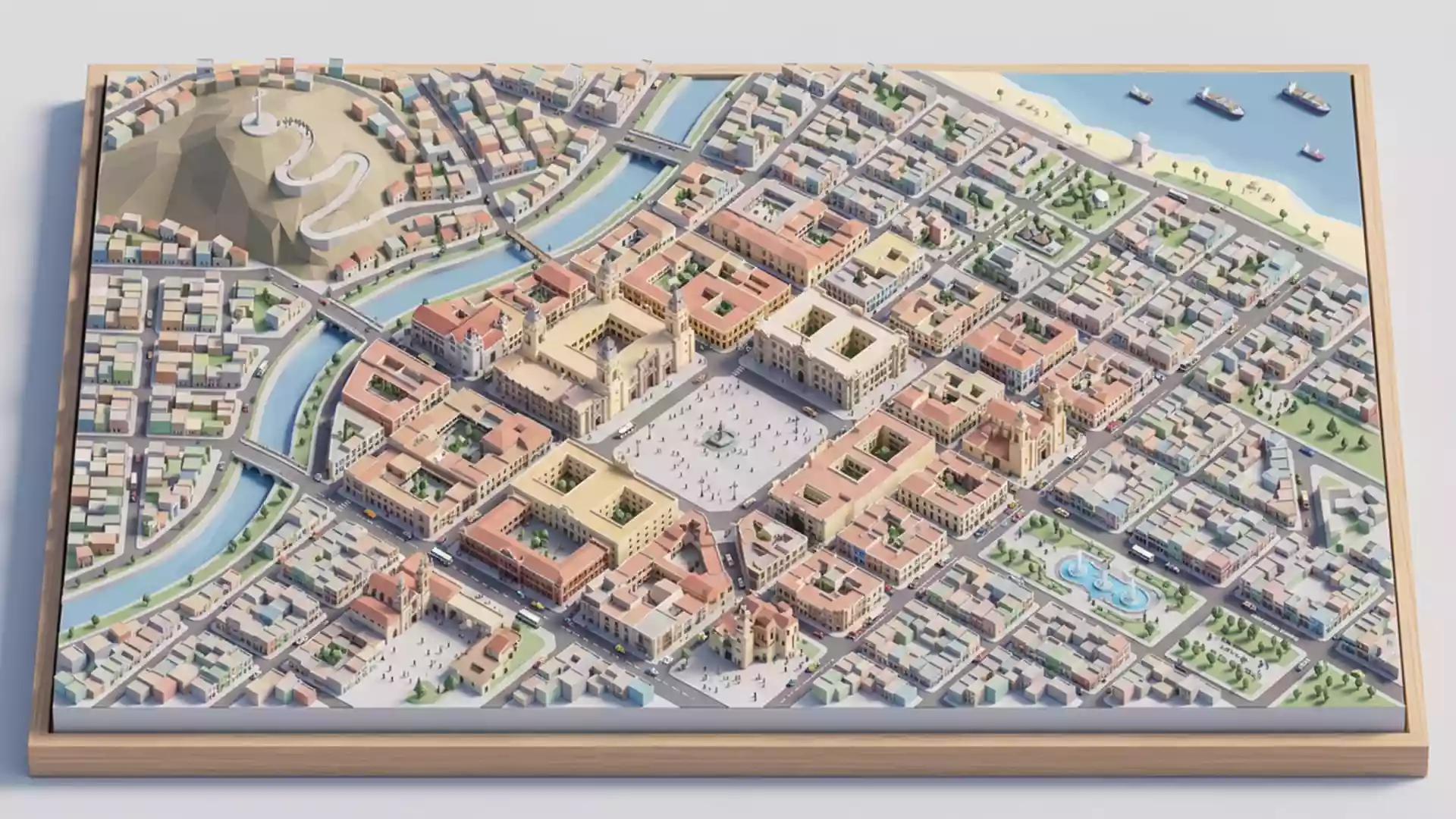
Centro Historico de Lima and its colonial grid around Plaza Mayor
Published on 09/17/2026 at 12:45 | Editorial responsibility: Rafael Müller, Editor-in-Chief AD HOC NEWS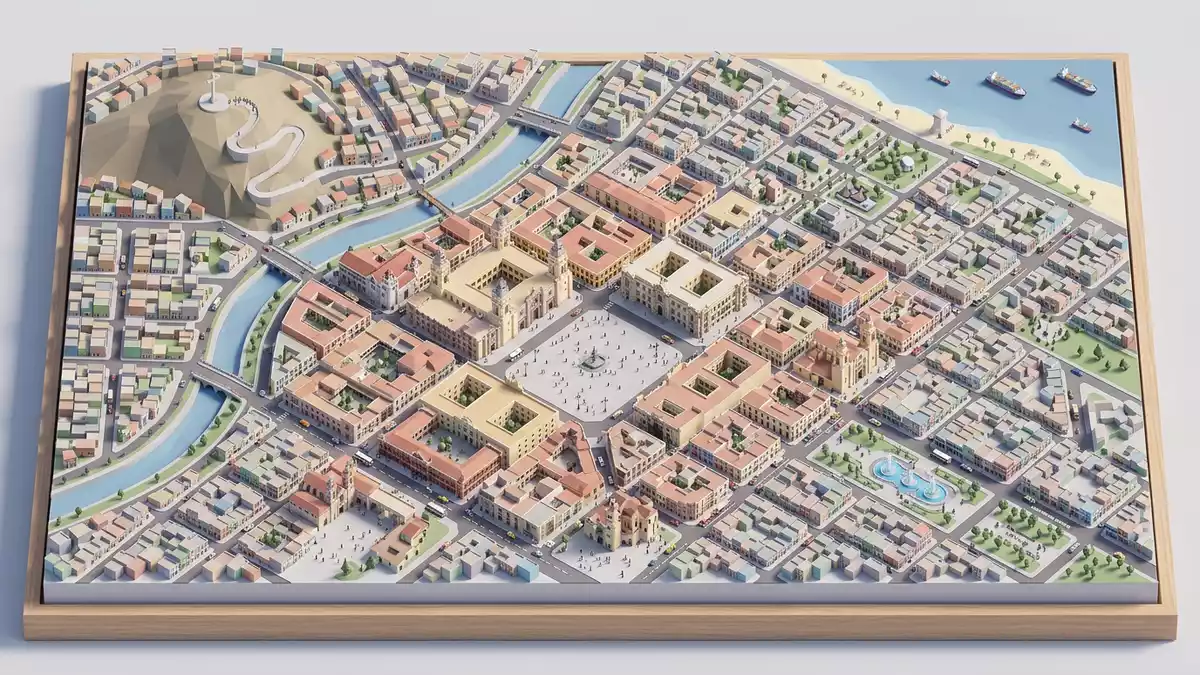
Centro Historico de Lima is the historic core of Lima in Peru, a planned colonial grid focused on Plaza Mayor and extending across the Rimac river into the neighbouring district of Rímac. Within this compact area, streets, plazas and religious complexes from the sixteenth to eighteenth centuries form a dense urban fabric that records Lima’s role as a major Spanish colonial centre in South America.
From Ciudad de los Reyes to colonial capital
The historic centre grew from the foundation of Lima as the “Ciudad de los Reyes” by Francisco Pizarro in January 1535, set in the Rimac valley on land associated with the Chiefdom of Rímac.Francisco Pizarro founded Lima in 1535 The urban core that developed became the seat of the Viceroyalty of Peru, concentrating political, religious and economic institutions in a tight grid of streets, blocks and courtyards. This grid, laid out from the founding square and extended in straight lines, is still referred to as the Damero de Pizarro, a name that recalls both the checkerboard pattern and its association with the city’s founder.the Damero de Pizarro grid
Centro Historico de Lima occupies parts of the districts of Lima and Rímac along the banks of the Rimac river, a location that underlines the historic relationship between the colonial core and the waterway that traverses the capital.the central districts of Lima and Rímac Within this area, hundreds of monuments from the period of Spanish presence line streets and plazas, forming an ensemble that reflects successive phases of colonial and republican architecture.
Plaza Mayor and the surrounding monuments
At the centre of the grid lies Plaza Mayor, also known as Plaza de Armas, the square identified at the city’s foundation and still the organising focus of the historic centre.Plaza Mayor as founding square The plaza is framed by buildings that concentrate political and ecclesiastical authority: the Government Palace, the Metropolitan Cathedral of Lima, the Archbishop’s Palace and the Municipal Palace. Their facades present a mix of colonial and later styles, but together they define a continuous architectural wall around the square.
The Cathedral of Lima occupies one side of Plaza Mayor and traces its origins to work begun soon after the city’s foundation in 1535, with rebuilding after earthquakes in 1687 and 1746 and completion of its present form in 1797.Cathedral construction history Its towers rise above the square, while inside the cathedral contains the tomb of Francisco Pizarro, linking the founding figure directly to the principal religious space of the colonial city.mausoleum of Francisco Pizarro Nearby, the Archbishop’s Palace presents balconies and ornamented windows overlooking the same plaza, reinforcing the close pairing of civic and religious power.
Balconied streets and World Heritage recognition
Beyond Plaza Mayor, Centro Historico de Lima is characterised by streets lined with long timber balconies, church towers and civic facades that together form a distinct colonial streetscape.balcony-lined colonial streets The blocks follow the orthogonal pattern of the original grid, with straight streets intersecting at right angles and opening onto secondary plazas and courtyards. Within this planned framework stand religious complexes such as the convent ensemble of San Francisco de Lima, whose recognition marked an early stage in international appreciation of the area’s heritage.
The Historic Centre of Lima holds formal inscription on the UNESCO World Heritage List as a cultural property, recognised under criterion (iv) for its testimony to Spanish colonial architecture and urban development in Latin America.UNESCO World Heritage listing This status, first linked to the convent of San Francisco in 1988 and extended to encompass a wider part of the historic centre in 1991, covers a mapped core zone measured in hundreds of hectares within the central districts and a buffer zone that protects additional historic fabric.extension of protection in 1991 Many buildings within this zone carry the UNESCO black-and-white shield near their entrances, marking their inclusion in the protected ensemble.
Visiting Centro Historico de Lima: what travellers from Western Europe should know
- Centro Historico de Lima lies in central Lima, spanning parts of the Lima and Rímac districts along the Rimac river and reached by city roads from other quarters of the capital.
- Much of the area is walkable on level streets, though some churches, convents and towers are accessed by internal staircases that can be narrow and steep.
- Lima sits at the Pacific coastal plain, and the historic centre itself stands close to sea level, so altitude is not a factor in visiting the colonial core.
- The official language is Spanish and the currency is the Peruvian sol.
- Entry requirements depend on your nationality; UK travellers can check the FCDO travel advice at gov.uk/foreign-travel-advice, Irish travellers the Department of Foreign Affairs at ireland.ie.
Searching for Centro Historico de Lima on social platforms
These links open searches for Centro Historico de Lima on each platform.
Frequently asked questions about Centro Historico de Lima
Where is Centro Historico de Lima located within the city?
Centro Historico de Lima occupies the historic core of Peru’s capital, spanning parts of the Lima and Rímac districts along the Rimac river in central Lima.
What should a visitor expect when walking through the historic centre?
Visitors encounter a planned colonial grid of streets and plazas lined with balconied houses, churches, convents and civic buildings, with Plaza Mayor as the principal square.
What makes Centro Historico de Lima distinctive among historic city centres?
Its combination of a sixteenth-century grid, major colonial monuments and recognised UNESCO World Heritage status gives Centro Historico de Lima a dense concentration of historic architecture in a compact urban core.