
Centro Historico de Lima and its colonial grid of plazas
Published on 08/20/2026 at 22:47 | Editorial responsibility: Rafael Müller, Editor-in-Chief AD HOC NEWS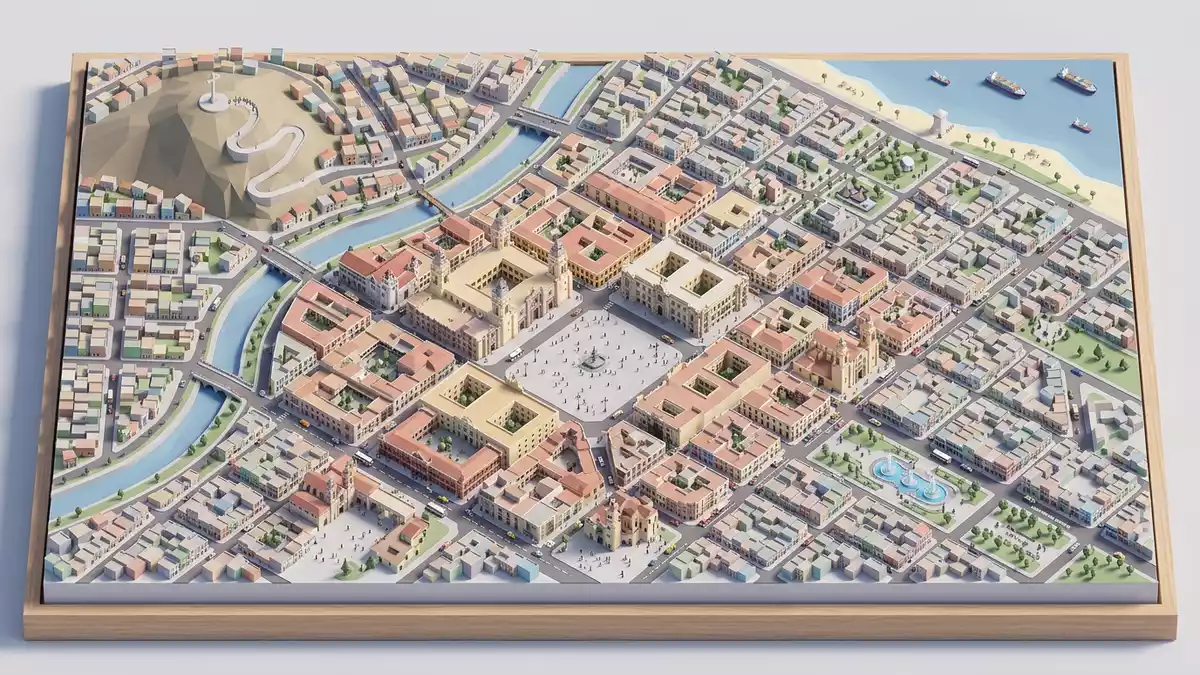
Centro Historico de Lima forms the historic core of Lima, the capital of Peru, laid out as a Spanish colonial grid around its main square and lined with churches, civic buildings and long timber balconies. Founded in January 1535 by the Spanish conquistador Francisco Pizarro as “Ciudad de los Reyes”, it later gained formal recognition as a World Heritage Site for the originality of its colonial urban fabric and the concentration of historic monuments.
A colonial city planned around Plaza Mayor
Centro Historico de Lima grew from a single square: Plaza Mayor, also known as Plaza de Armas, set out as the founding site of Lima in 1535. This square occupies a central position within the historic grid, and is bordered by important buildings including the Government Palace, the Metropolitan Cathedral of Lima, the Archbishop’s Palace and the Municipal Palace.Plaza Mayor in Lima The layout around it follows the regular blocks characteristic of Spanish colonial town planning, with straight streets radiating and intersecting to form an orthogonal pattern sometimes referred to as the “Damero de Pizarro”.
From the outset Lima served as the centre of Spanish administration in a wide region of South America, and Centro Historico de Lima preserves the governmental core of that period. The Government Palace on the north side of Plaza Mayor, also called the House of Pizarro, continues the line of viceregal power that once operated from the same location.Historic Centre of Lima overview Around the square, arcaded frontages and painted facades mark the transition from political buildings to commercial and civic structures, while balconies project over the pavements and frame views towards church towers.
Churches, convents and timber balconies
One of the most striking aspects of Centro Historico de Lima is the density of religious complexes, many dating from the seventeenth and eighteenth centuries. Convents and churches such as San Francisco de Lima introduce stone and adobe facades, towers, courtyards and cloisters into the street grid, reflecting the architectural styles of the Spanish colonial era.colonial grid of plazas and churches Inside these complexes, altarpieces and side chapels show the craftsmanship of the period, while their courtyards bring light and planted space into the compact urban fabric.
Lima Cathedral, which anchors one side of Plaza Mayor, traces its origins to construction beginning soon after the city’s foundation in 1535. Over the centuries it has been rebuilt more than once following earthquakes, and its current form combines historical layers of structure and decoration.Lima Cathedral history Across the historic centre, long enclosed balconies made of timber, many projecting above arcades and doorways, give Centro Historico de Lima a distinctive streetscape when viewed from ground level or across a plaza. These balconies, together with plastered walls in strong colours, create a rhythm of openings and projections that accompanies a walk through the area.
UNESCO World Heritage status and mapped historic area
Centro Historico de Lima holds formal recognition as a World Heritage Site, inscribed by UNESCO in 1988 for the originality of its colonial layout and its high concentration of historic monuments constructed during the era of Spanish presence.Historic Centre of Lima UNESCO listing The protected property, mapped within the central districts of Lima and Rímac along the Rímac river, covers an area measured in hundreds of hectares and includes key squares, streets and building ensembles.mapped World Heritage area Within this zone, selected buildings carry the UNESCO black-and-white shield to mark their inclusion in the core of the historic centre.
The historic core is also recognised through national inventories that describe Centro Historico de Lima as a record of the architecture and urban development of a Spanish colonial town of significant political, economic and cultural importance in Latin America.Peruvian tourism inventory entry These descriptions emphasise both the grid of streets and the collection of monuments, linking them to wider narratives of viceregal administration and trade in the region. The combination of plazas, religious complexes, civic buildings and traditional balconies within a defined area gives Centro Historico de Lima a layered character that reflects several centuries of urban life.
Visiting Centro Historico de Lima: what travellers from Western Europe should know
- Centro Historico de Lima occupies the central districts of Lima and Rímac along the Rímac river, and can be reached by road transport from other parts of the city, including routes that pass near Plaza Mayor.
- Walking within Centro Historico de Lima involves moving along paved streets and across squares, with sections that include arcades and stairways; some older buildings have internal staircases that are narrow compared with modern standards.
- Centro Historico de Lima lies in a coastal urban area at low altitude, with conditions shaped by Lima’s climate rather than high-mountain terrain.
- Nearby landmarks within the historic area include the Rímac river to the north and major sites such as the Government Palace and Lima Cathedral around Plaza Mayor.
- The official language is Spanish and the currency is the Peruvian sol.
Searching for Centro Historico de Lima on social platforms
These links open searches for Centro Historico de Lima on each platform.
Frequently asked questions about Centro Historico de Lima
Where is Centro Historico de Lima located?
Centro Historico de Lima occupies the historic core of Lima in Peru, largely within the districts of Lima and Rímac along the Rímac river.
What should visitors expect on a visit to Centro Historico de Lima?
Visitors encounter a planned colonial grid with plazas, paved streets, churches, convents, civic buildings and traditional timber balconies within a defined historic area.
What makes Centro Historico de Lima distinctive among historic city centres?
The combination of a sixteenth-century founding plan, Spanish colonial street grid and a high concentration of monuments recognised as a UNESCO World Heritage Site gives Centro Historico de Lima particular character.


