
Centro Historico de Cuenca, an Andean grid of rivers and domes
Published on 09/01/2026 at 10:44 | Editorial responsibility: Rafael Müller, Editor-in-Chief AD HOC NEWS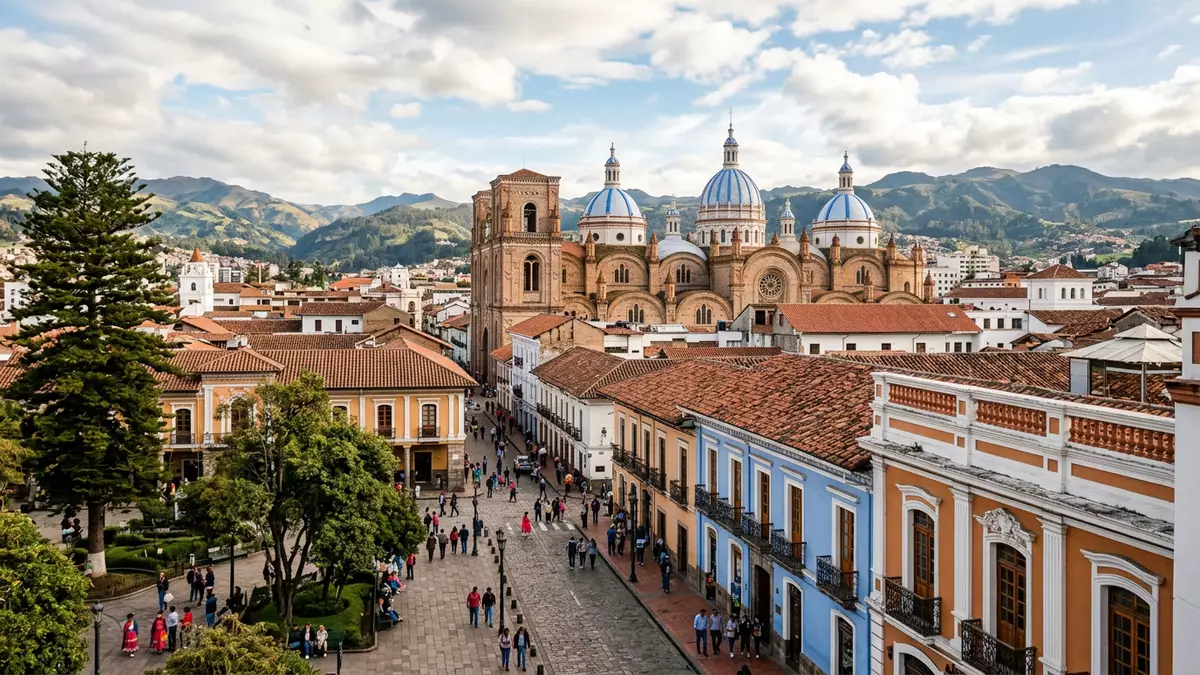
Centro Historico de Cuenca in southern Ecuador is the historic centre of Santa Ana de los Ríos de Cuenca, a highland city laid out on a planned grid across an Andean plateau framed by rivers and church domes. Recognised as the Historic Centre of Santa Ana de los Ríos de Cuenca by UNESCO from 1999, it brings together colonial streets, plazas and religious buildings in a compact urban fabric that remains legible at street level.
An Andean Spanish town planned on a Renaissance grid
Centro Historico de Cuenca occupies the area settled after the foundation of Santa Ana de los Ríos de Cuenca in the sixteenth century, when Spanish planners imposed a rectilinear street pattern over earlier Andean occupation. The historic centre includes the territory occupied by the town until the first half of the twentieth century, along with archaeological zones such as Pumapungo and corridors that follow former access routes into the city.Historic Centre of Santa Ana de los Ríos de Cuenca Streets run broadly north–south and east–west in straight lines, crossing at regular junctions and forming blocks of low-rise buildings that reflect Renaissance ideas of urban order transplanted to the Americas.the cuadricula original del Centro Histórico
The city stands in the Andes, at an elevation that gives Centro Historico de Cuenca clear views toward the surrounding hills and river valleys. Within the grid, streets descend towards the Río Tomebamba and other waterways, where stone embankments and terraces mark the edge between the urban fabric and the river corridors.an Andean grid of rivers, plazas and domes The planned layout emphasises straight streets and right-angled crossings, yet within this structure the terrain introduces small variations in slope that become part of the everyday experience of walking the centre.
Colonial architecture, domes and civic spaces
Centro Historico de Cuenca is characterised by a dense concentration of colonial and republican buildings, many of them two- or three-storey townhouses with masonry ground floors and lighter upper levels. Facades often combine plastered walls with timber balconies and heavy wooden doors opening into interior courtyards, while tiled roofs step down with the slope of the streets.townhouses characterised by stucco facades and balconies Within this fabric, churches and convents mark key junctions, their domes and towers rising above the surrounding roofscape and giving the centre its distinctive skyline.
The architectural ensemble reflects a mixture of Spanish colonial planning, local Andean building traditions and later European influences, with styles ranging from baroque and neoclassical to early twentieth-century currents.different estilos arquitectónicos desde el barroco y neoclásico Civic spaces punctuate the grid in the form of plazas, where administrative buildings, markets and churches face onto stone-paved squares. Interiors of major religious structures tend to feature carved wooden elements and gilded altars, while exteriors remain relatively restrained, reinforcing the feeling of a coherent urban ensemble rather than isolated monuments.
Heritage status and continuity of urban life
The historic centre was declared “Patrimonio Cultural del Ecuador” in March 1982, recognising its architectural complexes, archaeological remains and cultural practices as fundamental to national identity.declaratoria de patrimonio nacional 29 de marzo de 1982 On 1 December 1999, UNESCO inscribed the Historic Centre of Santa Ana de los Ríos de Cuenca on the World Heritage List as a cultural site, emphasising the preservation of the original grid since the city’s foundation and the fusion of Spanish, Cañari and Inca cultural elements in its urban fabric.UNESCO declaró al Centro Histórico de Cuenca Patrimonio Cultural de la Humanidad
The UNESCO listing describes Centro Historico de Cuenca as a remarkable example of a planned inland Spanish town that reflects Renaissance urban planning principles in the Americas.a remarkable example of a planned inland Spanish town Alongside this formal recognition, the centre remains a lived district where residential buildings, civic offices, religious institutions and markets share the same grid. The continuity of everyday uses within historic structures contributes to the sense that the centre is not preserved as a backdrop but continues as part of Cuenca’s working city.
Visiting Centro Historico de Cuenca: what travellers from Western Europe should know
- Centro Historico de Cuenca lies in the city of Cuenca in southern Ecuador’s Andes region, reached overland from other Andean centres and via airports serving the wider Azuay province.
- Many streets in the historic centre follow gentle gradients, with stone paving, kerbs and occasional staircases linking terraces above the rivers, so walking involves regular changes in level.
- The Río Tomebamba runs along one edge of Centro Historico de Cuenca, and riverside walks connect directly with streets in the grid, bringing water, embankments and bridges within easy reach of the colonial core.
- The official language is Spanish and the currency is the US dollar.
- Entry requirements depend on your nationality; UK travellers can check the FCDO travel advice at gov.uk/foreign-travel-advice, Irish travellers the Department of Foreign Affairs at ireland.ie.
Searching for Centro Historico de Cuenca on social platforms
These links open searches for Centro Historico de Cuenca on each platform.
Frequently asked questions about Centro Historico de Cuenca
Where is Centro Historico de Cuenca located?
Centro Historico de Cuenca is the historic centre of Santa Ana de los Ríos de Cuenca in southern Ecuador, set on an Andean plateau above rivers such as the Río Tomebamba.
What can visitors expect when walking through the historic centre?
Visitors encounter straight streets laid out on a grid, low-rise townhouses, churches with domes and towers, plazas, markets and riverfront terraces where the city meets the water.
What makes Centro Historico de Cuenca distinctive among historic city centres?
Its combination of Renaissance-inspired grid planning, Andean highland setting, mixed architectural styles and recognised status as both national heritage since 1982 and a UNESCO World Heritage site from 1999 makes it distinctive.


