
Castillo San Felipe del Morro and the stone ramparts of Old San Juan
Published on 09/04/2026 at 15:11 | Editorial responsibility: Rafael Müller, Editor-in-Chief AD HOC NEWS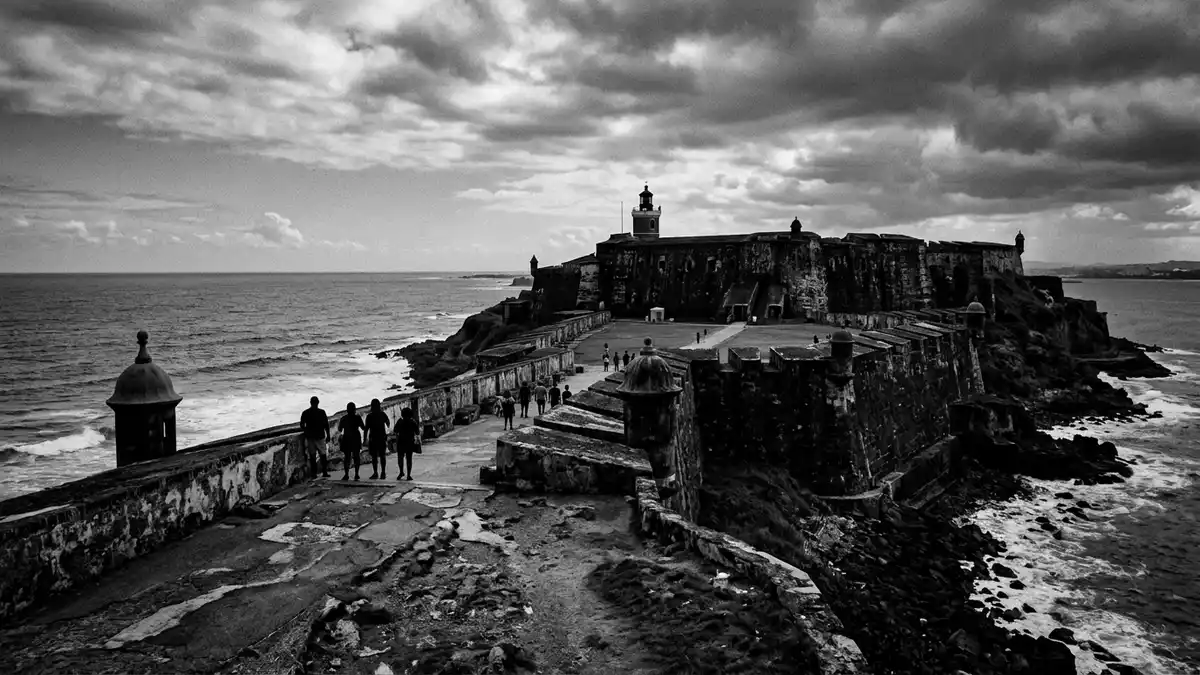
Castillo San Felipe del Morro rises above the entrance to San Juan Bay as a multi-level stone fortress, its ramparts stepping down towards the Atlantic and enclosing a broad green headland in Old San Juan. Construction of this coastal citadel began under the Spanish Crown in 1539, anchoring the harbour defences that would shape the colonial city for generations.
A six-level fortress on the Atlantic headland
The fort occupies a high promontory at the north-western tip of Old San Juan, with terraces and batteries arranged to face the open Atlantic and the narrow entrance to the bay.covers a 140 foot-high promontory From the upper levels the view runs along the Atlantic coastline and over the harbour mouth, while lower platforms sit closer to the sea, packed with artillery positions that once guarded the shipping lanes into Puerto Rico.
Over more than two centuries, Spanish military engineers expanded Castillo San Felipe del Morro from an early tower into a six-level bastioned complex, with thick masonry walls, angled outer works and a central courtyard forming an integrated defence system.layered walls and terraces The stone construction and tiered layout make the fort a clear example of early modern coastal fortification in the Caribbean.
From Spanish stronghold to American installation
Work on Castillo San Felipe del Morro began in the sixteenth century under King Charles I of Spain, with the fort named in honour of King Philip II as Spain consolidated its presence in the Americas.commissioned by King Charles I of Spain in 1539 Over the late sixteenth and seventeenth centuries, engineers such as Juan Bautista Antonelli reworked the design into a hornwork bastion, with thicker parapets and new batteries added as artillery technology advanced.Italian-born military engineer Juan Bautista Antonelli
Through the colonial period the fortress repelled several major attacks, including assaults led by Sir Francis Drake in 1595 and Dutch forces in 1625, its seaward walls and gun platforms forming the outer shield of San Juan.withstood four major attacks In 1898, during the Spanish–American War, United States Navy ships bombarded the fort and Puerto Rico passed from Spanish to American control, after which the site became part of Fort Brooke and remained in military use into the twentieth century.designated as part of Fort Brooke
Architecture, lighthouse and surrounding walls
Castillo San Felipe del Morro forms part of a wider system of fortifications and city walls enclosing the old colonial core of San Juan, with stone ramparts running inland towards Castillo San Cristóbal and La Fortaleza.system of fortresses and massive walls Within the fort, courtyards, barracks, storerooms and dungeons occupy different levels, linked by ramps and staircases that reveal the layered nature of the defence works.
One of the most distinctive features of the complex is the lighthouse that rises above the upper platform, identified as the oldest light station on the island, dating from the mid-nineteenth century and rebuilt in the early twentieth century after wartime damage.the island’s oldest light station The fort and its surrounding defences are recognised as part of the San Juan National Historic Site and were inscribed as a UNESCO World Heritage Site in 1983, underlining their importance in the military and urban history of the Caribbean.declared a Unesco World Heritage site in 1983
Visiting Castillo San Felipe del Morro: what travellers from Western Europe should know
- Castillo San Felipe del Morro stands on a headland at the north-western edge of Old San Juan, overlooking the entrance to San Juan Bay and the Atlantic Ocean.
- The interior of the fortress is arranged across several levels linked by ramps and staircases, and exploring the site involves walking on stone surfaces and climbing multiple flights of steps.
- The fort lies within the historic district of San Juan, with city walls, plazas and other colonial buildings nearby, so a visit naturally connects with wider exploration of Old San Juan’s streets.
- The official language is Spanish and the currency is the United States dollar, reflecting Puerto Rico’s status as a territory of the United States.
- Entry requirements depend on your nationality; UK travellers can check the FCDO travel advice at gov.uk/foreign-travel-advice, Irish travellers the Department of Foreign Affairs at ireland.ie.
Searching for Castillo San Felipe del Morro on social platforms
These links open searches for Castillo San Felipe del Morro on each platform.
Frequently asked questions about Castillo San Felipe del Morro
Where is Castillo San Felipe del Morro located?
The fortress stands on a rocky headland at the entrance to San Juan Bay, forming the outer coastal defences of Old San Juan in Puerto Rico.
What should visitors expect inside the fort?
Visitors encounter stone ramparts, courtyards, barracks and artillery platforms spread across multiple levels, reached by ramps and staircases with views over the Atlantic and the harbour.
What makes Castillo San Felipe del Morro distinctive among Caribbean fortifications?
Its multi-level design, long construction history from 1539 to the late eighteenth century, integrated lighthouse and UNESCO World Heritage status together mark it out within Caribbean military architecture.


