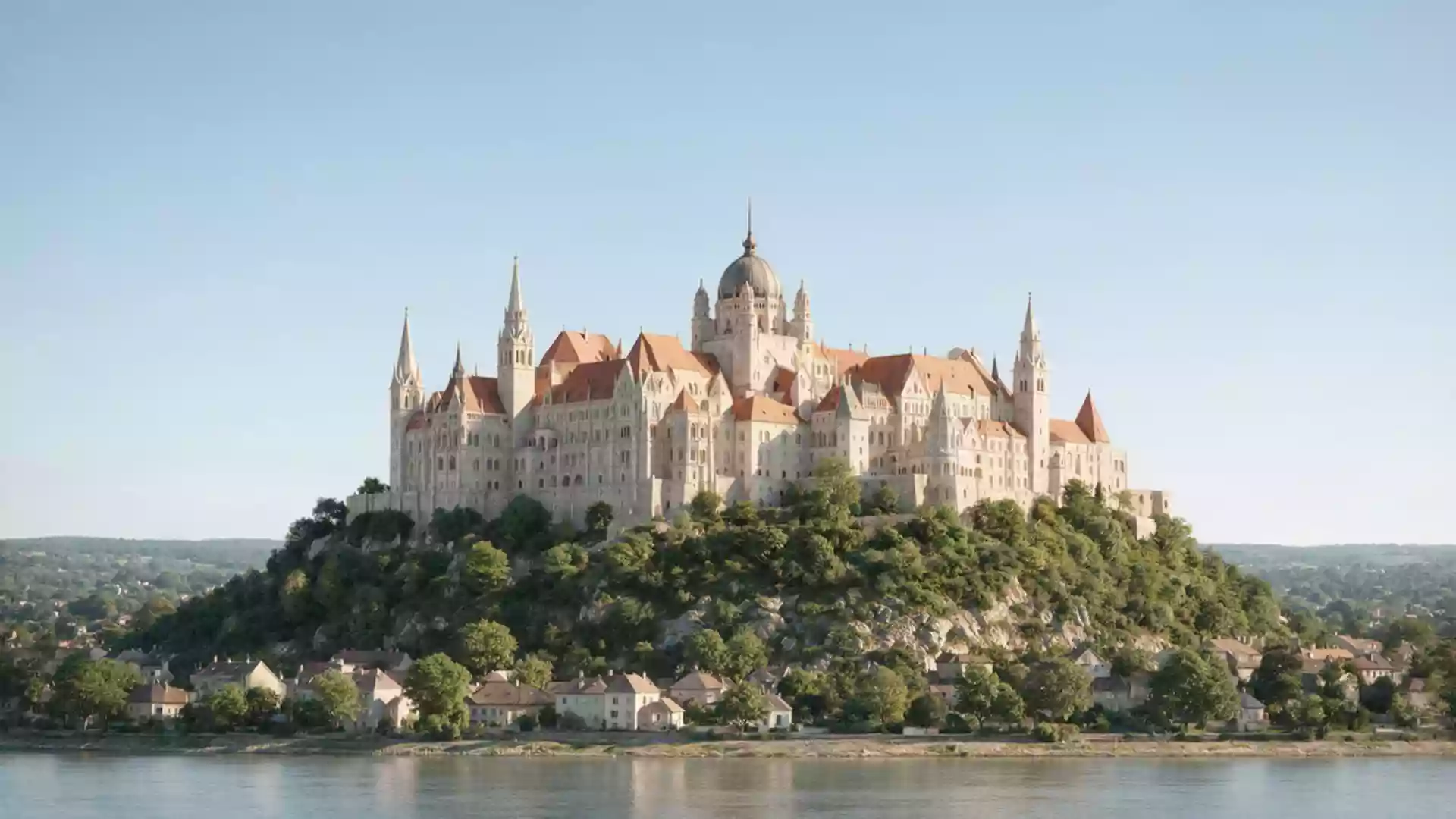
Budai Var and the baroque palace crowning Castle Hill
Published on 09/11/2026 at 10:50 | Editorial responsibility: Rafael Müller, Editor-in-Chief AD HOC NEWS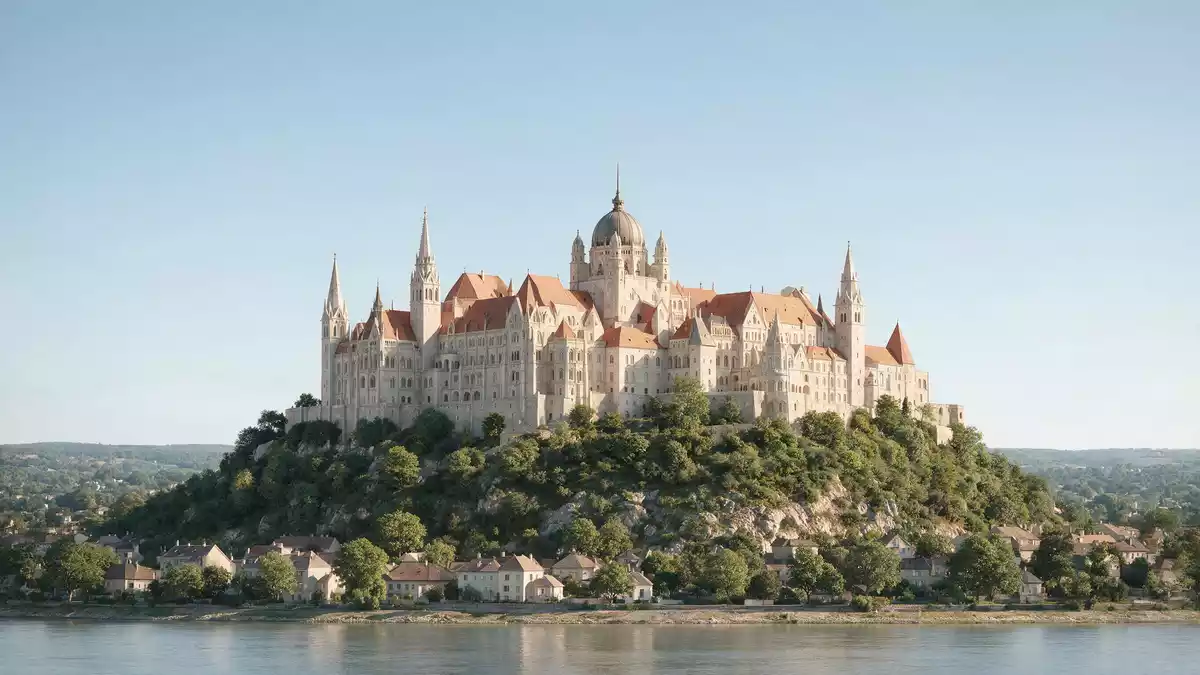
Budai Var is the historical castle and palace complex of the Hungarian kings on Castle Hill in Budapest, occupying the southern end of the ridge above the Danube and forming a continuous ensemble of palace façades, courtyards and streets that link royal architecture with an old urban quarter. The palace complex in its present baroque form dates to the mid-eighteenth century, rising over medieval foundations that trace back to the thirteenth century.
The royal palace on Castle Hill
Budai Var crowns Castle Hill in District I on the Buda side of the Danube, occupying the southern tip of the plateau and forming a broad terrace of stone buildings above the riverfront. The site developed from a thirteenth-century royal fortress and residence, constructed after the Mongol invasion under King Béla IV, into a palace complex whose baroque mass dominates the southern part of the hill.historical castle and palace complex Castle Hill itself forms a separate topographic unit, rising above the Danube’s western bank and carrying not only the palace but also a dense network of streets and smaller buildings.
The palace visible on the southern tip of the hill is largely an eighteenth-century baroque reconstruction, carried out under Habsburg rule between 1749 and 1769 and replacing earlier structures that had suffered heavy damage in earlier wars.Baroque palace built 1749-1769 Broad façades with regular window rhythms and a central dome define the silhouette, while the stone terraces and ramparts below recall the site’s origins as a fortified royal stronghold.
Layers of Hungarian history in stone
The story of Budai Var reaches back to the thirteenth century, when Béla IV initiated fortification on Castle Hill in response to the devastation of the Mongol invasion of 1241–1242. The earliest fortifications and royal buildings, begun around the 1260s, established the hill as a seat of power and allowed later rulers to enlarge the complex into a major medieval palace.original castle constructed by Béla IV During the reigns of Sigismund of Luxembourg and Matthias Corvinus in the fifteenth century, the castle became a significant Gothic and Renaissance residence, with expanded wings and richly decorated interiors.
Subsequent centuries brought repeated damage and rebuilding. After the long period of Ottoman rule and the liberation of Buda in 1686, the Habsburg administration oversaw an extensive baroque reconstruction, creating the palace volume that still frames the southern end of Castle Hill.castle underwent successive alterations In the twentieth century the complex suffered heavy damage during the Siege of Budapest in 1944–1945, after which it was rebuilt in a simplified baroque style in the decades of state socialist rule, leaving a palace whose exterior scale recalls earlier grandeur while interiors reflect modern museum and institutional use.castle heavily targeted during Siege of Budapest
Budai Var as a cultural complex and World Heritage site
Budai Var no longer functions as a royal residence; instead, the palace buildings and surrounding quarter house cultural and civic institutions. Within the palace wings are the Hungarian National Gallery, displaying a broad collection of Hungarian art, and the Budapest History Museum, tracing the city’s development from antiquity to the twentieth century.Hungarian National Gallery and Budapest History Museum On the upper levels of Castle Hill, the National Széchényi Library occupies parts of the complex, reinforcing the site’s role as a repository of national memory.
The palace ensemble and the surrounding Castle Quarter form part of a wider historic landscape recognised by UNESCO. In 1987, “Budapest, including the Banks of the Danube, the Buda Castle Quarter and Andrássy Avenue” was inscribed as a World Heritage Site, acknowledging the relationship between the river, the hill and the nineteenth-century boulevards on the Pest side.World Heritage Site in 1987 From the terraces around Budai Var, views extend across the Danube to the Parliament building and along the riverbanks that form part of this inscribed cultural landscape.
Visiting Budai Var: what travellers from Western Europe should know
- Budai Var stands on Castle Hill on the Buda side of the Danube in District I of Budapest and is reached on foot, by public transport or by road from the riverfront.
- The palace complex occupies an elevated plateau above the river; approaches from the lower city involve sustained uphill walking or stairways through parks and streets.
- The Castle Quarter around Budai Var is a compact historic district with stone pavements and narrow streets, so walking routes involve uneven surfaces and changes in level.
- Hungary’s official language is Hungarian and the currency is the forint.
- Entry requirements depend on your nationality; UK travellers can check the FCDO travel advice at gov.uk/foreign-travel-advice, Irish travellers the Department of Foreign Affairs at ireland.ie.
Searching for Budai Var on social platforms
These links open searches for Budai Var on each platform.Frequently asked questions about Budai Var
Where is Budai Var located in Budapest?
Budai Var stands on Castle Hill in District I on the Buda side of the Danube, occupying the southern end of the hill above the riverfront.
What can visitors expect when exploring Budai Var?
Visitors encounter an extensive baroque palace complex with museums, terraces and courtyards, set within a historic quarter of streets and smaller buildings on an elevated hill above the Danube.
What makes Budai Var distinctive among European palaces?
Budai Var combines a royal baroque palace with an older fortified hilltop town and forms part of a World Heritage landscape that links Castle Hill with the Danube riverbanks and Andrássy Avenue.