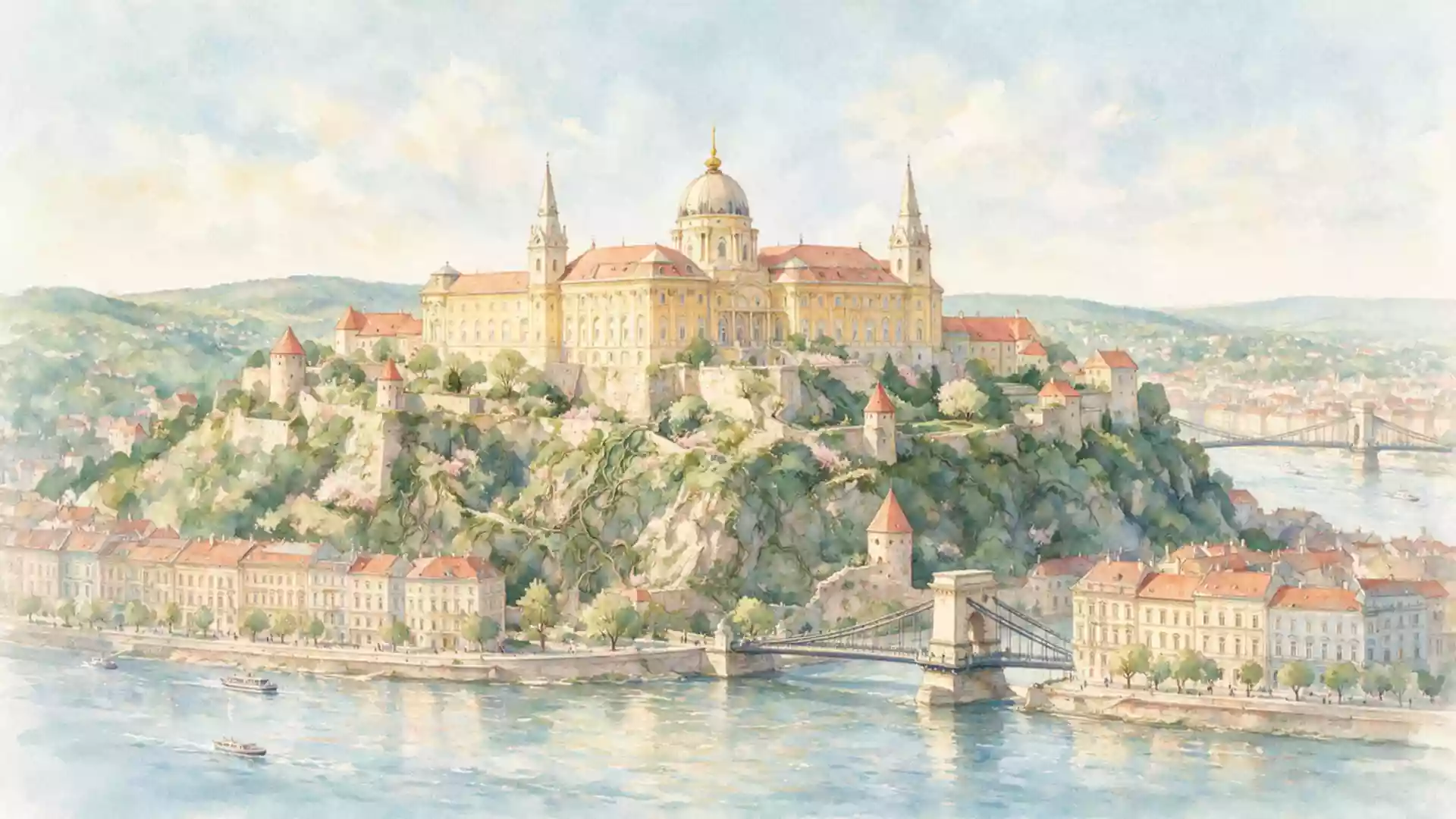
Budai Var and the castle quarter above the Danube
Published on 08/20/2026 at 18:19 | Editorial responsibility: Rafael Müller, Editor-in-Chief AD HOC NEWS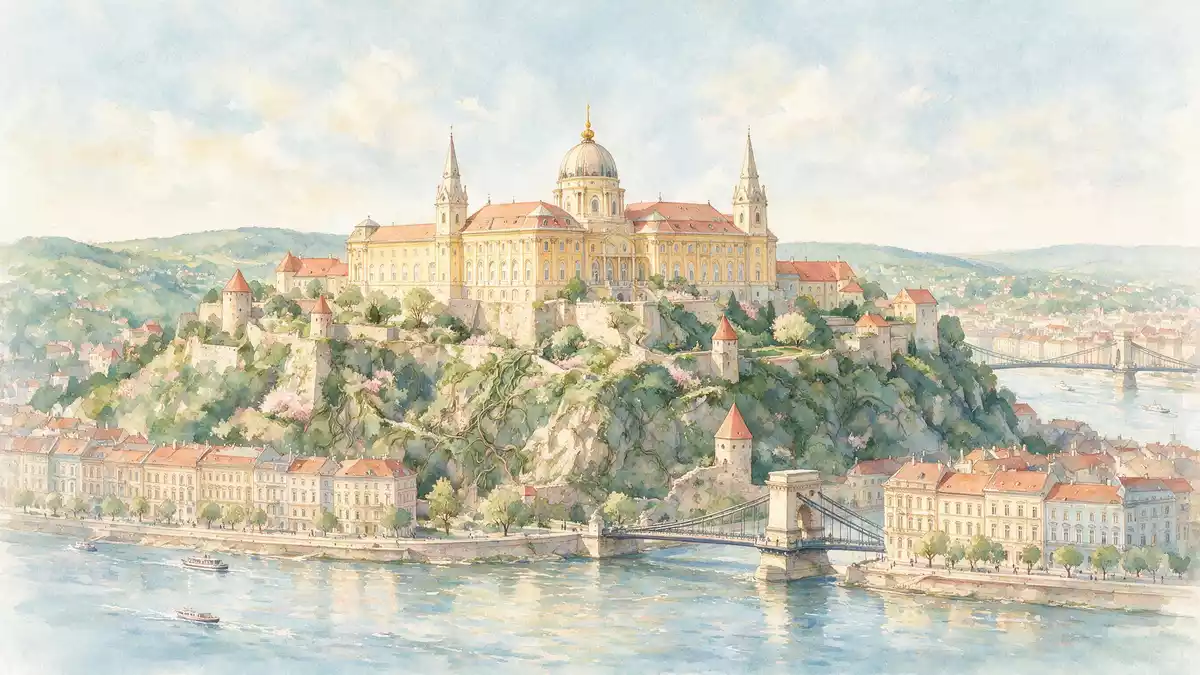
Budai Var is the historic castle and palace complex on Castle Hill in Budapest, rising above the Danube with a dense quarter of streets, courtyards and fortifications that trace Hungary’s royal and urban history from the thirteenth century onwards. The ensemble, inscribed as part of the “Budapest, including the Banks of the Danube, the Buda Castle Quarter and Andrássy Avenue” World Heritage Site in 1987, links the former royal residence with a surrounding district of houses and public buildings.World Heritage Site designation
Castle Hill and the shape of Budai Var
Budai Var occupies the southern part of Castle Hill on the Buda side of the Danube, with the palace complex extending along the ridge and terraces stepping down towards the river. The hill forms part of Budapest’s District I, and the castle quarter is commonly described in Hungarian as Budai Várnegyed, grouping the palace with a historical residential neighbourhood on the same plateau.Budai Várnegyed in District I
The site brings together several distinct areas: the Budavári Palota, centred around Szent György tér; adjoining courtyards connected by ramps and stairways; and an older “polgárváros”, the former citizens’ town, with rows of houses from the seventeenth and eighteenth centuries.polgárváros and palace ensemble From the terraces and bastions, views open across the Danube to the Pest side and along the river corridor that also forms part of the World Heritage landscape.Banks of the Danube listing
From medieval stronghold to royal palace
The origins of Budai Var reach back to the reign of King Béla IV in the thirteenth century, when stone fortifications were ordered after the Tatar invasion to protect the kingdom, including a royal house on the Buda hill.King Béla IV’s castle building Over the following centuries the complex developed into a Gothic castle and later into an expansive palace that served as the seat of Hungarian kings, reflecting successive architectural periods.
Across its history, Budai Var has functioned as royal residence, fortress and representative palace, with the medieval fabric joined by Baroque and later interventions that reshaped the courtyards and façades.Gothic castle within the site The castle quarter’s streets and houses from the seventeenth and eighteenth centuries still line the plateau, creating a compact urban district around the palace with churches such as the Mátyás Church, also known as the Assumption Church, which once served for coronations.castle quarter monuments and Mátyás Church
Budai Var as a cultural district today
Budai Var’s large palace wings now accommodate major cultural institutions, including the Hungarian National Gallery, the Budapest History Museum and the National Széchényi Library, bringing together art, historical collections and Hungary’s national library within the former royal complex.institutions inside the palace Exhibition spaces occupy the interiors while courtyards and terraces remain open urban spaces above the river.
The wider castle quarter around Budai Var is characterised by cobbled streets, townhouses, small squares and stretches of surviving medieval fortifications, forming a compact district where residential buildings, public institutions and museums sit within walking distance.houses and public buildings from the 17th-18th century Together with the riverfront and Andrássy Avenue, the area was recognised on the World Heritage List in 1987 for its outstanding urban landscape and for illustrating key periods in the history of the Hungarian capital.urban landscape of Budapest
Visiting Budai Var: what travellers from Western Europe should know
- Budai Var stands on Castle Hill on the Buda side of Budapest, above the Danube; the area around Szent György tér and the palace courtyards forms the core of the castle quarter.
- The terrain involves a sustained uphill walk or ascent by transport from the river level to the plateau, with stairways and sloping streets connecting the lower quays to the castle district.
- A historic funicular, Budavári Sikló, links Clark Ádám tér by the Széchenyi Chain Bridge with the palace level, while buses serve stops such as Dísz tér near the northern side of the hill.Budavári Sikló and bus stops
- The castle quarter lies within Hungary, where the official language is Hungarian and the currency is the forint.
Searching for Budai Var on social platforms
These links open searches for Budai Var on each platform.
Frequently asked questions about Budai Var
Where is Budai Var located within Budapest?
Budai Var stands on Castle Hill in Budapest’s District I, on the Buda side of the Danube, above the riverbanks that form part of the city’s World Heritage landscape.
What can visitors expect when exploring Budai Var?
Visitors encounter the former royal palace housing museums and the national library, together with a surrounding quarter of streets, houses, churches and fortifications linked by courtyards and terraces.
What makes Budai Var distinctive among Budapest’s landmarks?
Budai Var combines a medieval-origin castle and later royal palace with an intact historic district on the same hill, and is recognised as part of a UNESCO World Heritage Site for its urban landscape and architecture.